Research use only. This compound is supplied for in-vitro laboratory research by qualified researchers. It is not for human or veterinary consumption and has not been evaluated by the FDA.
Buy more of this strength and the price comes down. The store applies it at checkout - there is nothing to enter.
Free US shipping - no minimum
Tell us the Report ID or Laboratory ID shown on the certificate, and what you observed. If independent testing shows a discrepancy against our published certificate, we refund the lot in full and pull it from sale pending investigation.
1
$59.99each
Tell us the Report ID or Laboratory ID shown on the certificate, and what you observed. If independent testing shows a discrepancy against our published certificate, we refund the lot in full and pull it from sale pending investigation.
Certificate pending
Discreet packaging
Dispatched within one business day
Free US shipping, no minimum
In stock, ships from our US fulfilment partner
Compound information
Type
Melanocortin Research
Molecular weight
1024.19 g/mol
Sequence
Ac-Nle-cyclo[Asp-His-D-Phe-Arg-Trp-Lys]-NH2
Form
Lyophilized powder
Vial strength
10mg
Catalogue number
PX-MT2-10MG
Purity
Certificate pending for this strength
Identifiers are published properties of the molecule. Values we cannot confirm are omitted rather than estimated.
A seven-residue cyclic melanocortin analogue. The ring is closed by a lactam bridge between the aspartate at position 2 and the lysine at position 7, the N-terminus is acetylated and the C-terminus is an amide, so both ends are capped.
Position 1 is norleucine and position 4 is D-phenylalanine. The structure is drawn in the PepXtide library with the lactam shown as a real bond.
The compound was reported by Al-Obeidi, Castrucci, Hadley and Hruby in the Journal of Medicinal Chemistry in 1989, in a paper whose title records the method: the cyclic lactam analogues were designed on the basis of molecular dynamics. It is a conformationally constrained version of the 4 to 10 region of alpha-melanocyte-stimulating hormone, built on the same norleucine and D-phenylalanine substitutions that the linear analogue introduced.
The bridge is a side-chain to side-chain lactam, joining the beta-carboxyl of the aspartate to the epsilon-amine of the lysine, which produces a 23-membered macrocycle. Ring size is load-bearing rather than incidental: in the original series the 23- and 24-membered lactams showed prolonged activity in both bioassays used, while the 20-, 21- and 22-membered rings did not. That is the clearest available demonstration that the constraint, and not merely the capping, is what the design depends on.
It is a non-selective agonist across MC1R, MC3R, MC4R and MC5R. Reported inhibition constants from membrane binding in a HEK293-derived line are around 0.13 nanomolar at MC1R, 18.6 at MC3R and 1.26 at MC4R, with a half-maximal inhibitory concentration near 26.9 nanomolar at MC5R, and cyclic AMP half-maximal concentrations in the sub-nanomolar to low-nanomolar range at MC1R, MC3R and MC4R. Values quoted on some supplier datasheets differ materially from these primary figures, so an affinity should be taken with its source.
The single most instructive structure-activity fact in this series concerns position 4. Replacing the D-phenylalanine of this compound with D-2-naphthylalanine gives SHU9119, which converts the molecule from an agonist into an antagonist at MC3R and MC4R while leaving it a full agonist at MC1R and MC5R. A single residue therefore determines whether the molecule activates or blocks a receptor, and does so differently at different subtypes of the same receptor family, which is why this pair is used as a reference set in melanocortin pharmacology.
Characterisation of cyclic analogues in this family is by reversed-phase HPLC retention and electrospray mass spectrometry, typically as the doubly charged ion, with plasma quantitation by HPLC cross-validated against bioassay.
Background
Melanotan 2 is a seven-residue cyclic analogue of the 4 to 10 region of alpha-melanocyte-stimulating hormone, reported by Al-Obeidi, Castrucci, Hadley and Hruby in 1989. A side-chain lactam joins Asp2 to Lys7 to form a 23-membered ring, both termini are capped, and it carries norleucine at position 1 and D-phenylalanine at position 4. It is a non-selective agonist at the MC1, MC3, MC4 and MC5 melanocortin receptors.
Research applications
Where this compound appears in the published literature. Each area points to the papers listed under Primary literature below. These describe what was studied, not an application of this product.
Receptor pharmacology
Studied as a scaffold for discovering functionally selective melanocortin receptor agonists, in a 2022 Journal of Medicinal Chemistry study.[2]
Rodent behavioural models
Investigated in rodent models, including food-motivated responding after delivery into the nucleus accumbens (Neuropeptides, 2022) and a maternal immune activation mouse model of autism (PLoS One, 2019).[3][5]
Specifications
Supplied as
Lyophilized powder
Available strengths
10mg
Storage
Store lyophilized at -20C, protected from light and moisture.
Intended use
In-vitro laboratory research only
Research overview
Cyclic melanocortin analogue
Seven residues closed into a ring by a side-chain lactam: the aspartate at two and the lysine at seven are joined directly, so the ring hangs off the middle of the chain rather than closing it end to end. The N-terminus is acetylated and position one is norleucine.
Residues
7
Atoms
145
Primary literature
Peer-reviewed papers indexed on PubMed that study this compound. We did not write them and we do not summarise them — each reference opens the record on PubMed so you can read the work itself. Publication is not evidence of safety or efficacy, and none of this research was conducted by PepXtide.
The list above is a selection, not the whole literature. These open the public databases themselves, each one confirmed to return results on 29 August 2026.
PubMed, PubChem and ClinicalTrials.gov are independent scientific databases. A record or a published paper is not an endorsement of this product, and nothing indexed there describes an application, dose or outcome supported by PepXtide.
Storage & handling
Lyophilized
Store lyophilized at -20C, protected from light and moisture. The lactam ring and the two capped termini make the molecule a poor peptidase substrate, so the practical concerns are light exposure, because of the tryptophan, and moisture uptake by the lyophilized cake.
Reconstituted
Once reconstituted, refrigerate at 2-8C and use within the period appropriate to the material.
Handling notes
Store lyophilized at -20C, protected from light and moisture.
The lactam ring and capped termini make it a poor peptidase substrate, so the practical concerns are light, because of the tryptophan, and moisture uptake by the cake.
Once reconstituted, refrigerate at 2-8C and use within the period appropriate to the material.
Safety & handling
Bench handling, not a dosing guide.
Intended use
Supplied strictly as a laboratory research material for in-vitro study by qualified researchers. Not for human or veterinary use, not for ingestion or injection, and not for any clinical or diagnostic application.
Personal protective equipment
Handle with gloves, eye protection and a laboratory coat. Weigh and transfer lyophilized powder in a ventilated enclosure to avoid generating an inhalable dust.
Reconstitution
Reconstitute against the diluent and volume appropriate to your protocol, adding solvent slowly down the vial wall rather than directly onto the pellet. Do not shake. This is a handling note, not a dosing guide.
Storage after opening
Once reconstituted, refrigerate and use within the period appropriate to the material. Avoid repeated freeze-thaw cycles, which degrade peptides faster than continuous storage at the listed temperature.
Disposal
Dispose of material and containers in accordance with your institution's chemical waste procedures and applicable local regulations.
Also sold as part of a set
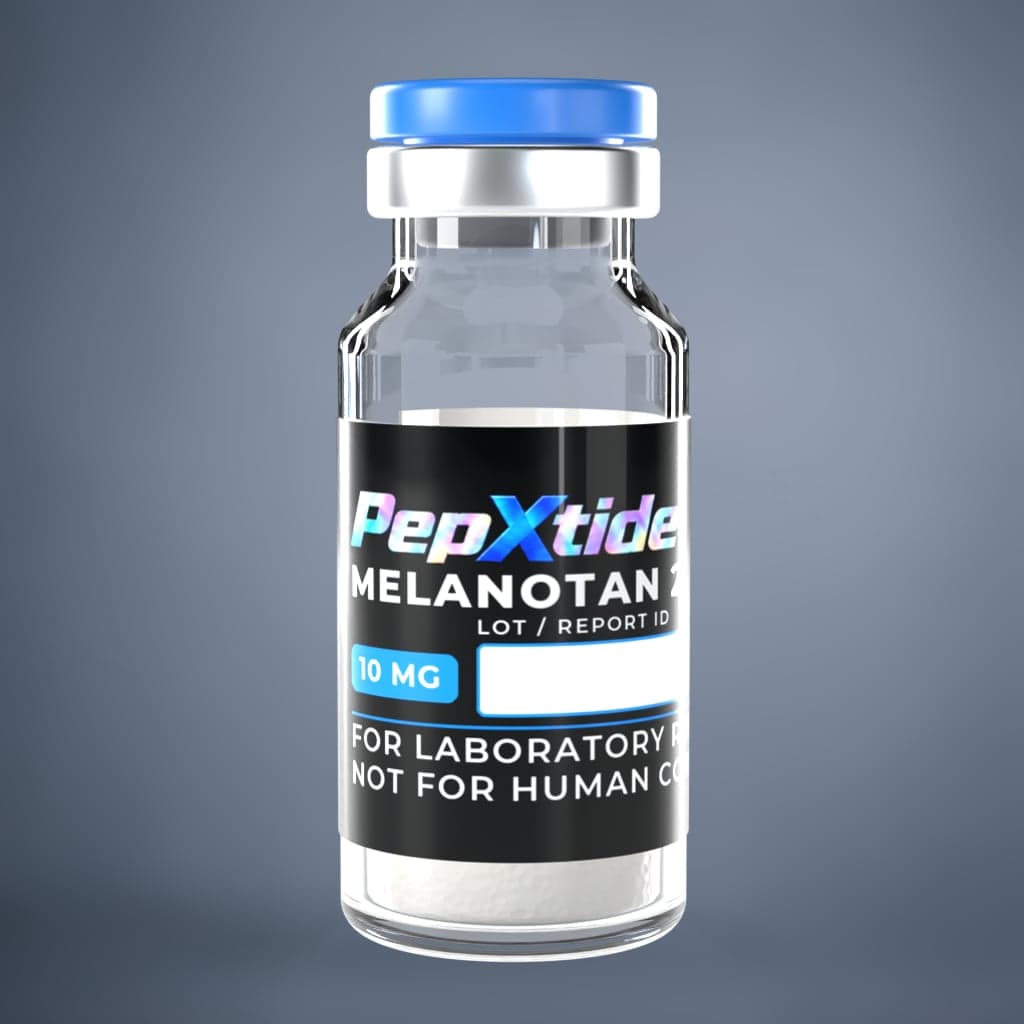
10mg
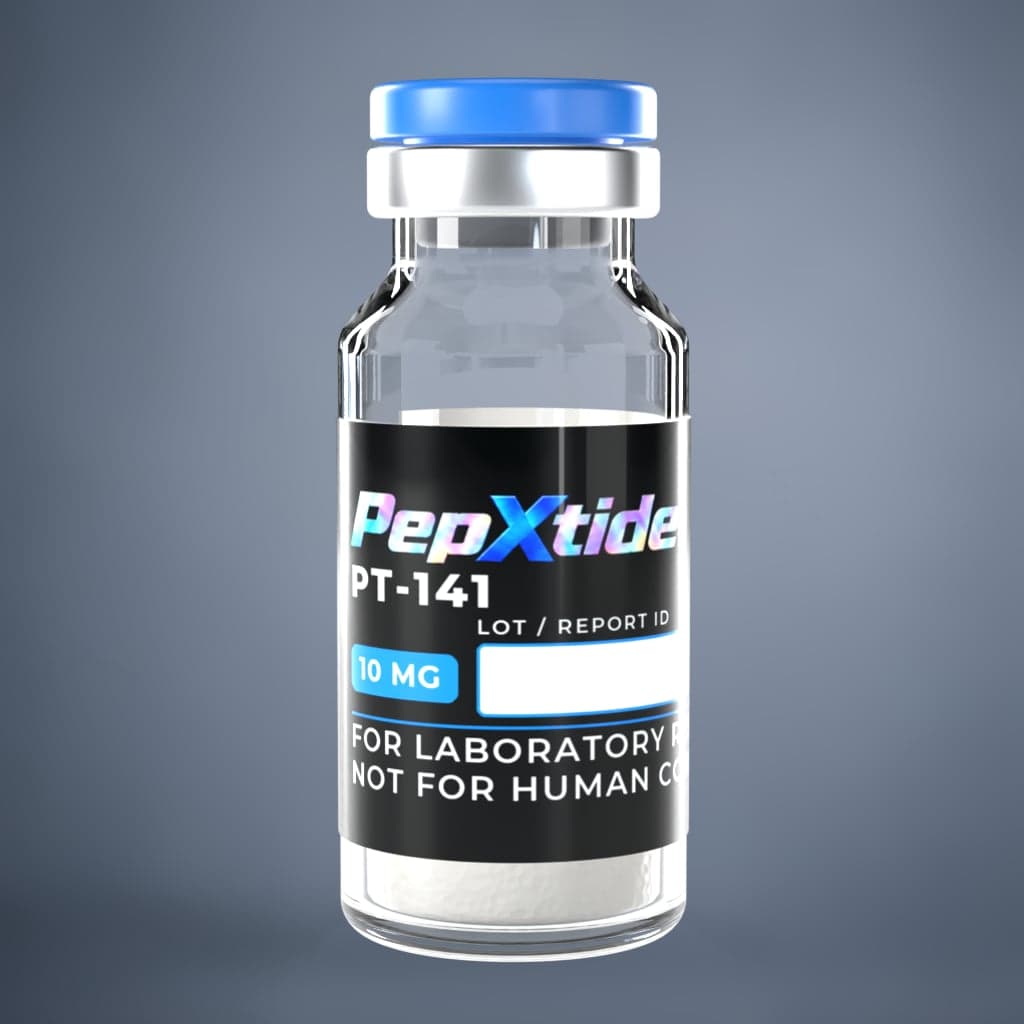
10mg
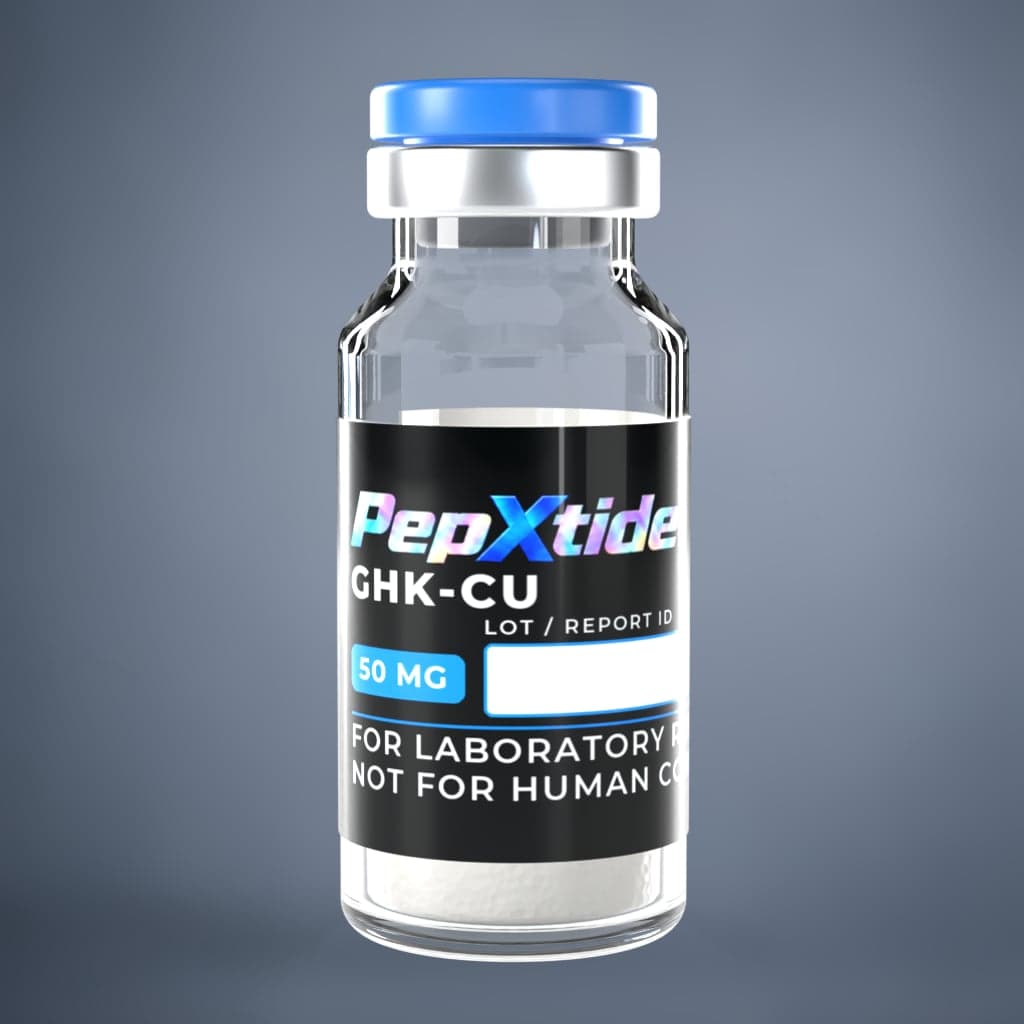
50mg
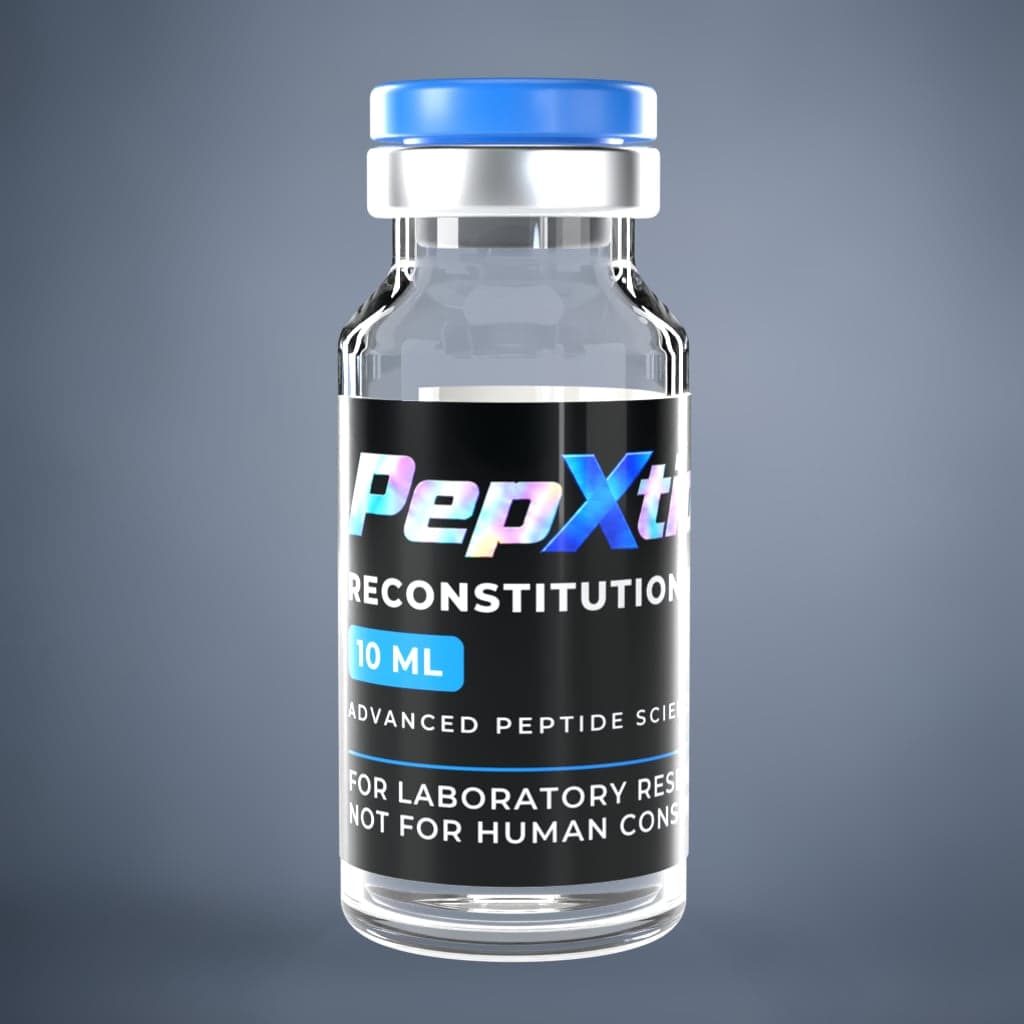
10ml
Melanocortin Research · 4 vials
Melanotan-2, PT-141 and GHK-Cu Set
Two melanocortin-class peptides at 10mg each and a copper tripeptide at 50mg, plus water.
On its own this set comes to $169.97 at checkout: $29.99 Bundle & Save is taken off there.
Melanotan-2 at 10mg, PT-141 at 10mg, GHK-Cu at 50mg and a 10ml bacteriostatic water vial. Four separate vials, four separate cart lines. Named for the compounds included in the set.
Melanotan-2 and PT-141 are melanocortin-receptor peptides (PT-141, bremelanotide, is a metabolite of Melanotan-2); GHK-Cu is a copper-binding tripeptide. Melanotan-2 and PT-141 are listed under Melanocortin Research; GHK-Cu is listed under Matrix & Cytoskeletal.
Adds 4 separate cart lines. Remove any one of them in the cart.
Supplied for in-vitro laboratory research only. Not for human or veterinary consumption, and not evaluated by the FDA. No statement on this page describes an application, benefit, dose, route or outcome. Descriptions are structural and mechanistic, and reference data such as CAS numbers and molecular formulas is published information about the compound itself, provided for identification. No measured result is shown for this strength because a certificate has not yet been published for its lot.


 10mg
 10mg
 50mg
 10ml