Research use only. This compound is supplied for in-vitro laboratory research by qualified researchers. It is not for human or veterinary consumption and has not been evaluated by the FDA.
Buy more of this strength and the price comes down. The store applies it at checkout - there is nothing to enter.
Free US shipping - no minimum
Tell us the Report ID or Laboratory ID shown on the certificate, and what you observed. If independent testing shows a discrepancy against our published certificate, we refund the lot in full and pull it from sale pending investigation.
1
$69.99each
Tell us the Report ID or Laboratory ID shown on the certificate, and what you observed. If independent testing shows a discrepancy against our published certificate, we refund the lot in full and pull it from sale pending investigation.
Certificate published
Discreet packaging
Dispatched within one business day
Free US shipping, no minimum
In stock, ships from our US fulfilment partner
Compound information
Type
Matrix & Cytoskeletal
CAS number
89030-95-5
Molecular formula
C14H22CuN6O4
Molecular weight
401.91 g/mol
Sequence
Gly-His-Lys (GHK), copper(II) complex
Form
Lyophilized powder
Vial strength
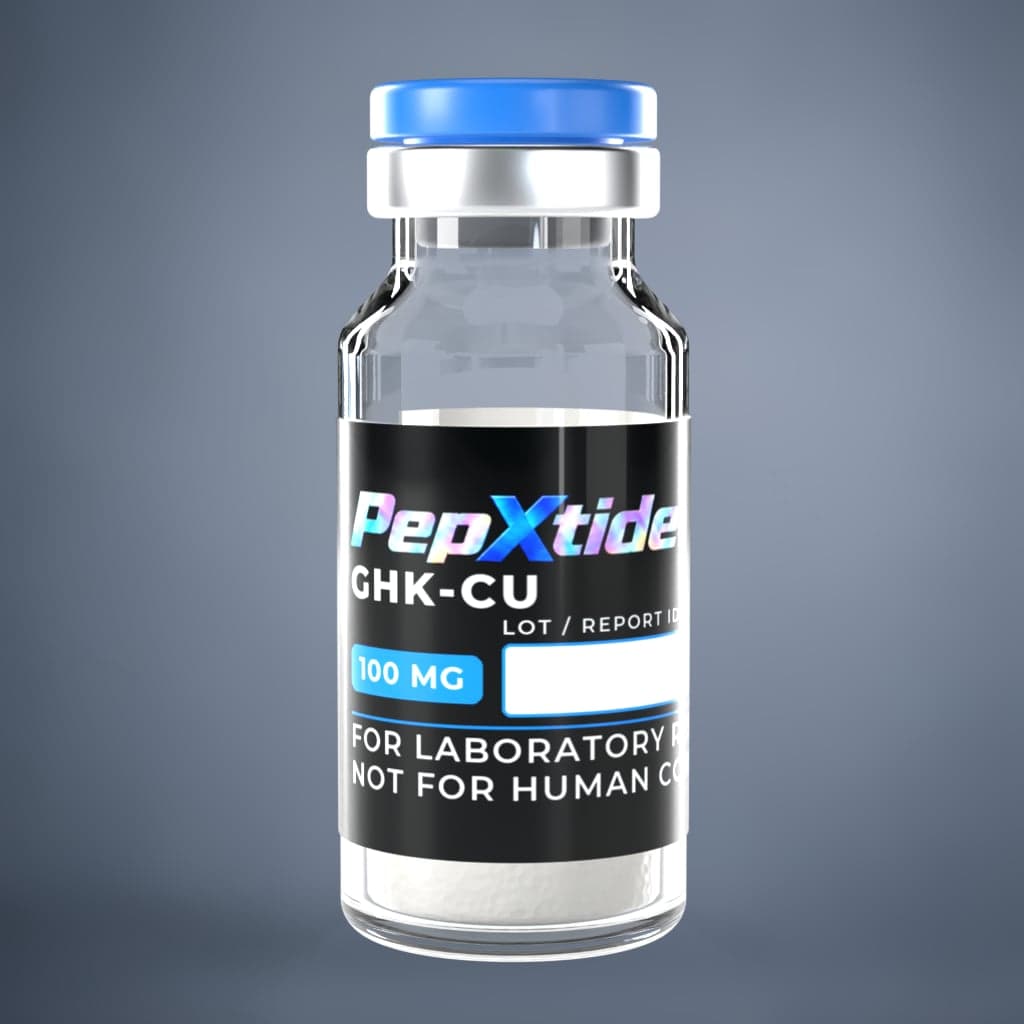
100mg
Catalogue number
PX-GHKCU-100MG
Purity
99.559% (lot KVR-2026-20675F)
Identifiers are published properties of the molecule. Values we cannot confirm are omitted rather than estimated.
GHK-Cu is the copper(II) complex of the tripeptide glycyl-L-histidyl-L-lysine, a sequence present in human plasma that binds copper with high affinity. In the PepXtide structural library the copper is shown chelated by the terminal amine, the backbone amide nitrogen and the histidine imidazole, with the metal relaxed to sit about 2 angstroms from each donor.
The uncomplexed GHK tripeptide is a distinct substance, C14H24N6O4 at 340.38 g/mol under CAS 49557-75-7. This listing is the copper complex.
The tripeptide was isolated from human serum by Pickart and Thaler and reported in Nature New Biology in 1973, with the sequence assigned in 1977. Its association with copper came seven years after the isolation, in a 1980 Nature paper reporting co-isolation with roughly equimolar copper and formation of a copper(II) complex. A related tripeptide motif occurs within the alpha-2 chain of type I collagen and within the protein SPARC, which has been proposed as a proteolytic origin for the circulating peptide.
The coordination geometry is well characterised and is what the structural model shows. In solution the complex is monomeric with three equatorial nitrogen donors: the glycine alpha-amino nitrogen, the deprotonated glycyl-histidyl amide nitrogen, and the histidine imidazole nitrogen. The fourth equatorial position is labile and is occupied by a carboxylate oxygen in the solid state but readily exchanges, forming ternary complexes with free amino acids such as histidine. The lysine side-chain amine takes no part in coordination at physiological pH, remaining protonated, and participates only under alkaline conditions. In the solid state the complex is dimeric.
No cell-surface receptor is established for this compound, and the molecular account is coordination chemistry and copper delivery rather than receptor pharmacology. One in-vitro result is unusually informative for distinguishing the complex from the free peptide: in human dermal fibroblast culture the complex raised matrix metalloproteinase-2 and the secretion of its tissue inhibitors TIMP-1 and TIMP-2, an effect reproduced by copper ions alone but not by copper-free tripeptide. Collagen-synthesis measurements in fibroblast culture report onset between picomolar and low picomolar concentrations with a maximum near one nanomolar. A widely cited broad gene-expression analysis should be read with its basis in mind: it profiled the peptide in only two cell lines.
Stability data are good for a metal complex. The compound is highly hydrophilic, with a distribution coefficient between about -2.4 and -2.5 across pH 4.5 to 7.4, and has been reported stable in water and in buffer over that pH range for at least two weeks at 60 degrees Celsius. It degrades under basic and oxidative stress by first-order kinetics, with three degradants resolved by HPLC-MS, one of them free histidine. Characterisation methods in the literature include single-crystal X-ray diffraction, electron paramagnetic resonance, X-ray absorption spectroscopy confirming copper(II) in a one-to-one complex, potentiometry and cyclic voltammetry, the last showing a copper(II) to copper(I) reduction accompanied by release of the metal.
One caution on specifications, because the public records genuinely conflict. Both one-to-one and two-to-one peptide-to-copper species are registered, with different formulae, different masses and different registry numbers, and charge states differ between records again. The figures published on this page are for the one-to-one complex under the registry number used for copper tripeptide-1. A certificate quoting a different stoichiometry is describing a different species, not a different measurement of this one.
Background
GHK-Cu is the copper(II) complex of glycyl-L-histidyl-L-lysine, a tripeptide isolated from human serum by Pickart and Thaler in 1973 and shown in 1980 to co-isolate with copper. In solution the metal is held in a monomeric complex by three equatorial nitrogen donors (the glycine amine, the deprotonated Gly-His amide and the histidine imidazole), with a labile fourth site; the solid form is dimeric. No cell-surface receptor is established, and the molecular account rests on coordination chemistry and copper delivery.
Research applications
Where this compound appears in the published literature. Each area points to the papers listed under Primary literature below. These describe what was studied, not an application of this product.
Matrix & Signalling Research
Examined in a 2025 Bioimpacts review of GHK in extracellular-matrix research, which sets out advantages, problems and prospects for the peptide.[1]
Gene-expression and cellular-pathway reviews
Reported in two reviews, a 2015 Biomed Research International paper on cellular pathways and a 2018 International Journal of Molecular Sciences paper interpreting gene-expression data.[3][2]
Published research
Studied in a 2015 rat model of anterior cruciate ligament reconstruction, reported in the Journal of Orthopaedic Research.[4]
Biomaterials
Investigated in a 2025 biomaterials study loading the complex into a hydroxyapatite microsphere formulation and examining inflammatory and oxidative markers.[5]
Specifications
Supplied as
Lyophilized powder
Available strengths
100mg · 50mg
CAS number
89030-95-5
Molecular formula
C14H22CuN6O4
Storage
Store lyophilized at -20C, protected from light and moisture.
Intended use
In-vitro laboratory research only
Research overview
Copper tripeptide (Gly-His-Lys)
A tripeptide present in human plasma that binds copper(II) with high affinity. The copper is shown chelated by the terminal amine, the backbone amide nitrogen and the histidine imidazole - the metal position was relaxed to sit about 2 A from each donor.
Residues
3
Atoms
50
Primary literature
Peer-reviewed papers indexed on PubMed that study this compound. We did not write them and we do not summarise them — each reference opens the record on PubMed so you can read the work itself. Publication is not evidence of safety or efficacy, and none of this research was conducted by PepXtide.
The list above is a selection, not the whole literature. These open the public databases themselves, each one confirmed to return results on 29 August 2026.
PubMed, PubChem and ClinicalTrials.gov are independent scientific databases. A record or a published paper is not an endorsement of this product, and nothing indexed there describes an application, dose or outcome supported by PepXtide.
Storage & handling
Lyophilized
Store lyophilized at -20C, protected from light and moisture. The copper(II) centre is redox-active and can be reduced to copper(I) with release of the metal, and the complex is reported to degrade under basic and oxidative conditions, so keep solutions near neutral to mildly acidic pH and away from reducing agents and strong oxidants.
Reconstituted
Once reconstituted, keep refrigerated and use within the working period established by the laboratory.
Handling notes
Store the lyophilized material at -20C, protected from light and moisture.
The copper(II) centre is redox-active and can be reduced to copper(I) with release of the metal, so keep solutions away from reducing agents and strong oxidants.
The complex degrades under basic and oxidative conditions; keep solutions near neutral to mildly acidic pH.
Once reconstituted, keep refrigerated and use within the working period established by the laboratory.
Safety & handling
Bench handling, not a dosing guide.
Intended use
Supplied strictly as a laboratory research material for in-vitro study by qualified researchers. Not for human or veterinary use, not for ingestion or injection, and not for any clinical or diagnostic application.
Personal protective equipment
Handle with gloves, eye protection and a laboratory coat. Weigh and transfer lyophilized powder in a ventilated enclosure to avoid generating an inhalable dust.
Reconstitution
Reconstitute against the diluent and volume appropriate to your protocol, adding solvent slowly down the vial wall rather than directly onto the pellet. Do not shake. This is a handling note, not a dosing guide.
Storage after opening
Once reconstituted, refrigerate and use within the period appropriate to the material. Avoid repeated freeze-thaw cycles, which degrade peptides faster than continuous storage at the listed temperature.
Disposal
Dispose of material and containers in accordance with your institution's chemical waste procedures and applicable local regulations.
Also sold as part of these sets
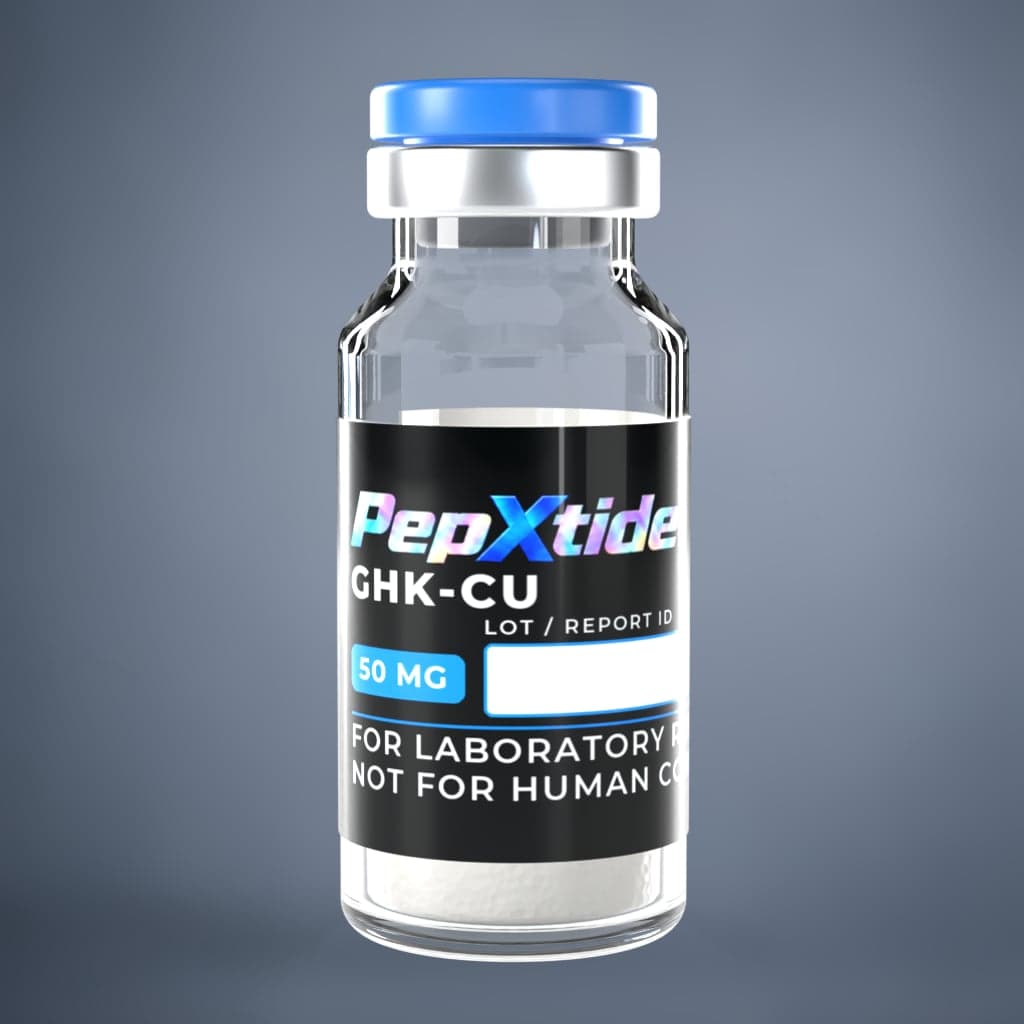
50mg
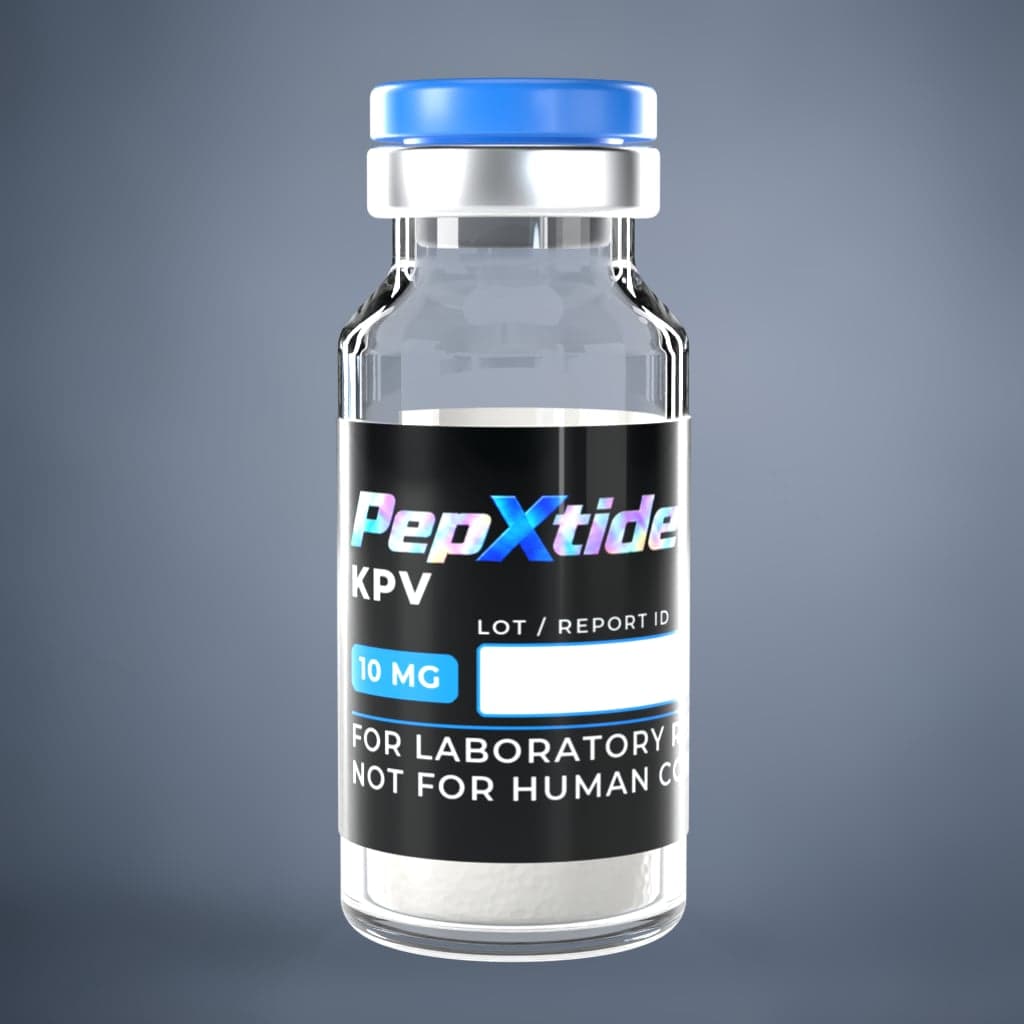
10mg
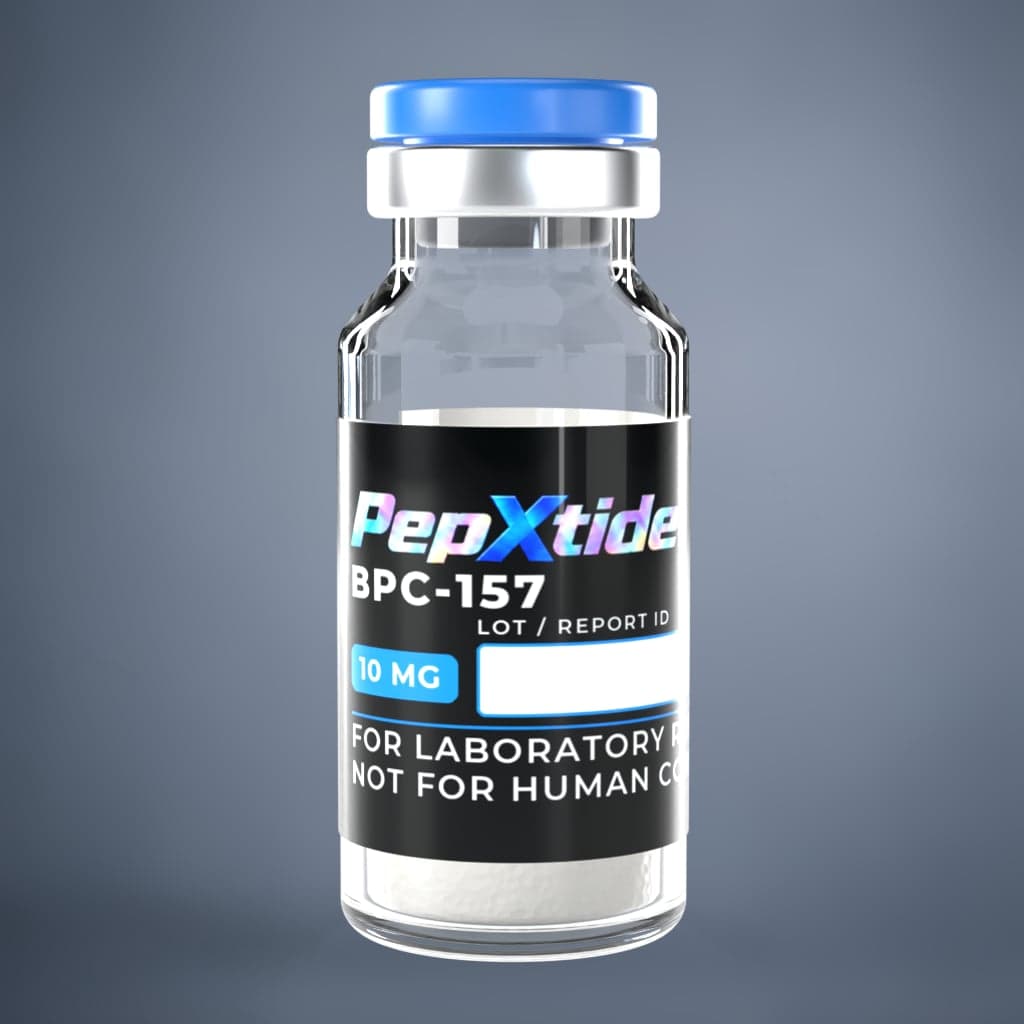
10mg
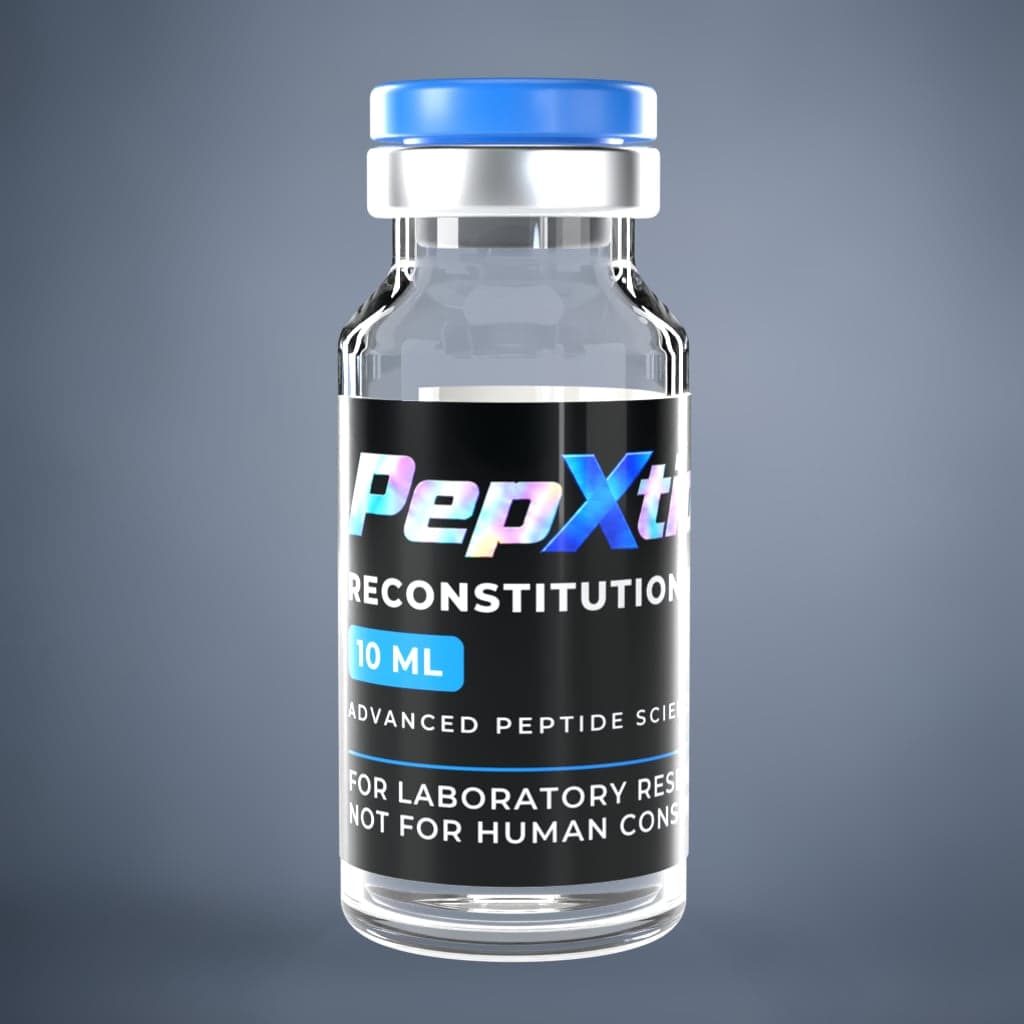
10ml
Matrix & Cytoskeletal · 4 vials
GHK-Cu, KPV and BPC-157 Set
A copper tripeptide at 50mg, a tripeptide fragment at 10mg and a 15-residue peptide at 10mg, plus water.
On its own this set comes to $161.47 at checkout: $28.49 Bundle & Save is taken off there.
GHK-Cu at 50mg, KPV at 10mg, BPC-157 at 10mg and a 10ml bacteriostatic water vial, added as four separate cart lines. The set exists to save you four trips through the catalogue, not to change what is in the box: each vial is the same item, same lot and same certificate status as the one on its own page.
GHK-Cu is a copper-binding tripeptide, KPV a three-residue fragment and BPC-157 a 15-residue peptide. All three are single compounds that the catalogue's KLOW blend also contains.
Adds 4 separate cart lines. Remove any one of them in the cart.
100mg
70mg
10mg
10ml
Matrix & Cytoskeletal · 4 vials
GHK-Cu 100mg, GLOW and KPV Set
The larger GHK-Cu vial alongside the blended GLOW vial and KPV at 10mg, plus water.
On its own this set comes to $229.47 at checkout: $40.49 Bundle & Save is taken off there.
GHK-Cu at 100mg, GLOW at 70mg, KPV at 10mg and a 10ml bacteriostatic water vial. Worth reading each product page before ordering: GLOW arrives as a manufacturer blend while GHK-Cu and KPV are single compounds, so their certificates describe different things.
GLOW is a pre-blended vial supplied by the manufacturer; GHK-Cu here is the single-compound 100mg vial and KPV a single-compound tripeptide fragment. GHK-Cu, GLOW and KPV are listed under Matrix & Cytoskeletal.
Adds 4 separate cart lines. Remove any one of them in the cart.
10mg
10mg
50mg
10ml
Melanocortin Research · 4 vials
Melanotan-2, PT-141 and GHK-Cu Set
Two melanocortin-class peptides at 10mg each and a copper tripeptide at 50mg, plus water.
On its own this set comes to $169.97 at checkout: $29.99 Bundle & Save is taken off there.
Melanotan-2 at 10mg, PT-141 at 10mg, GHK-Cu at 50mg and a 10ml bacteriostatic water vial. Four separate vials, four separate cart lines. Named for the compounds included in the set.
Melanotan-2 and PT-141 are melanocortin-receptor peptides (PT-141, bremelanotide, is a metabolite of Melanotan-2); GHK-Cu is a copper-binding tripeptide. Melanotan-2 and PT-141 are listed under Melanocortin Research; GHK-Cu is listed under Matrix & Cytoskeletal.
Adds 4 separate cart lines. Remove any one of them in the cart.
Studied in matrix and copper-transport research. Supplied as a lyophilized powder for in-vitro laboratory research only. No statement on this page describes an application, benefit, dose, route or outcome. Descriptions are structural and mechanistic, and reference data such as CAS numbers and molecular formulas is published information about the compound itself, provided for identification. The measured result shown above is for report KVR-2026-20675F and is not averaged across the product line.


 50mg
 10mg
 10mg
 10ml