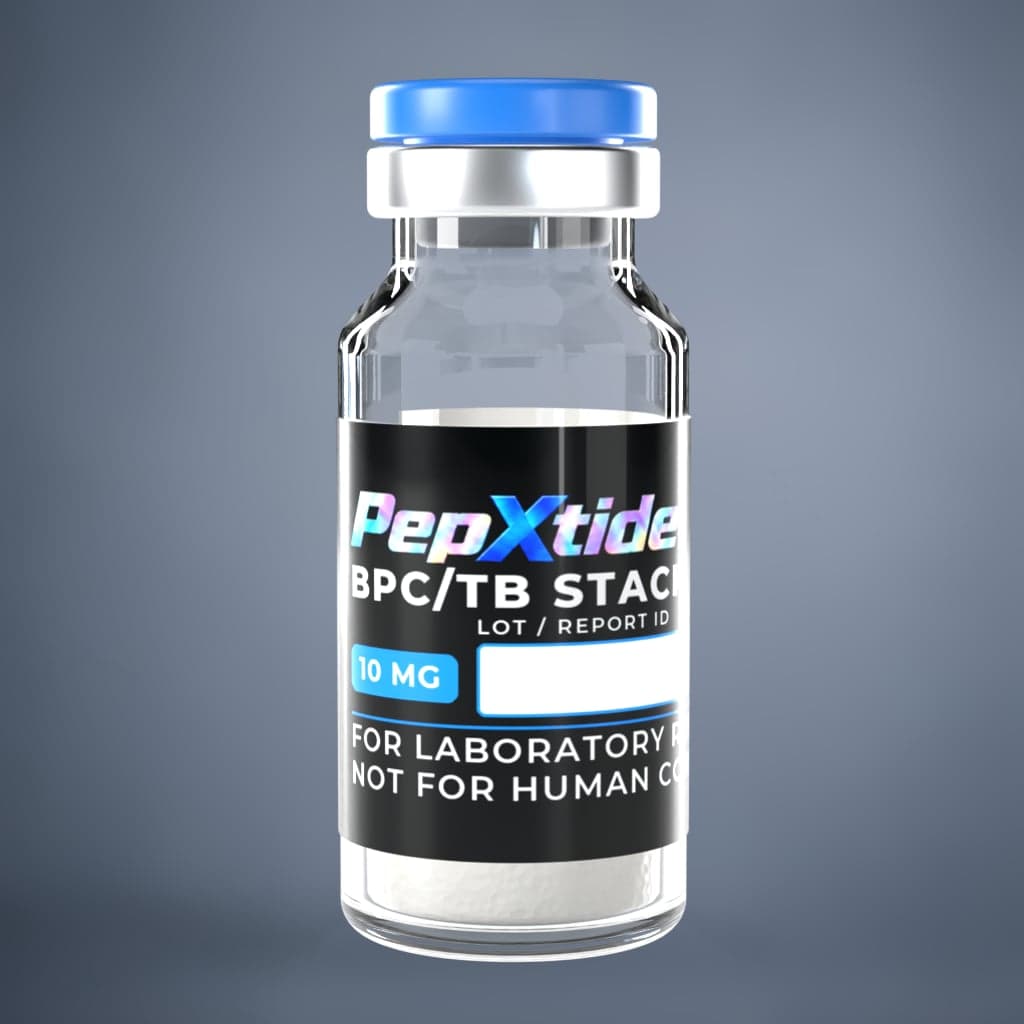
Research use only. This compound is supplied for in-vitro laboratory research by qualified researchers. It is not for human or veterinary consumption and has not been evaluated by the FDA.
Buy more of this strength and the price comes down. The store applies it at checkout - there is nothing to enter.
Free US shipping - no minimum
Tell us the Report ID or Laboratory ID shown on the certificate, and what you observed. If independent testing shows a discrepancy against our published certificate, we refund the lot in full and pull it from sale pending investigation.
1
$69.99each
Tell us the Report ID or Laboratory ID shown on the certificate, and what you observed. If independent testing shows a discrepancy against our published certificate, we refund the lot in full and pull it from sale pending investigation.
Lab report available on request
Discreet packaging
Dispatched within one business day
Free US shipping, no minimum
In stock, ships from our US fulfilment partner
Compound information
Type
Matrix & Cytoskeletal
CAS number
885340-08-9
Molecular formula
C38H68N10O14
Molecular weight
889.02 g/mol
Sequence
Ac-Leu-Lys-Lys-Thr-Glu-Thr-Gln (Ac-LKKTETQ)
Form
Lyophilized powder
Vial strength
10mg
Catalogue number
PX-TB500-10MG
Identifiers are published properties of the molecule. Values we cannot confirm are omitted rather than estimated.
TB-500 is the N-acetylated seven-residue actin-binding fragment of thymosin beta-4, covering residues 17 to 23 of the parent protein. In thymosin beta-4 itself this stretch forms the contact surface for monomeric actin.
Worth being precise about, because the name is used loosely in the trade: TB-500 is the heptapeptide, not full-length thymosin beta-4. The full protein is 43 residues with a molecular weight of roughly 4,963 g/mol, more than five times the mass. What is supplied here is the fragment.
The parent protein is the product of the human TMSB4X gene. Its numbering deserves a note, because two conventions are in circulation: the database entry carries an initiator methionine and numbers the LKKTETQ stretch 18 to 24, while the mature protein, from which that methionine is removed and whose new N-terminal serine is acetylated, numbers the same residues 17 to 23. The catalogue uses mature-protein numbering, which is the convention the analytical literature on this fragment follows.
Chemically the fragment is Ac-Leu-Lys-Lys-Thr-Glu-Thr-Gln, acetylated at the N-terminus and carried as the free acid at the C-terminus. It is strongly hydrophilic and, like BPC-157, contains no cysteine, methionine or tryptophan, so there is no oxidation-prone residue and no aromatic chromophore for absorbance-based quantitation.
Full-length thymosin beta-4 binds monomeric G-actin in a one-to-one complex and inhibits its polymerisation, and the LKKTET motif within this fragment is the principal actin contact. Mutagenesis of the leucine and lysine residues of that motif reduces actin binding severely and abolishes the inhibition of polymerisation, which is the experimental basis for treating the heptapeptide as the functional minimum. No cell-surface receptor for the fragment itself has been identified; the described interaction is intracellular and is with actin.
The compound is used in cell-based migration and scratch assays, endothelial migration and adhesion assays, and vessel-sprouting preparations. Its metabolism has been mapped by UHPLC coupled to high-resolution Orbitrap mass spectrometry, which identifies the truncated fragments Ac-LK and Ac-LKK as the principal products; sensitive detection in biological matrices is routinely done by LC-MS after ion-exchange solid-phase extraction, with reported detection limits in the tens of picograms per millilitre. Those truncations are the practical stability concern in any matrix containing peptidase activity.
Background
TB-500 is the N-acetylated heptapeptide Ac-LKKTETQ, residues 17 to 23 of mature thymosin beta-4, the stretch that forms the parent protein's contact surface for monomeric actin. It is the fragment, not the 43-residue full-length protein. Mutagenesis of the LKKTET motif abolishes the parent's inhibition of actin polymerisation, which is the basis for regarding the heptapeptide as the functional minimum; no cell-surface receptor for the fragment has been identified.
Research applications
Where this compound appears in the published literature. Each area points to the papers listed under Primary literature below. These describe what was studied, not an application of this product.
Actin regulation
Studied in actin-regulation research on the parent protein, thymosin beta-4, reviewed in 2018 in the context of sepsis. The curated papers concern full-length thymosin beta-4, not this fragment.[2]
Cardiac and hepatic research
Reported in two 2016 Vitamins and Hormones reviews on the parent protein, one on thymosin beta-4 in the heart and one on its possible regulation of hepatic stellate cells.[4][5]
Published research
Reported in reviews of the parent protein: a 2018 account of thymosin beta-4 research in the eye, and a 2023 review of regenerative research directions in International Immunopharmacology.[3][1]
Specifications
Supplied as
Lyophilized powder
Available strengths
10mg · 20mg
CAS number
885340-08-9
Molecular formula
C38H68N10O14
Storage
Store lyophilized at -20C, protected from light and moisture.
Intended use
In-vitro laboratory research only
Research overview
Thymosin beta-4 fragment (17-23)
The seven-residue actin-binding stretch of thymosin beta-4, N-terminally acetylated. Studied alongside BPC-157 in actin-binding and cell-migration research.
Residues
7
Atoms
126
Primary literature
Peer-reviewed papers indexed on PubMed that study this compound. We did not write them and we do not summarise them — each reference opens the record on PubMed so you can read the work itself. Publication is not evidence of safety or efficacy, and none of this research was conducted by PepXtide.
The list above is a selection, not the whole literature. These open the public databases themselves, each one confirmed to return results on 29 August 2026.
PubMed, PubChem and ClinicalTrials.gov are independent scientific databases. A record or a published paper is not an endorsement of this product, and nothing indexed there describes an application, dose or outcome supported by PepXtide.
Storage & handling
Lyophilized
Store lyophilized at -20C, protected from light and moisture. The peptide carries no oxidation-prone side chain, and the documented degradation route is exopeptidase truncation from the C-terminal end rather than chemical breakdown.
Reconstituted
Once reconstituted, keep refrigerated and use within the working period established by the laboratory, and avoid holding it in matrices with peptidase activity for longer than the experiment requires.
Handling notes
Store the lyophilized powder at -20C, protected from light and moisture.
No cysteine, methionine or tryptophan, so there is no oxidation-prone residue and no aromatic chromophore for absorbance-based quantitation.
The documented degradation route is exopeptidase truncation to Ac-LK and Ac-LKK rather than chemical breakdown.
Once reconstituted, keep refrigerated, and avoid holding it in matrices with peptidase activity longer than the experiment requires.
Safety & handling
Bench handling, not a dosing guide.
Intended use
Supplied strictly as a laboratory research material for in-vitro study by qualified researchers. Not for human or veterinary use, not for ingestion or injection, and not for any clinical or diagnostic application.
Personal protective equipment
Handle with gloves, eye protection and a laboratory coat. Weigh and transfer lyophilized powder in a ventilated enclosure to avoid generating an inhalable dust.
Reconstitution
Reconstitute against the diluent and volume appropriate to your protocol, adding solvent slowly down the vial wall rather than directly onto the pellet. Do not shake. This is a handling note, not a dosing guide.
Storage after opening
Once reconstituted, refrigerate and use within the period appropriate to the material. Avoid repeated freeze-thaw cycles, which degrade peptides faster than continuous storage at the listed temperature.
Disposal
Dispose of material and containers in accordance with your institution's chemical waste procedures and applicable local regulations.
Also sold as part of a set
10mg
10mg
10mg
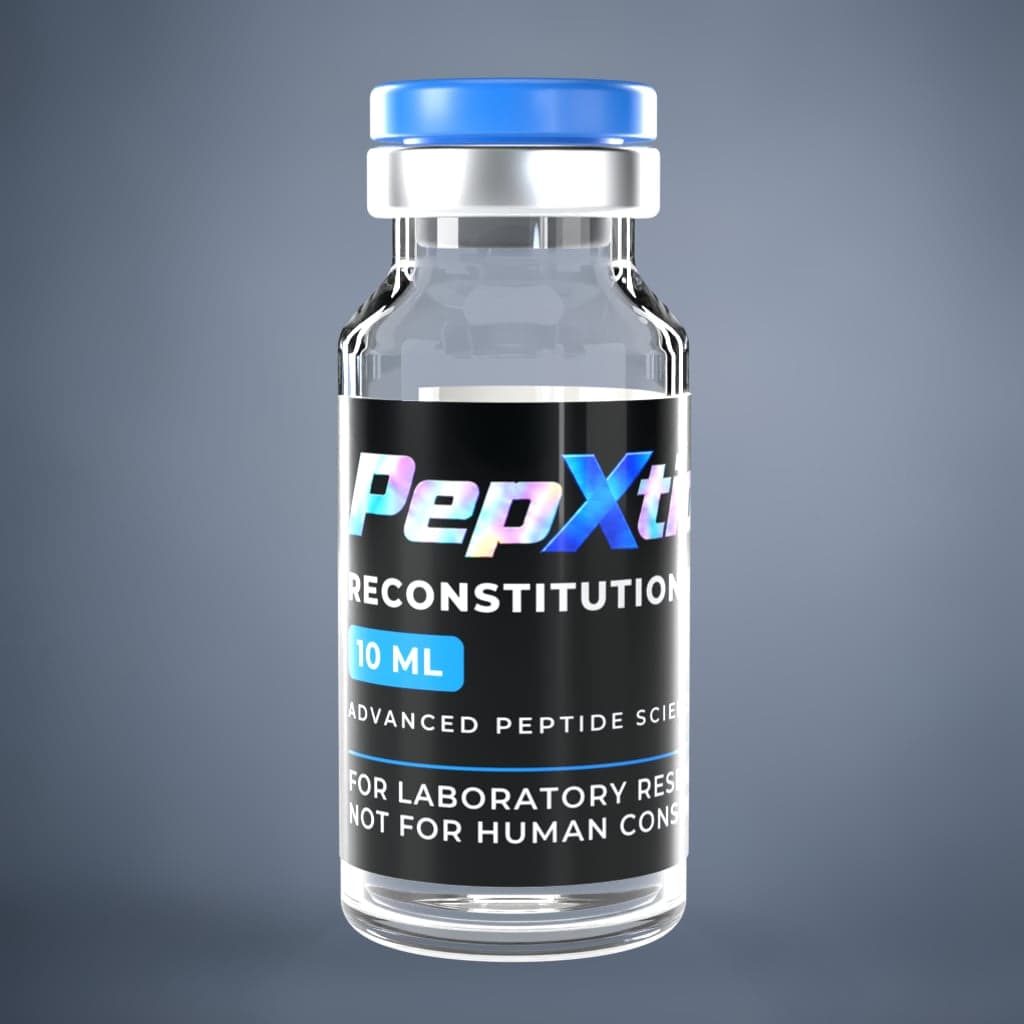
10ml
Matrix & Cytoskeletal · 4 vials
BPC-157, TB-500 and Thymosin Alpha 1 Set
Three peptide vials from the Matrix & Cytoskeletal category, plus the water to reconstitute them.
On its own this set comes to $212.47 at checkout: $37.49 Bundle & Save is taken off there.
Four catalogue items added in one click: BPC-157 at 10mg, TB-500 at 10mg, Thymosin Alpha 1 at 10mg and a 10ml bacteriostatic water vial. Nothing is pre-mixed, blended or compounded for this set. Each vial arrives exactly as it would if you added it from its own product page, with its own certificate status.
BPC-157 is a 15-residue peptide, TB-500 a synthetic peptide and Thymosin Alpha 1 a 28-residue acetylated peptide; all three are listed in this catalogue's Matrix & Cytoskeletal category.
Adds 4 separate cart lines. Remove any one of them in the cart.
Supplied as a lyophilized powder for in-vitro laboratory research only. No statement on this page describes an application, benefit, dose, route or outcome. Descriptions are structural and mechanistic, and reference data such as CAS numbers and molecular formulas is published information about the compound itself, provided for identification. Lab report available on request.


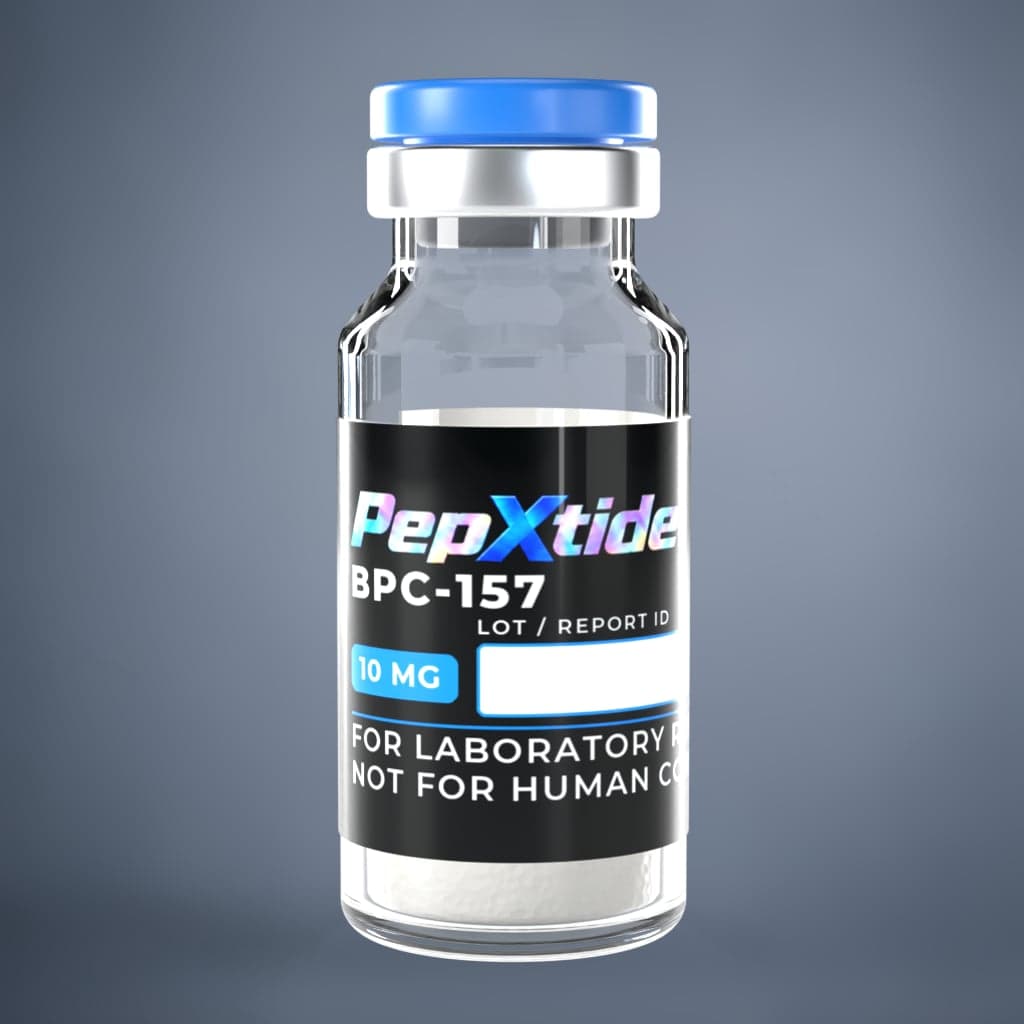 10mg
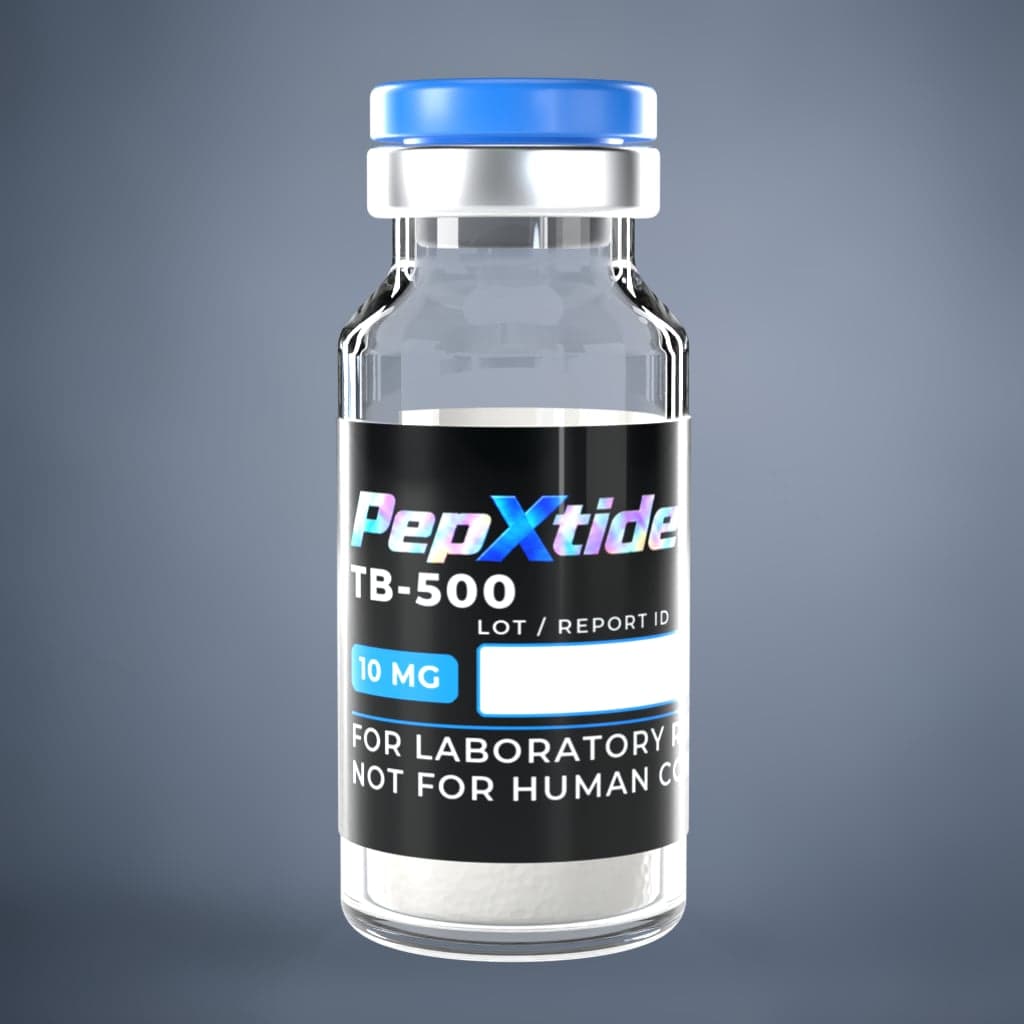 10mg
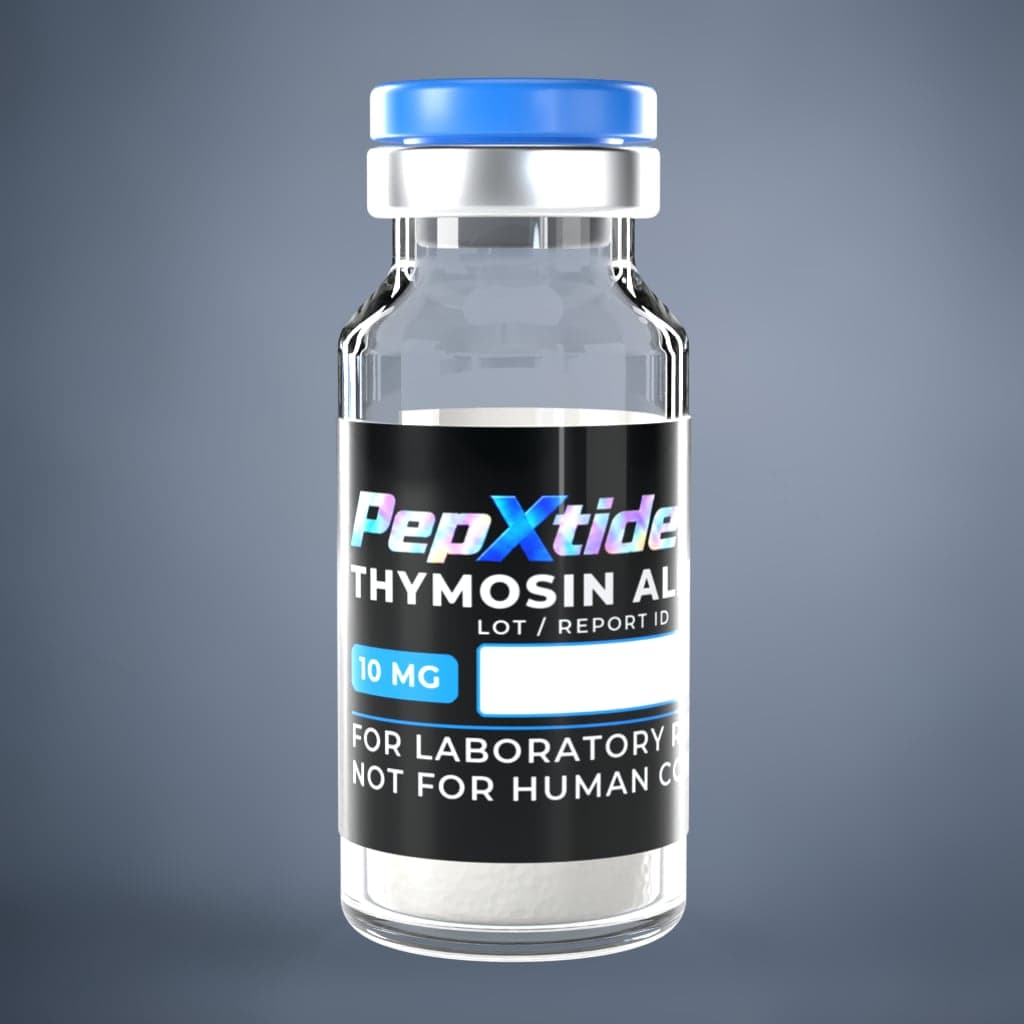 10mg
 10ml