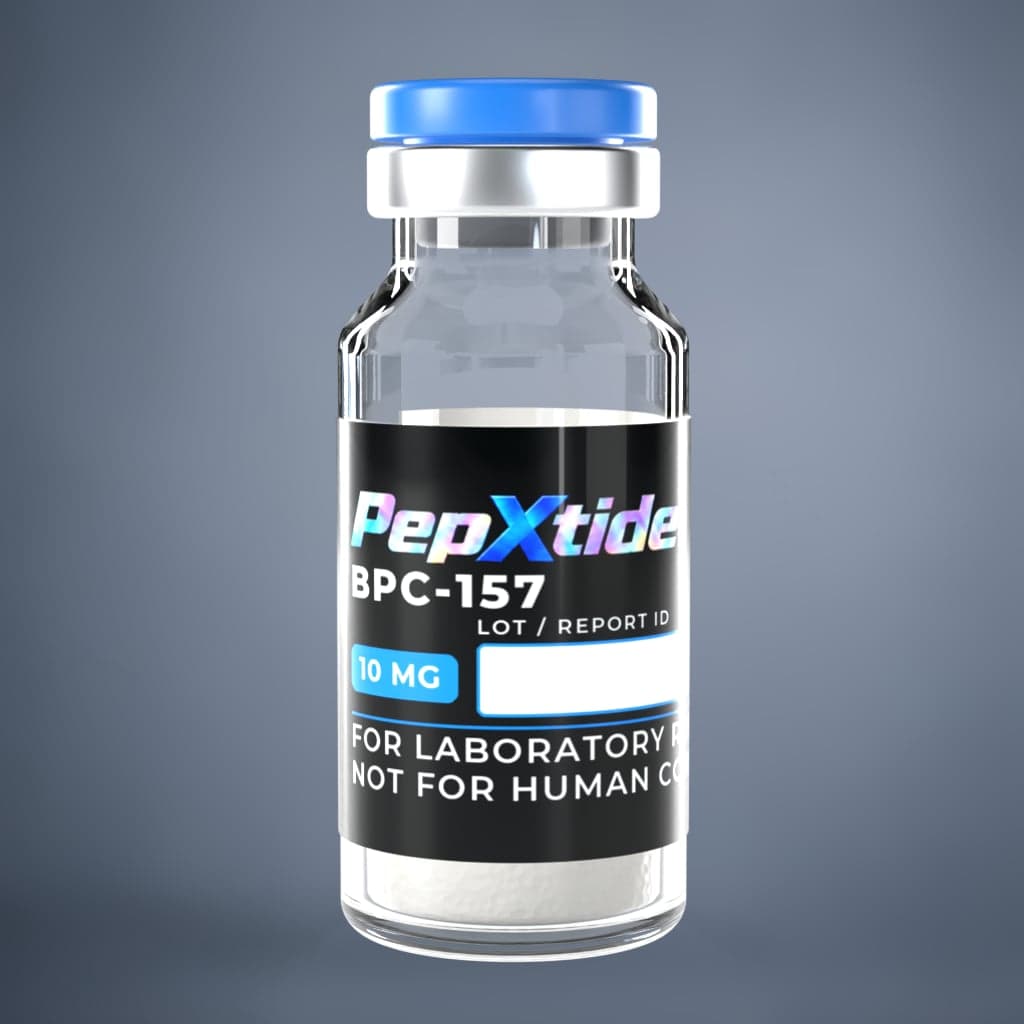
Research use only. This compound is supplied for in-vitro laboratory research by qualified researchers. It is not for human or veterinary consumption and has not been evaluated by the FDA.
Buy more of this strength and the price comes down. The store applies it at checkout - there is nothing to enter.
Free US shipping - no minimum
Tell us the Report ID or Laboratory ID shown on the certificate, and what you observed. If independent testing shows a discrepancy against our published certificate, we refund the lot in full and pull it from sale pending investigation.
1
$59.99each
Tell us the Report ID or Laboratory ID shown on the certificate, and what you observed. If independent testing shows a discrepancy against our published certificate, we refund the lot in full and pull it from sale pending investigation.
Identifiers are published properties of the molecule. Values we cannot confirm are omitted rather than estimated.
BPC-157, or Body Protection Compound 157, is a synthetic pentadecapeptide corresponding to a partial sequence of a protein found in human gastric juice. Its fifteen residues include a proline-rich central region, which is why the backbone is modelled in a polyproline-II conformation in the PepXtide structural library.
The parent material is a roughly 40 kDa protein described from human gastric juice by Sikiric and colleagues in the early 1990s, and the fifteen-residue stretch supplied here is the fragment that the subsequent literature is built on. The sequence is Gly-Glu-Pro-Pro-Pro-Gly-Lys-Pro-Ala-Asp-Asp-Ala-Gly-Leu-Val, carried as the free acid with no acetylation, amidation, disulfide or other terminal modification.
Three consecutive prolines at positions three to five dominate the conformation. Proline cannot donate a backbone hydrogen bond and its ring restricts the phi angle, so the central region resists folding into a regular helix and is modelled instead as a polyproline-II ribbon. The composition is also worth reading for what it lacks: there is no cysteine, methionine or tryptophan, so the molecule has no oxidation-prone side chain, and no tyrosine or phenylalanine either, which means there is no aromatic chromophore and concentration cannot be determined by absorbance at 280 nm. A colorimetric assay or a mass-based method is required instead.
The reported molecular targets are signalling proteins rather than a dedicated receptor; no BPC-157 receptor has been identified. In cultured endothelial cells the peptide has been reported to raise VEGFR2 (KDR) transcript and protein and to promote receptor internalisation, with downstream Akt and eNOS activation, an effect abolished by the endocytosis inhibitor dynasore; a separate VEGF-independent route through Src and caveolin-1 to eNOS has also been described. In cultured rat tendon fibroblasts the peptide has been reported to increase phosphorylation of focal adhesion kinase and paxillin without changing total protein, and to raise growth hormone receptor transcript and protein in the same cells.
Laboratory work with the compound is largely cell-based: tendon and fibroblast outgrowth and migration assays, endothelial tube-formation assays, viability and oxidative-stress survival assays, phalloidin staining of the actin cytoskeleton, and Western blotting of the kinases above. Pharmacokinetic characterisation in animal plasma uses reversed-phase LC-MS/MS with electrospray ionisation; those studies report a short elimination half-life for the intact peptide and rapid breakdown to short fragments and free amino acids, which is the practical reason assay design for this compound tends to be short-window.
Handling follows from the chemistry. The peptide is strongly hydrophilic, with a computed partition coefficient far below zero and a large polar surface area, so aqueous buffers present no solubility difficulty. With no thiol and no methionine there is no oxidation route to guard against, and the usual failure mode is instead adsorptive and hydrolytic loss in dilute solution. A review published in 2026 notes that formal pharmaceutical characterisation of this compound, including validated formulation and stability data, remains largely absent from the literature.
Background
BPC-157 is a synthetic fifteen-residue peptide corresponding to a partial sequence of a larger protein described from gastric juice by Sikiric and colleagues in the early 1990s. It is carried as the free acid with no terminal modification, and three consecutive prolines at positions three to five keep the central region in a polyproline-II conformation. No dedicated receptor has been identified; the published mechanistic work centres on signalling proteins in cultured endothelial cells and tendon fibroblasts.
Research applications
Where this compound appears in the published literature. Each area points to the papers listed under Primary literature below. These describe what was studied, not an application of this product.
Musculoskeletal and tendon models
Studied in preclinical tendon, ligament and muscle models, a body of work collected in two 2025 reviews from the orthopaedic literature, one of which reviews the reported preclinical findings alongside open questions about risk.[2][3]
Published research
Studied in preclinical wound and gastrointestinal-lining models, reviewed in the pharmacology literature alongside the patent record for the compound.[5][1]
Central nervous system models
Studied in preclinical central-nervous-system models, summarised in a 2022 review in Neural Regeneration Research.[4]
Specifications
Supplied as
Lyophilized powder
Available strengths
10mg · 20mg
CAS number
137525-51-0
Molecular formula
C62H98N16O22
Storage
Store lyophilized at -20C, protected from light and moisture.
Intended use
In-vitro laboratory research only
Research overview
Body Protection Compound 157
A 15-residue partial sequence derived from a protein found in human gastric juice. Studied in preclinical models for effects on connective tissue and the gastrointestinal lining. The proline-rich middle is why the backbone is modelled in a polyproline-II conformation.
Residues
15
Atoms
100
Primary literature
Peer-reviewed papers indexed on PubMed that study this compound. We did not write them and we do not summarise them — each reference opens the record on PubMed so you can read the work itself. Publication is not evidence of safety or efficacy, and none of this research was conducted by PepXtide.
The list above is a selection, not the whole literature. These open the public databases themselves, each one confirmed to return results on 29 August 2026.
PubMed, PubChem and ClinicalTrials.gov are independent scientific databases. A record or a published paper is not an endorsement of this product, and nothing indexed there describes an application, dose or outcome supported by PepXtide.
Storage & handling
Lyophilized
Store lyophilized at -20C, protected from light and moisture. The sequence contains no cysteine or methionine, so there is no oxidation-sensitive side chain, and the practical risks are moisture uptake by the lyophilized cake and adsorptive loss from dilute solutions.
Reconstituted
Once reconstituted, keep refrigerated and use within the working period established by the laboratory, avoiding repeated freeze-thaw cycles.
Handling notes
Store the lyophilized cake at -20C, protected from light and moisture.
No cysteine or methionine in the sequence, so there is no oxidation-sensitive side chain to guard against.
The practical losses are moisture uptake by the cake and adsorption from dilute solution.
No aromatic residue, so concentration cannot be read by absorbance at 280 nm; use a colorimetric or mass-based method.
Safety & handling
Bench handling, not a dosing guide.
Intended use
Supplied strictly as a laboratory research material for in-vitro study by qualified researchers. Not for human or veterinary use, not for ingestion or injection, and not for any clinical or diagnostic application.
Personal protective equipment
Handle with gloves, eye protection and a laboratory coat. Weigh and transfer lyophilized powder in a ventilated enclosure to avoid generating an inhalable dust.
Reconstitution
Reconstitute against the diluent and volume appropriate to your protocol, adding solvent slowly down the vial wall rather than directly onto the pellet. Do not shake. This is a handling note, not a dosing guide.
Storage after opening
Once reconstituted, refrigerate and use within the period appropriate to the material. Avoid repeated freeze-thaw cycles, which degrade peptides faster than continuous storage at the listed temperature.
Disposal
Dispose of material and containers in accordance with your institution's chemical waste procedures and applicable local regulations.
Also sold as part of these sets
10mg
10mg
10mg
10ml
Matrix & Cytoskeletal · 4 vials
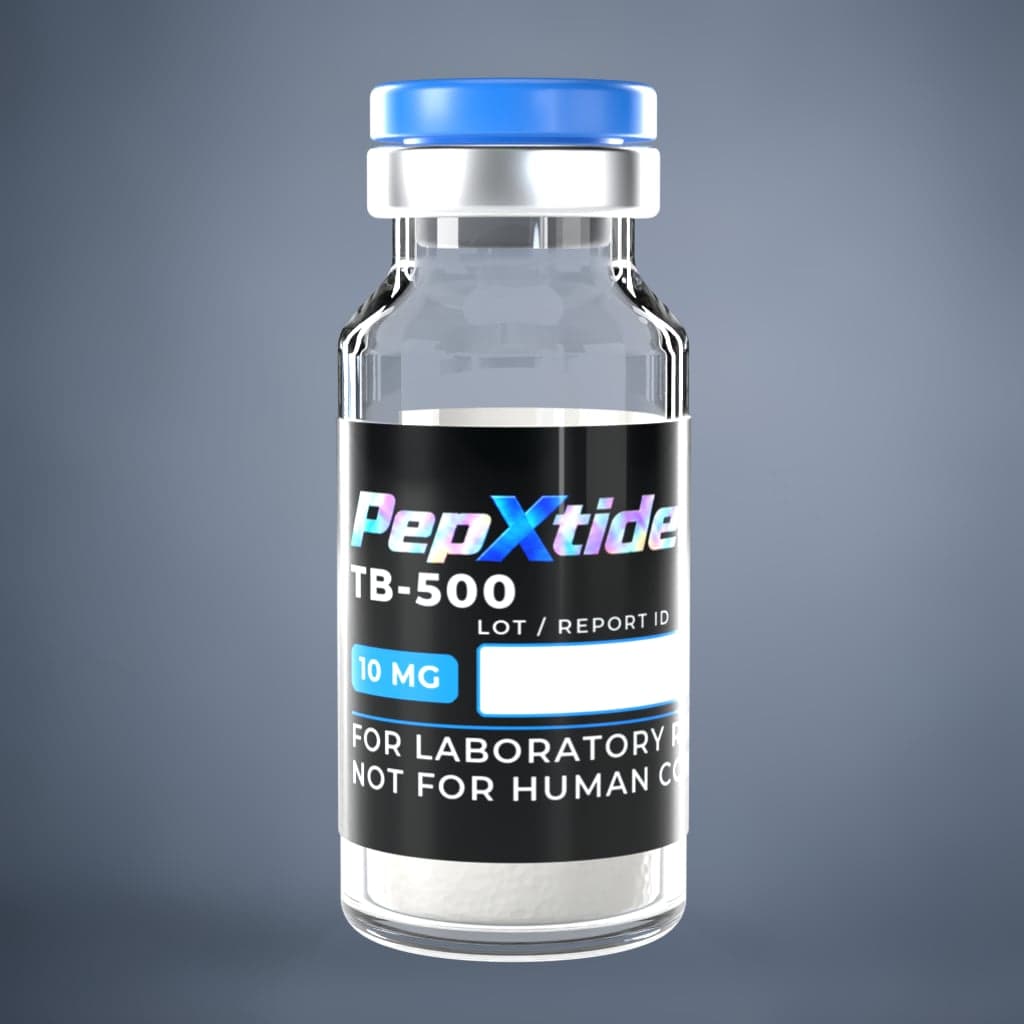
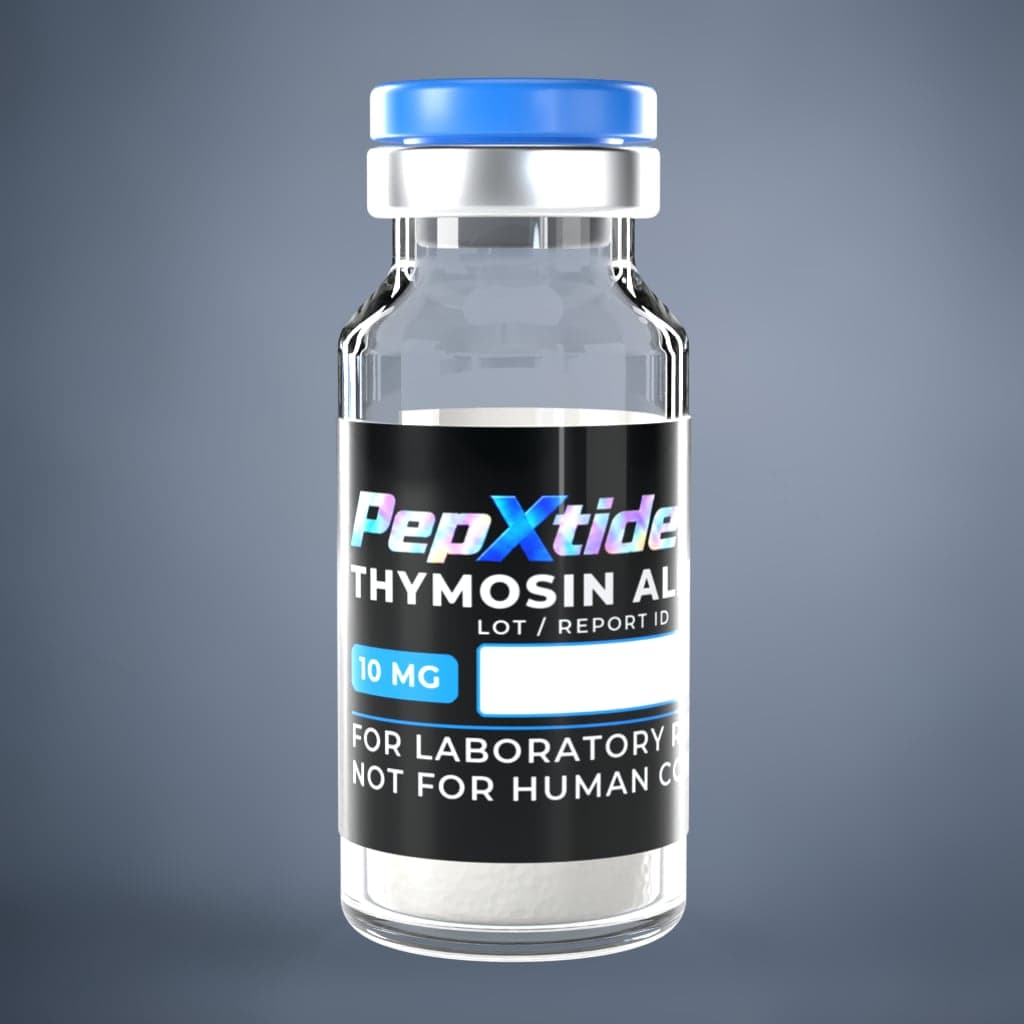
BPC-157, TB-500 and Thymosin Alpha 1 Set
Three peptide vials from the Matrix & Cytoskeletal category, plus the water to reconstitute them.
On its own this set comes to $212.47 at checkout: $37.49 Bundle & Save is taken off there.
Four catalogue items added in one click: BPC-157 at 10mg, TB-500 at 10mg, Thymosin Alpha 1 at 10mg and a 10ml bacteriostatic water vial. Nothing is pre-mixed, blended or compounded for this set. Each vial arrives exactly as it would if you added it from its own product page, with its own certificate status.
BPC-157 is a 15-residue peptide, TB-500 a synthetic peptide and Thymosin Alpha 1 a 28-residue acetylated peptide; all three are listed in this catalogue's Matrix & Cytoskeletal category.
Adds 4 separate cart lines. Remove any one of them in the cart.
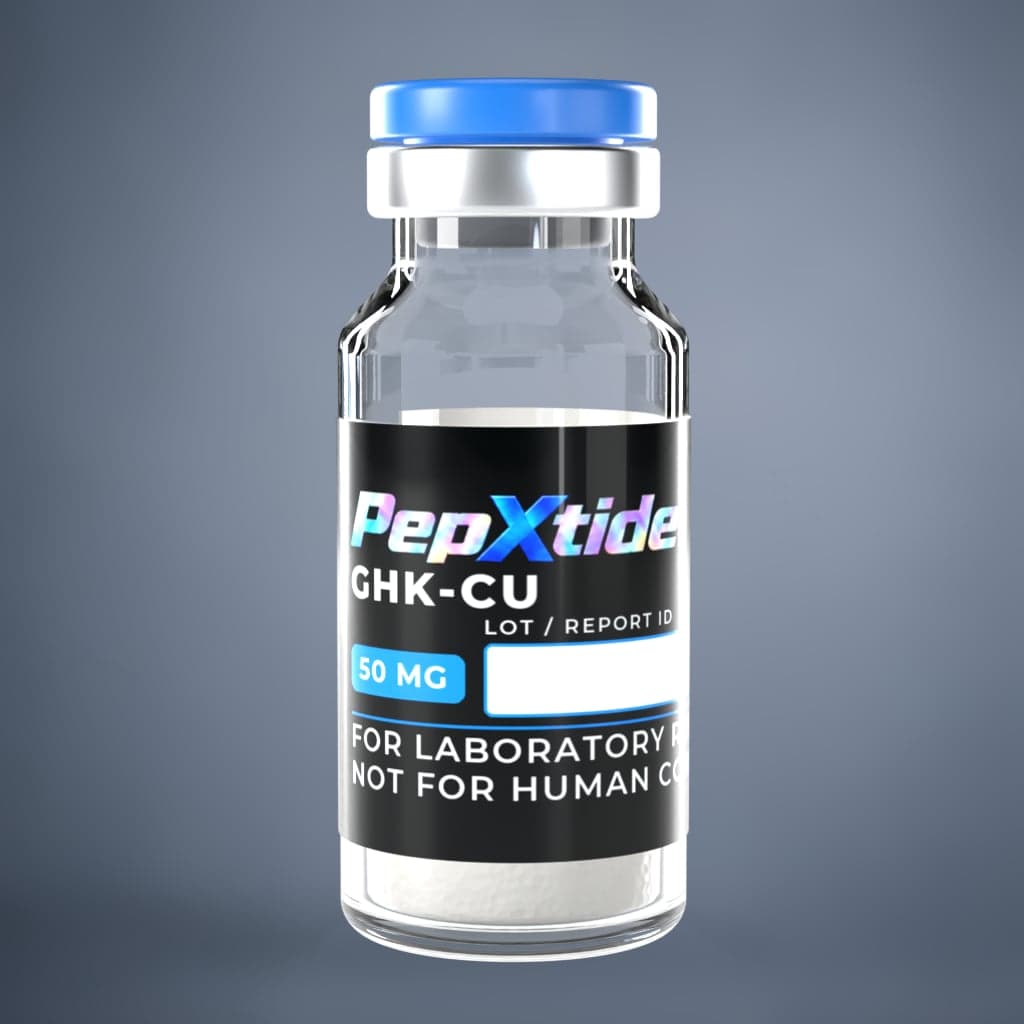
50mg
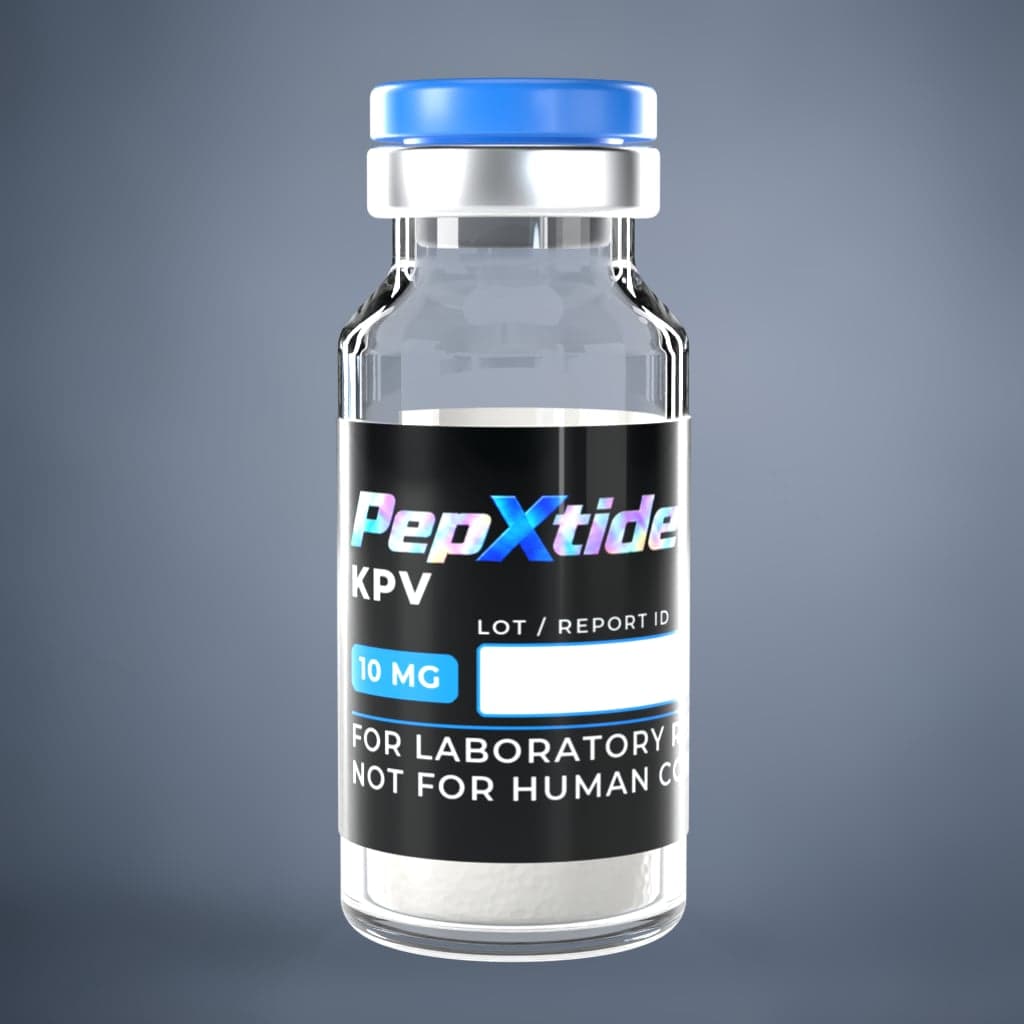
10mg
10mg
10ml
Matrix & Cytoskeletal · 4 vials
GHK-Cu, KPV and BPC-157 Set
A copper tripeptide at 50mg, a tripeptide fragment at 10mg and a 15-residue peptide at 10mg, plus water.
On its own this set comes to $161.47 at checkout: $28.49 Bundle & Save is taken off there.
GHK-Cu at 50mg, KPV at 10mg, BPC-157 at 10mg and a 10ml bacteriostatic water vial, added as four separate cart lines. The set exists to save you four trips through the catalogue, not to change what is in the box: each vial is the same item, same lot and same certificate status as the one on its own page.
GHK-Cu is a copper-binding tripeptide, KPV a three-residue fragment and BPC-157 a 15-residue peptide. All three are single compounds that the catalogue's KLOW blend also contains.
Adds 4 separate cart lines. Remove any one of them in the cart.
Supplied as a lyophilized powder for in-vitro laboratory research only. No statement on this page describes an application, benefit, dose, route or outcome. Descriptions are structural and mechanistic, and reference data such as CAS numbers and molecular formulas is published information about the compound itself, provided for identification. Lab report available on request.


 10mg
 10mg
 10mg
 10ml