Research use only. This compound is supplied for in-vitro laboratory research by qualified researchers. It is not for human or veterinary consumption and has not been evaluated by the FDA.
Buy more of this strength and the price comes down. The store applies it at checkout - there is nothing to enter.
Free US shipping - no minimum
Tell us the Report ID or Laboratory ID shown on the certificate, and what you observed. If independent testing shows a discrepancy against our published certificate, we refund the lot in full and pull it from sale pending investigation.
1
$99.99each
Tell us the Report ID or Laboratory ID shown on the certificate, and what you observed. If independent testing shows a discrepancy against our published certificate, we refund the lot in full and pull it from sale pending investigation.
Certificate published
Discreet packaging
Dispatched within one business day
Free US shipping, no minimum
In stock, ships from our US fulfilment partner
Compound information
Type
Matrix & Cytoskeletal
Molecular weight
3108.32 g/mol
Sequence
Ac-SDAAVDTSSEITTKDLKEKKEVVEEAEN
Form
Lyophilized powder
Vial strength
10mg
Catalogue number
PX-TA1-10MG
Purity
See the laboratory report V260204-18-018
Identifiers are published properties of the molecule. Values we cannot confirm are omitted rather than estimated.
A 28-residue peptide first described from thymic tissue, acetylated at the N-terminus, built entirely from standard amino acids. Drawn in the PepXtide structural library, where its computed mass matches the published molecular weight.
The peptide was isolated from calf thymus, from the preparation known as thymosin fraction 5, and sequenced by Goldstein and colleagues in 1977, who described it as a heat-stable and highly acidic 28-residue molecule. Endogenously it is not an independent gene product but the N-terminal fragment of prothymosin alpha, the 111-residue product of the PTMA gene, with the serine that becomes the new N-terminus after processing carrying the acetyl group.
The acidity is not a stylistic description but a countable property of the sequence Ac-SDAAVDTSSEITTKDLKEKKEVVEEAEN. Nine side chains are acidic against four basic ones, and the alpha-amino group is blocked by acetylation, so there is no free N-terminal positive charge to offset them. The molecule is correspondingly hydrophilic. It also contains no cysteine, methionine, tryptophan, tyrosine or phenylalanine, which means no oxidation-prone side chain, no disulfide chemistry to manage, and no aromatic chromophore, so absorbance at 280 nm cannot be used to determine concentration.
The best-supported molecular account is immunological signalling rather than a classical receptor interaction. The peptide has been reported to prime dendritic cells through Toll-like receptor 9, and to induce expression and function of indoleamine 2,3-dioxygenase in a manner requiring both TLR9 and type I interferon receptor signalling. Work on dendritic cells derived from peripheral blood mononuclear cells reports changes in co-stimulatory and checkpoint surface markers, including CD40, CD80 and TIM-3. A frequently repeated claim that the peptide signals through TLR2 is not supported by the primary sources located and is not repeated here.
Laboratory systems are accordingly immunological: human and murine dendritic cell culture, peripheral blood mononuclear cells and sorted immune subsets, and transcriptional profiling of those populations. One profiling study is worth knowing about because of its negative result, which reported minimal transcriptional change in tumour cell lines and the largest effect in activated CD8-positive T cells, indicating the response is restricted to particular cell types rather than general.
A note on identification. Several registry numbers are associated with this substance in the public databases, and secondary literature quotes both 3107 and 3108 daltons for the same 28-residue chain. The figure published on this page is the computed average mass for the acetylated free peptide. Where a certificate of analysis states a different basis, such as an acetate salt, the certificate governs.
Background
Thymosin alpha 1 is a 28-residue, N-terminally acetylated peptide isolated from calf thymus fraction 5 and sequenced by Goldstein and colleagues in 1977. Endogenously it is the N-terminal fragment of prothymosin alpha, the PTMA gene product. The chain is strongly acidic, nine acidic side chains against four basic, and the best-supported molecular account is immunological signalling, including dendritic cell priming through Toll-like receptor 9.
Research applications
Where this compound appears in the published literature. Each area points to the papers listed under Primary literature below. These describe what was studied, not an application of this product.
Structural characterisation
Characterised in structural studies: a 2011 NMR structure of the human peptide and a 1998 circular dichroism and NMR study of its conformation in solution and in a membrane-like environment.[2][3]
Serum measurement
Reported in a 2018 review of serum thymosin alpha 1 levels in normal and pathological conditions.[1]
Specifications
Supplied as
Lyophilized powder
Available strengths
10mg
Storage
Store lyophilized at -20C, protected from light and moisture.
Intended use
In-vitro laboratory research only
Research overview
Acetylated 28-residue thymic peptide
Twenty-eight residues with an acetyl group capping the N-terminus, which is drawn here. Strikingly acidic: eight glutamates and four aspartates out of twenty-eight.
Residues
28
Atoms
217
Primary literature
Peer-reviewed papers indexed on PubMed that study this compound. We did not write them and we do not summarise them — each reference opens the record on PubMed so you can read the work itself. Publication is not evidence of safety or efficacy, and none of this research was conducted by PepXtide.
The list above is a selection, not the whole literature. These open the public databases themselves, each one confirmed to return results on 29 August 2026.
PubMed, PubChem and ClinicalTrials.gov are independent scientific databases. A record or a published paper is not an endorsement of this product, and nothing indexed there describes an application, dose or outcome supported by PepXtide.
Storage & handling
Lyophilized
Store lyophilized at -20C, protected from light and moisture. The sequence carries no cysteine or methionine and the original isolation described the peptide as heat stable, so the handling concerns are moisture uptake and adsorptive loss rather than oxidation.
Reconstituted
Once reconstituted, refrigerate at 2-8C and use within the period appropriate to the material, avoiding repeated freeze-thaw cycles.
Handling notes
Store the lyophilized powder at -20C, protected from light and moisture.
No cysteine or methionine, and the original isolation described the peptide as heat stable, so moisture uptake and adsorptive loss are the concerns rather than oxidation.
No aromatic residue, so absorbance at 280 nm cannot be used to determine concentration.
Once reconstituted, refrigerate at 2-8C and avoid repeated freeze-thaw cycles.
Safety & handling
Bench handling, not a dosing guide.
Intended use
Supplied strictly as a laboratory research material for in-vitro study by qualified researchers. Not for human or veterinary use, not for ingestion or injection, and not for any clinical or diagnostic application.
Personal protective equipment
Handle with gloves, eye protection and a laboratory coat. Weigh and transfer lyophilized powder in a ventilated enclosure to avoid generating an inhalable dust.
Reconstitution
Reconstitute against the diluent and volume appropriate to your protocol, adding solvent slowly down the vial wall rather than directly onto the pellet. Do not shake. This is a handling note, not a dosing guide.
Storage after opening
Once reconstituted, refrigerate and use within the period appropriate to the material. Avoid repeated freeze-thaw cycles, which degrade peptides faster than continuous storage at the listed temperature.
Disposal
Dispose of material and containers in accordance with your institution's chemical waste procedures and applicable local regulations.
Also sold as part of a set
10mg
10mg
10mg
10ml
Matrix & Cytoskeletal · 4 vials
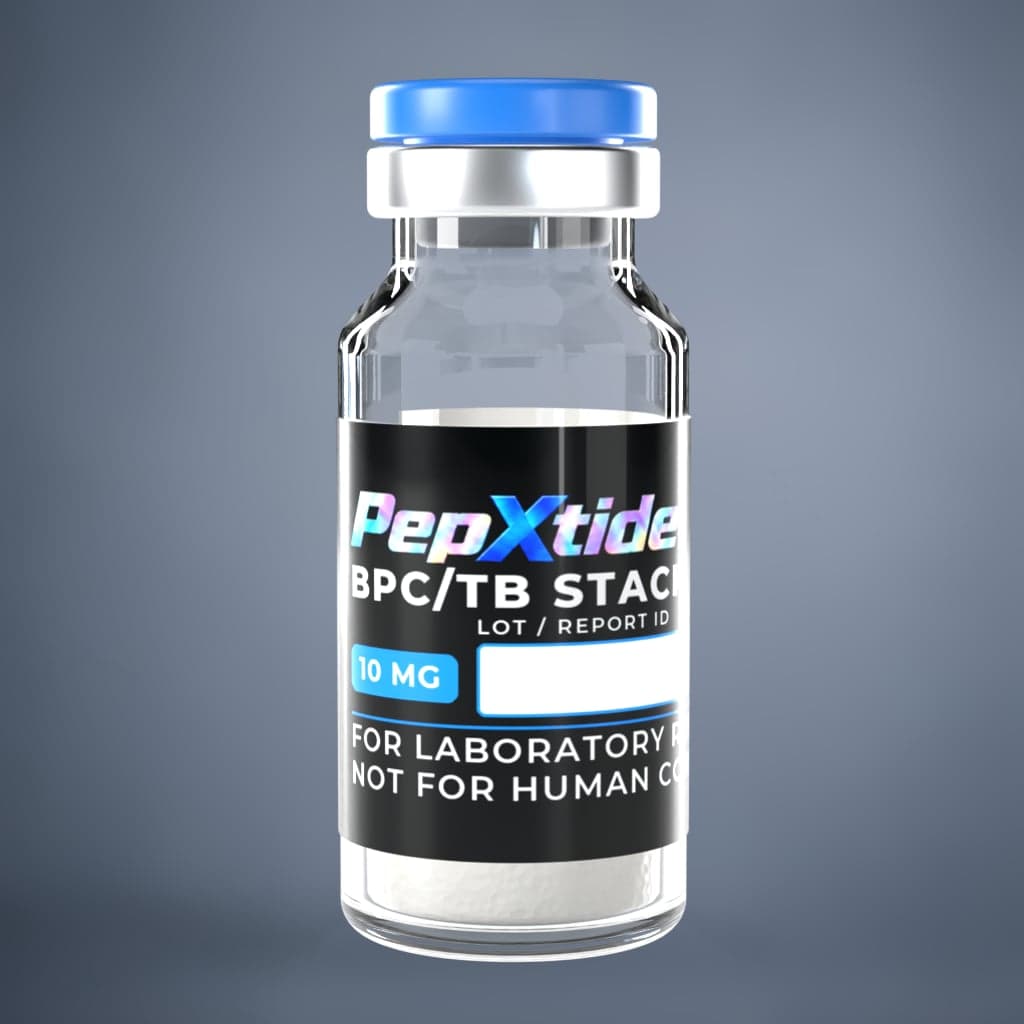
BPC-157, TB-500 and Thymosin Alpha 1 Set
Three peptide vials from the Matrix & Cytoskeletal category, plus the water to reconstitute them.
On its own this set comes to $212.47 at checkout: $37.49 Bundle & Save is taken off there.
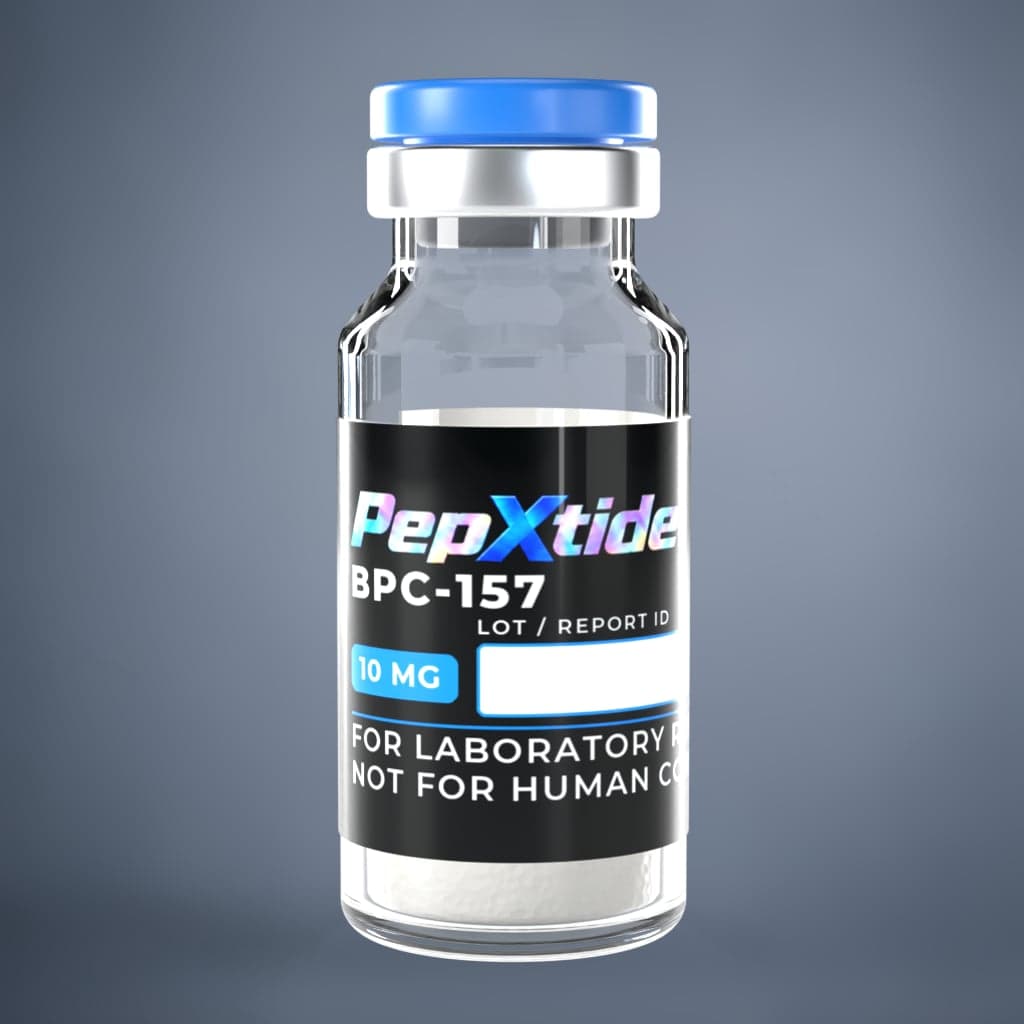
Four catalogue items added in one click: BPC-157 at 10mg, TB-500 at 10mg, Thymosin Alpha 1 at 10mg and a 10ml bacteriostatic water vial. Nothing is pre-mixed, blended or compounded for this set. Each vial arrives exactly as it would if you added it from its own product page, with its own certificate status.
BPC-157 is a 15-residue peptide, TB-500 a synthetic peptide and Thymosin Alpha 1 a 28-residue acetylated peptide; all three are listed in this catalogue's Matrix & Cytoskeletal category.
Adds 4 separate cart lines. Remove any one of them in the cart.
Supplied for in-vitro laboratory research only. Not for human or veterinary consumption, and not evaluated by the FDA. No statement on this page describes an application, benefit, dose, route or outcome. Descriptions are structural and mechanistic, and reference data such as CAS numbers and molecular formulas is published information about the compound itself, provided for identification. The certificate shown above is the testing laboratory's report V260204-18-018 for this strength; its results are for that report only and are not averaged across the product line.


 10mg
 10mg
 10mg
 10ml