Research use only. This compound is supplied for in-vitro laboratory research by qualified researchers. It is not for human or veterinary consumption and has not been evaluated by the FDA.
Buy more of this strength and the price comes down. The store applies it at checkout - there is nothing to enter.
Free US shipping - no minimum
Tell us the Report ID or Laboratory ID shown on the certificate, and what you observed. If independent testing shows a discrepancy against our published certificate, we refund the lot in full and pull it from sale pending investigation.
1
$74.99each
Tell us the Report ID or Laboratory ID shown on the certificate, and what you observed. If independent testing shows a discrepancy against our published certificate, we refund the lot in full and pull it from sale pending investigation.
Certificate pending
Discreet packaging
Dispatched within one business day
Free US shipping, no minimum
In stock, ships from our US fulfilment partner
Compound information
Type
Metabolic Research
Form
Lyophilized powder
Vial strength
50mg
Catalogue number
PX-5A1MQ-50MG
Purity
Certificate pending for this strength
Identifiers are published properties of the molecule. Values we cannot confirm are omitted rather than estimated.
The small molecule 5-amino-1-methylquinolinium, a quinolinium salt rather than a peptide, so it sits outside the PepXtide structural library.
Chemically this is a quaternary, N-methylated quinolinium cation. The methyl group on the ring nitrogen gives the molecule a permanent positive charge that does not depend on pH, which distinguishes it from an ordinary amine and is the single most consequential fact about its behaviour. It is supplied as a salt, and the public chemical databases carry separate records for the free cation, the iodide and the chloride; the counter-ion changes the formula mass and should be read from the certificate rather than assumed.
The compound came out of a medicinal-chemistry screen of N-methylated quinolinium, isoquinolinium, pyridinium and benzimidazolium analogues published in 2017 by a group at the University of Texas Medical Branch, and was characterised in a companion paper in the same year.
Its molecular target is nicotinamide N-methyltransferase, the cytosolic enzyme that transfers a methyl group from S-adenosylmethionine to nicotinamide to give 1-methylnicotinamide. The inhibition is substrate-competitive: the compound occupies the nicotinamide pocket rather than the S-adenosylmethionine pocket, so it is not a bisubstrate inhibitor, a distinction that matters for how enzyme kinetics on it should be set up. Reported values are a half-maximal inhibitory concentration near 1.2 micromolar against the isolated enzyme and a half-maximal effective concentration around 2.3 micromolar in cultured adipocytes. Its selectivity has been tested rather than assumed: no inhibition of DNMT1, PRMT3, NAMPT or SIRT1 was reported at concentrations up to 100 micromolar.
The permanent cationic charge is also the design problem the molecule solves. The unsubstituted parent, 1-methylquinolinium, was reported to lack passive diffusion across membranes, and the 5-amino substitution is what restored it; permeability work in Caco-2 monolayers reported high passive and active transport with no detectable efflux and an efflux ratio close to one. That is the reason this particular analogue, rather than the simpler parent, is the one in circulation.
Bench readouts are chromatographic rather than spectroscopic. Published work quantifies 1-methylnicotinamide, nicotinamide, S-adenosylmethionine, S-adenosylhomocysteine and NAD+ by LC-MS/MS in multiple-reaction-monitoring mode, and the enzyme inhibition constant rests on a non-coupled real-time fluorescence assay for the methyltransferase. Quantitative solubility and solution-stability figures for this compound were not located in the primary literature.
Background
5-Amino-1MQ is a small molecule, not a peptide: a quaternary N-methylated quinolinium cation whose ring-nitrogen methyl group gives it a permanent, pH-independent positive charge. It emerged from a 2017 University of Texas Medical Branch screen of N-methylated heteroaromatic analogues. Its molecular target is nicotinamide N-methyltransferase, which it inhibits competitively at the nicotinamide pocket rather than the S-adenosylmethionine pocket. The 5-amino substitution is what restores the membrane permeability reported to be missing from the unsubstituted parent, 1-methylquinolinium.
Specifications
Supplied as
Lyophilized powder
Available strengths
50mg
Storage
Store lyophilized at -20C, protected from light and moisture.
Intended use
In-vitro laboratory research only
Storage & handling
Lyophilized
Store lyophilized at -20C, protected from light and moisture. The compound is a quaternary salt carrying a permanent positive charge, so it is hygroscopic in the way salts generally are and the counter-ion stated on the certificate governs the formula mass.
Reconstituted
Once reconstituted, refrigerate at 2-8C and use within the period appropriate to the material.
Handling notes
Store lyophilized at -20C, protected from light and moisture.
As a quaternary salt with a permanent positive charge it is hygroscopic in the way salts generally are, so keep the container closed and dry.
The counter-ion (iodide or chloride) changes the formula mass; read it from the certificate rather than assuming it.
Once reconstituted, refrigerate at 2-8C and use within the period appropriate to the material.
Quantitative solubility and solution-stability figures were not located in the primary literature, so working conditions should be established in the laboratory.
Safety & handling
Bench handling, not a dosing guide.
Intended use
Supplied strictly as a laboratory research material for in-vitro study by qualified researchers. Not for human or veterinary use, not for ingestion or injection, and not for any clinical or diagnostic application.
Personal protective equipment
Handle with gloves, eye protection and a laboratory coat. Weigh and transfer lyophilized powder in a ventilated enclosure to avoid generating an inhalable dust.
Reconstitution
Reconstitute against the diluent and volume appropriate to your protocol, adding solvent slowly down the vial wall rather than directly onto the pellet. Do not shake. This is a handling note, not a dosing guide.
Storage after opening
Once reconstituted, refrigerate and use within the period appropriate to the material. Avoid repeated freeze-thaw cycles, which degrade peptides faster than continuous storage at the listed temperature.
Disposal
Dispose of material and containers in accordance with your institution's chemical waste procedures and applicable local regulations.
Also sold as part of a set
40mg
50mg
10mg
10ml
Metabolic Research · 4 vials
MOTS-c, 5-Amino-1MQ and AOD-9604 Set
A mitochondrial-derived peptide at 40mg, a small molecule at 50mg and a 16-residue fragment at 10mg, plus water.
On its own this set comes to $318.72 at checkout: $56.24 Bundle & Save is taken off there.
MOTS-c at 40mg, 5-Amino-1MQ at 50mg, AOD-9604 at 10mg and a 10ml bacteriostatic water vial. The three compounds are chemically unrelated to each other beyond sharing a catalogue category, and they ship as separate vials, each with its own certificate status. Each is stocked in one size only, which is the size this set uses.
A 16-residue mitochondrial-derived peptide, a small-molecule compound and a 16-residue growth-hormone fragment, all listed under Metabolic Research.
Adds 4 separate cart lines. Remove any one of them in the cart.
Supplied for in-vitro laboratory research only. Not for human or veterinary consumption, and not evaluated by the FDA. No statement on this page describes an application, benefit, dose, route or outcome. Descriptions are structural and mechanistic, and reference data such as CAS numbers and molecular formulas is published information about the compound itself, provided for identification. No measured result is shown for this strength because a certificate has not yet been published for its lot.


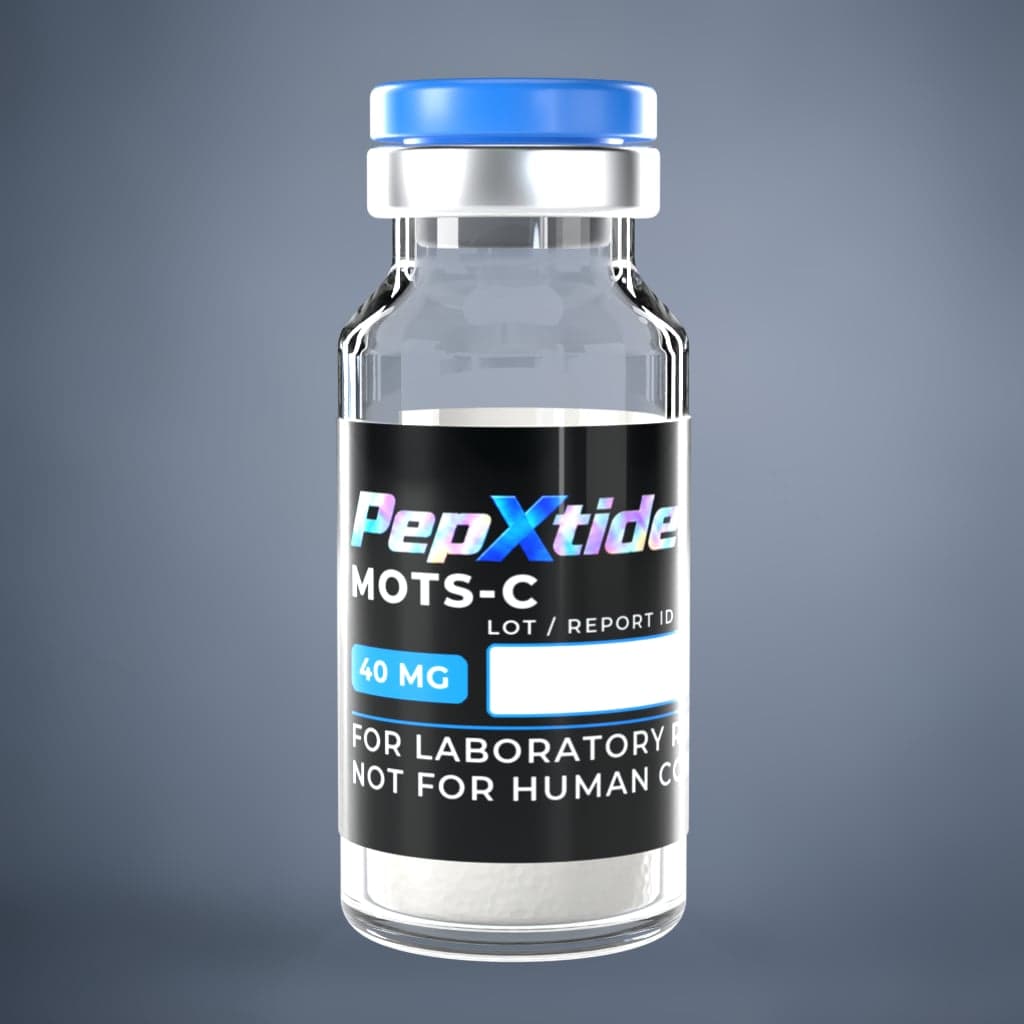 40mg
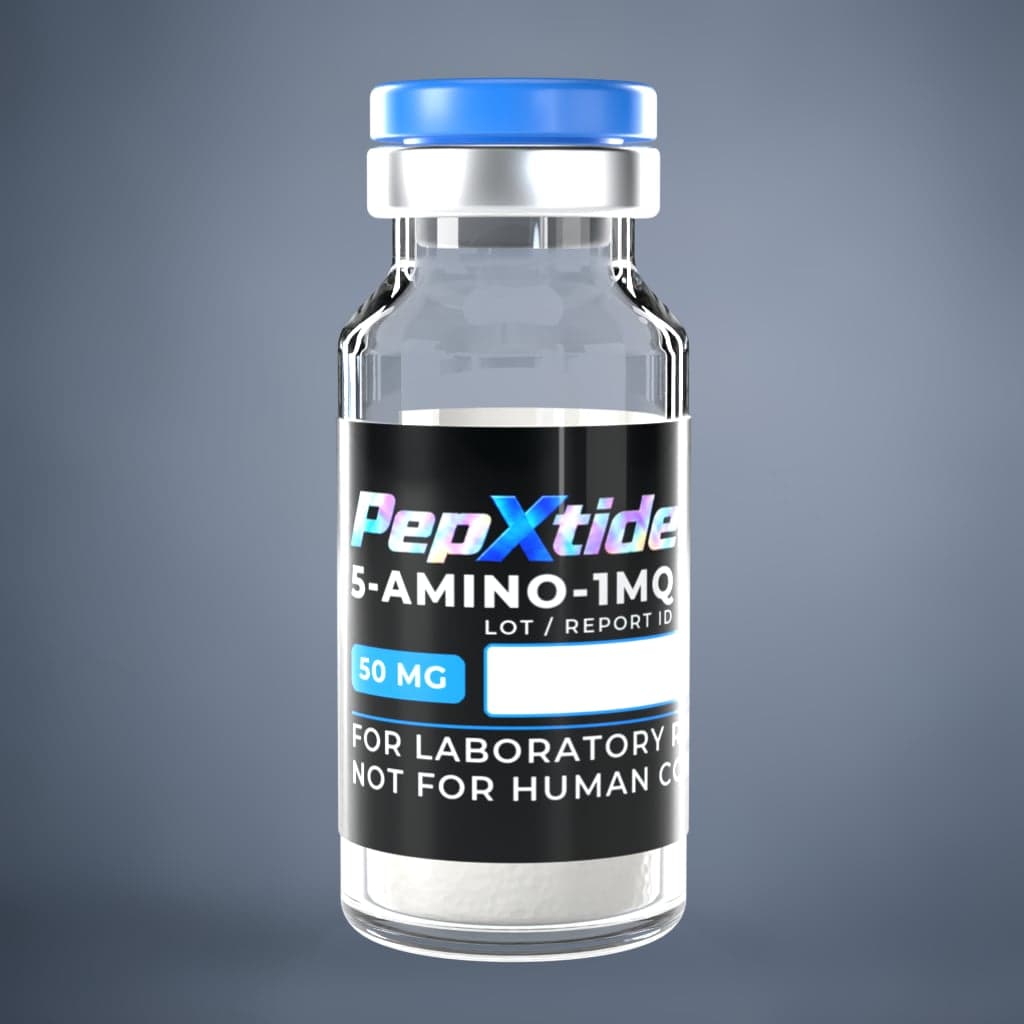 50mg
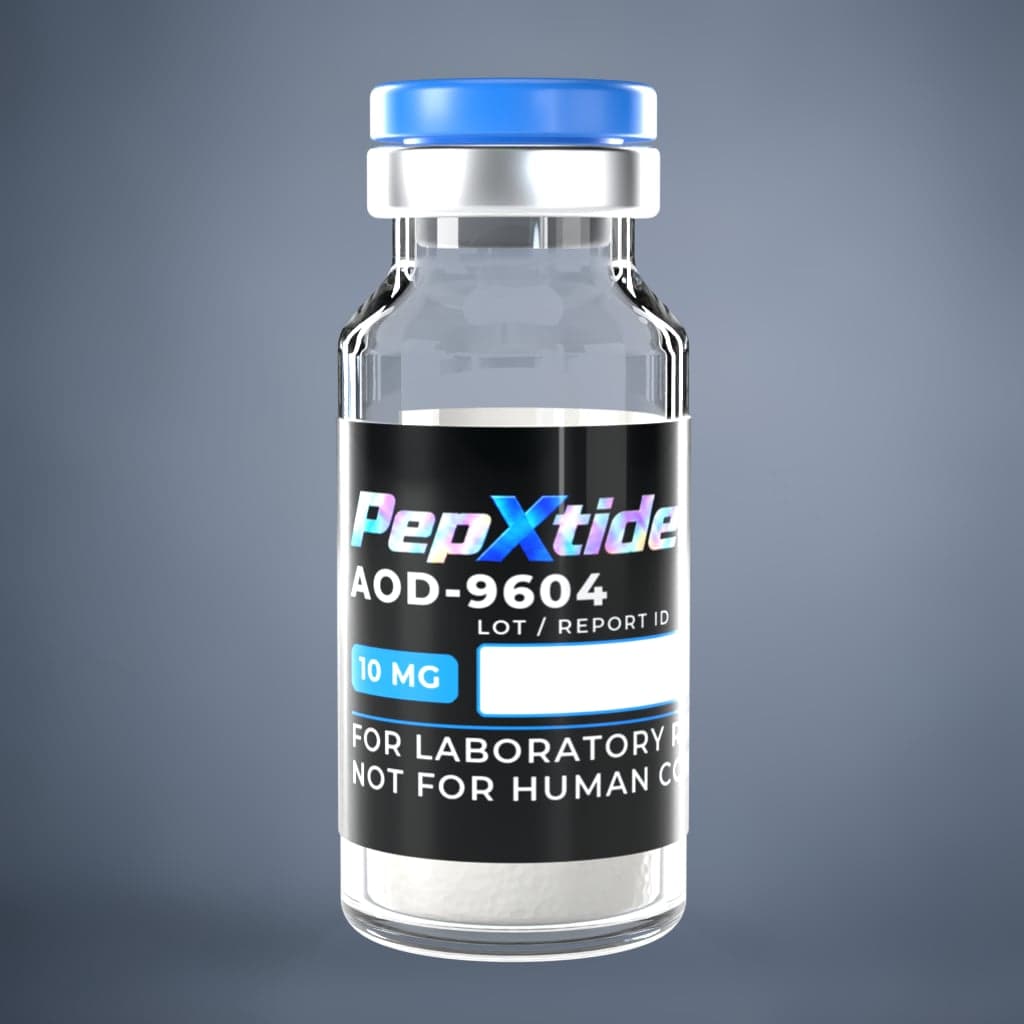 10mg
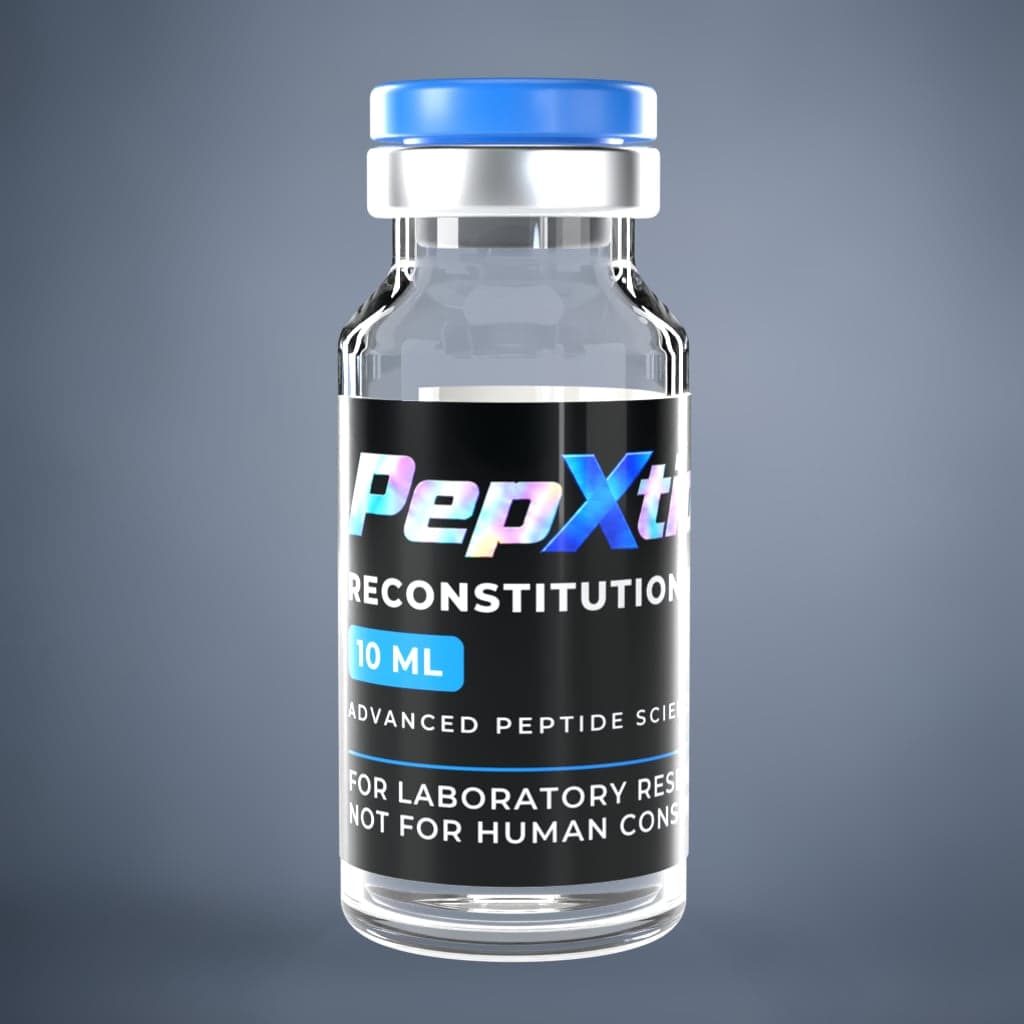 10ml