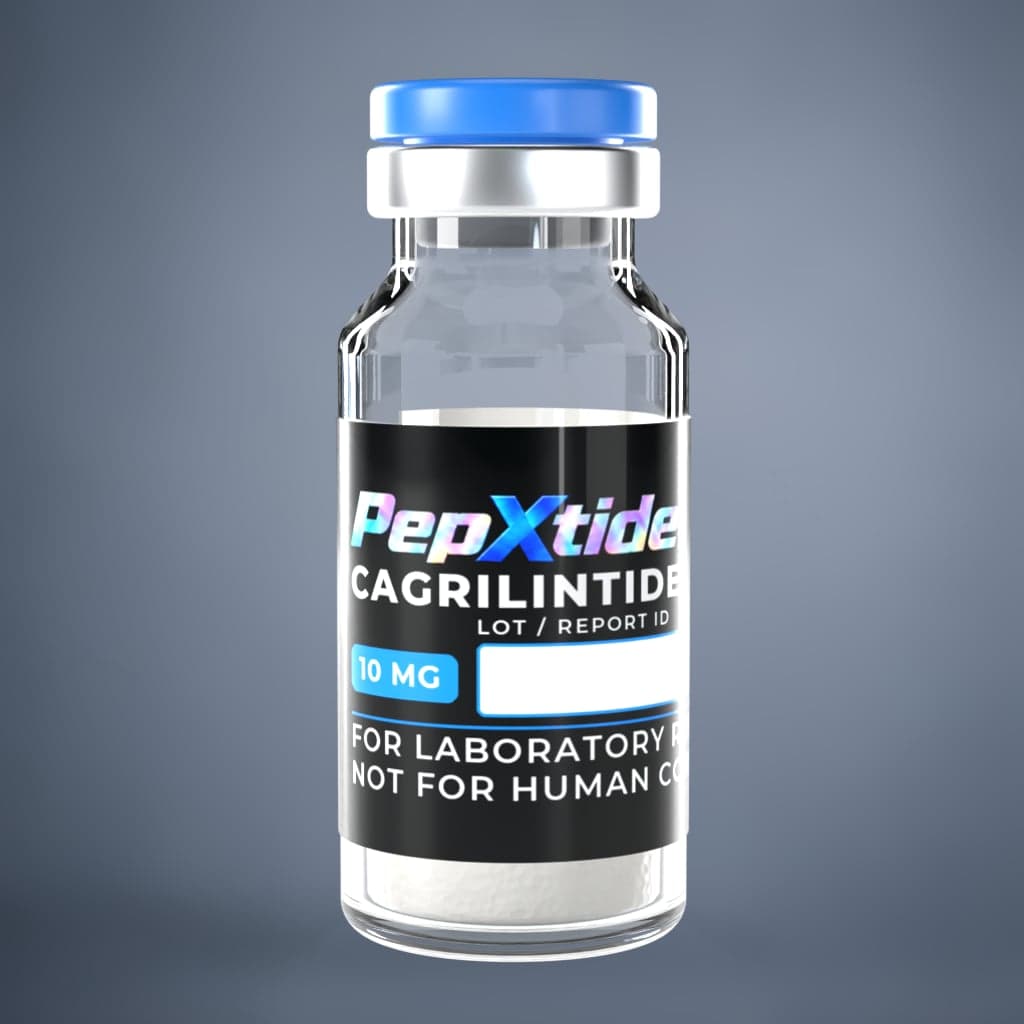
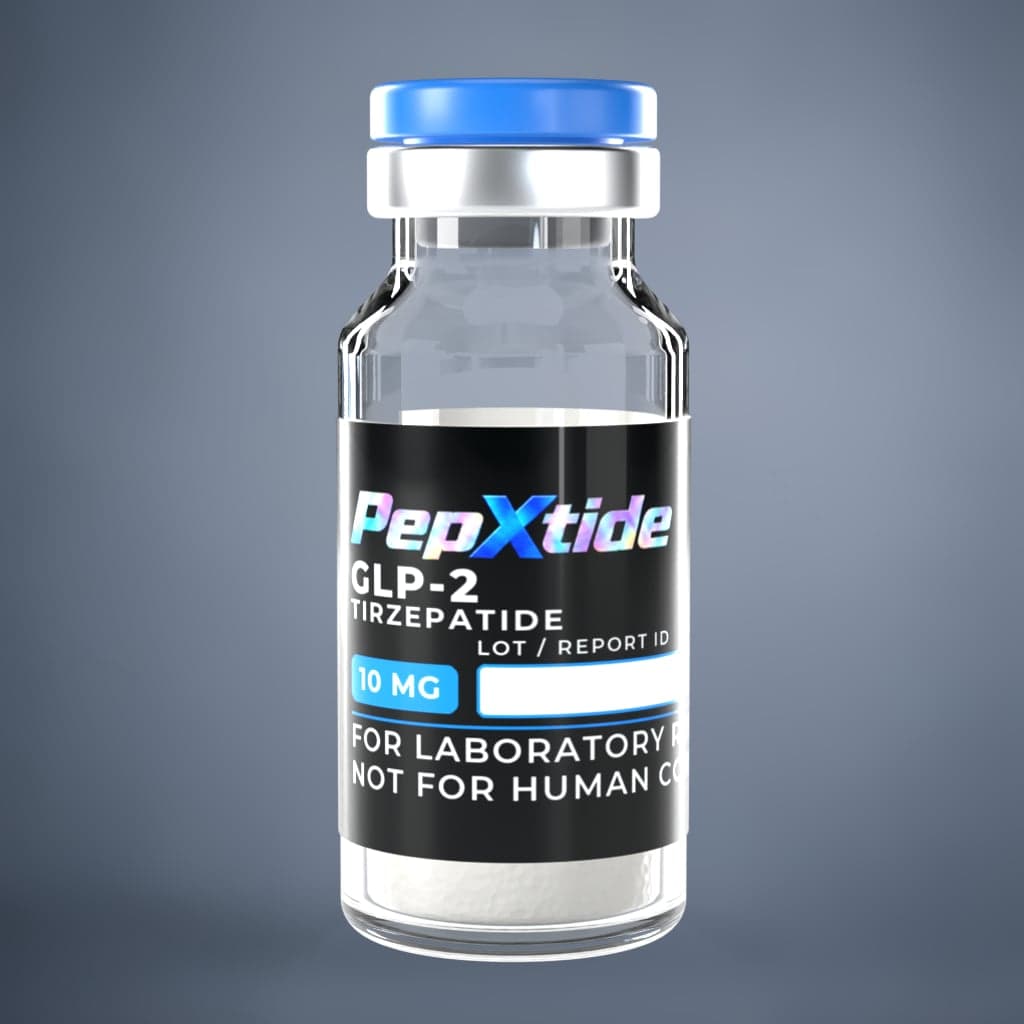
Research use only. This compound is supplied for in-vitro laboratory research by qualified researchers. It is not for human or veterinary consumption and has not been evaluated by the FDA.
Buy more of this strength and the price comes down. The store applies it at checkout - there is nothing to enter.
Free US shipping - no minimum
Tell us the Report ID or Laboratory ID shown on the certificate, and what you observed. If independent testing shows a discrepancy against our published certificate, we refund the lot in full and pull it from sale pending investigation.
1
$129.99each
Tell us the Report ID or Laboratory ID shown on the certificate, and what you observed. If independent testing shows a discrepancy against our published certificate, we refund the lot in full and pull it from sale pending investigation.
Certificate pending
Discreet packaging
Dispatched within one business day
Free US shipping, no minimum
In stock, ships from our US fulfilment partner
Compound information
Type
Metabolic Research
Molecular weight
1815.10 g/mol
Sequence
Tyr-Leu-Arg-Ile-Val-Gln-Cys-Arg-Ser-Val-Glu-Gly-Ser-Cys-Gly-Phe (YLRIVQCRSVEGSCGF), disulfide between Cys7 and Cys15
Form
Lyophilized powder
Vial strength
10mg
Catalogue number
PX-AOD-10MG
Purity
Certificate pending for this strength
Identifiers are published properties of the molecule. Values we cannot confirm are omitted rather than estimated.
AOD-9604 is a 16-residue fragment corresponding to the C-terminal region of human growth hormone, residues 176 to 191, closed by a disulfide bridge between the two cysteines at positions 7 and 15.
The PepXtide structural library models the same chain under the name HGH Fragment 176-191, where it computes to 1817.12 g/mol as an open chain. The figure given here is for the bridged form, which is two hydrogens lighter.
The fragment's history runs back to work at Monash University in the 1970s synthesising C-terminal pieces of human growth hormone, and it was developed as a defined compound by Metabolic Pharmaceuticals under Monash patents. Structurally it is the hGH 177-191 sequence with an additional tyrosine at the N-terminus, and the intramolecular disulfide of the parent region is retained rather than reduced.
A numbering note, because two conventions circulate and they differ by 26. The growth hormone entry in the sequence databases is the 217-residue precursor including its signal peptide; the 176 to 191 designation used here and in the literature is mature-protein numbering, corresponding to precursor residues 203 to 217.
The mechanism is unresolved, and this catalogue states that rather than filling the gap. No receptor or molecular target has been identified for the compound. Published in-vitro work reports that it does not compete for binding at the growth hormone receptor and does not induce proliferation in cells transfected with that receptor, so the reported activity is not growth-hormone-receptor mediated. Work on a related fragment reported changes in two lipid-metabolism enzyme activities in tissue preparations, and studies using beta-3 adrenergic receptor knockout animals were read by their authors as showing the reported activity is not directly through that receptor either. What remains is a compound with reproducible in-vitro observations and no identified target.
Characterisation is better established than mechanism. The solution structure has been determined by two-dimensional proton NMR in water and in water-dimethyl sulfoxide, showing type I beta-turns. Analytical detection in biological matrices uses solid-phase extraction followed by LC-MS, with reported detection limits around 50 picograms per millilitre and several identified metabolites, one of which, the internal fragment CRSVEGSCG, is reported to be more stable than the parent. The compound has also been shown not to interfere with the isoform immunoassay used in growth hormone testing.
One specification caution. Public sources disagree on the mass: one major database gives 1815.1 for the cyclised form while a regulatory substance registry lists a figure about five daltons higher together with a formula carrying two extra hydrogens, which is internally inconsistent with the disulfide that same record declares. The figure published here is the cyclised, disulfide-closed value.
Background
AOD-9604 is a sixteen-residue fragment of the C-terminal region of human growth hormone (mature-protein residues 176 to 191), built as the hGH 177-191 sequence with an extra N-terminal tyrosine and closed by a disulfide between the cysteines at positions 7 and 15. It traces to Monash University work on C-terminal growth hormone fragments and was developed as a defined compound by Metabolic Pharmaceuticals. No receptor or molecular target has been identified; in-vitro work reports that it does not bind the growth hormone receptor. Its solution structure, solved by two-dimensional proton NMR, shows type I beta-turns.
Research applications
Where this compound appears in the published literature. Each area points to the papers listed under Primary literature below. These describe what was studied, not an application of this product.
Lipid-metabolism models
Studied in lipid-metabolism work in obese mice and beta-3 adrenergic receptor knockout mice, compared with human growth hormone in a 2001 Endocrinology paper, and profiled as a metabolic research compound in a 2004 drug-development review.[3][1]
Analytical detection and metabolism
Characterised in a 2015 Drug Testing and Analysis study describing its detection and its in-vitro metabolism.[2]
Joint-tissue models
Studied in a rabbit osteoarthritis model, alone and alongside hyaluronic acid, in a 2015 paper in the Annals of Clinical and Laboratory Science.[5]
Cultured cell models
Investigated in MCF-7 breast cancer cell culture as a component of doxorubicin-loaded chitosan nanoparticles, in a 2022 study that names the peptide as hGH fragment 176-191.[4]
Specifications
Supplied as
Lyophilized powder
Available strengths
10mg
Storage
Store lyophilized at -20C, protected from light and moisture.
Intended use
In-vitro laboratory research only
Primary literature
Peer-reviewed papers indexed on PubMed that study this compound. We did not write them and we do not summarise them — each reference opens the record on PubMed so you can read the work itself. Publication is not evidence of safety or efficacy, and none of this research was conducted by PepXtide.
The list above is a selection, not the whole literature. These open the public databases themselves, each one confirmed to return results on 29 August 2026.
PubMed, PubChem and ClinicalTrials.gov are independent scientific databases. A record or a published paper is not an endorsement of this product, and nothing indexed there describes an application, dose or outcome supported by PepXtide.
Storage & handling
Lyophilized
Store lyophilized at -20C, protected from light and moisture. The molecule carries an intramolecular disulfide between its two cysteines, so it must be kept away from reducing agents such as dithiothreitol, 2-mercaptoethanol and tris(2-carboxyethyl)phosphine, which will open the ring and give a different substance.
Reconstituted
Once reconstituted, keep refrigerated and use within the working period established by the laboratory.
Handling notes
Store lyophilized at -20C, protected from light and moisture.
The intramolecular disulfide between the two cysteines must be kept away from reducing agents such as dithiothreitol, 2-mercaptoethanol and TCEP, which open the ring and give a different substance.
Once reconstituted, keep refrigerated and use within the working period established by the laboratory.
Public sources disagree on the mass; the figure on this page is the cyclised, disulfide-closed value, two hydrogens lighter than the open chain.
Safety & handling
Bench handling, not a dosing guide.
Intended use
Supplied strictly as a laboratory research material for in-vitro study by qualified researchers. Not for human or veterinary use, not for ingestion or injection, and not for any clinical or diagnostic application.
Personal protective equipment
Handle with gloves, eye protection and a laboratory coat. Weigh and transfer lyophilized powder in a ventilated enclosure to avoid generating an inhalable dust.
Reconstitution
Reconstitute against the diluent and volume appropriate to your protocol, adding solvent slowly down the vial wall rather than directly onto the pellet. Do not shake. This is a handling note, not a dosing guide.
Storage after opening
Once reconstituted, refrigerate and use within the period appropriate to the material. Avoid repeated freeze-thaw cycles, which degrade peptides faster than continuous storage at the listed temperature.
Disposal
Dispose of material and containers in accordance with your institution's chemical waste procedures and applicable local regulations.
Also sold as part of a set
40mg
50mg
10mg
10ml
Metabolic Research · 4 vials
MOTS-c, 5-Amino-1MQ and AOD-9604 Set
A mitochondrial-derived peptide at 40mg, a small molecule at 50mg and a 16-residue fragment at 10mg, plus water.
On its own this set comes to $318.72 at checkout: $56.24 Bundle & Save is taken off there.
MOTS-c at 40mg, 5-Amino-1MQ at 50mg, AOD-9604 at 10mg and a 10ml bacteriostatic water vial. The three compounds are chemically unrelated to each other beyond sharing a catalogue category, and they ship as separate vials, each with its own certificate status. Each is stocked in one size only, which is the size this set uses.
A 16-residue mitochondrial-derived peptide, a small-molecule compound and a 16-residue growth-hormone fragment, all listed under Metabolic Research.
Adds 4 separate cart lines. Remove any one of them in the cart.
Supplied as a lyophilized powder for in-vitro laboratory research only. No statement on this page describes an application, benefit, dose, route or outcome. Descriptions are structural and mechanistic, and reference data such as CAS numbers and molecular formulas is published information about the compound itself, provided for identification. No measured result is shown for this strength because a certificate has not yet been published for its lot.


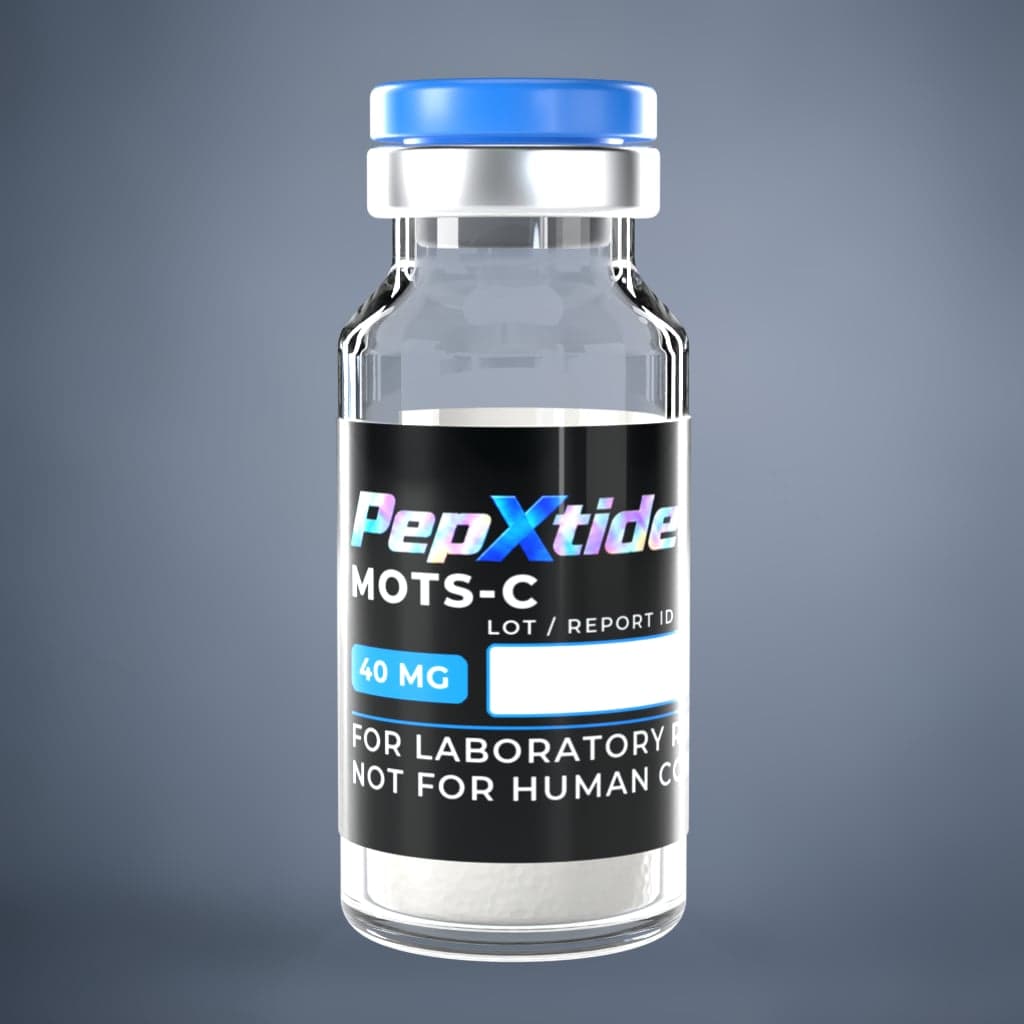 40mg
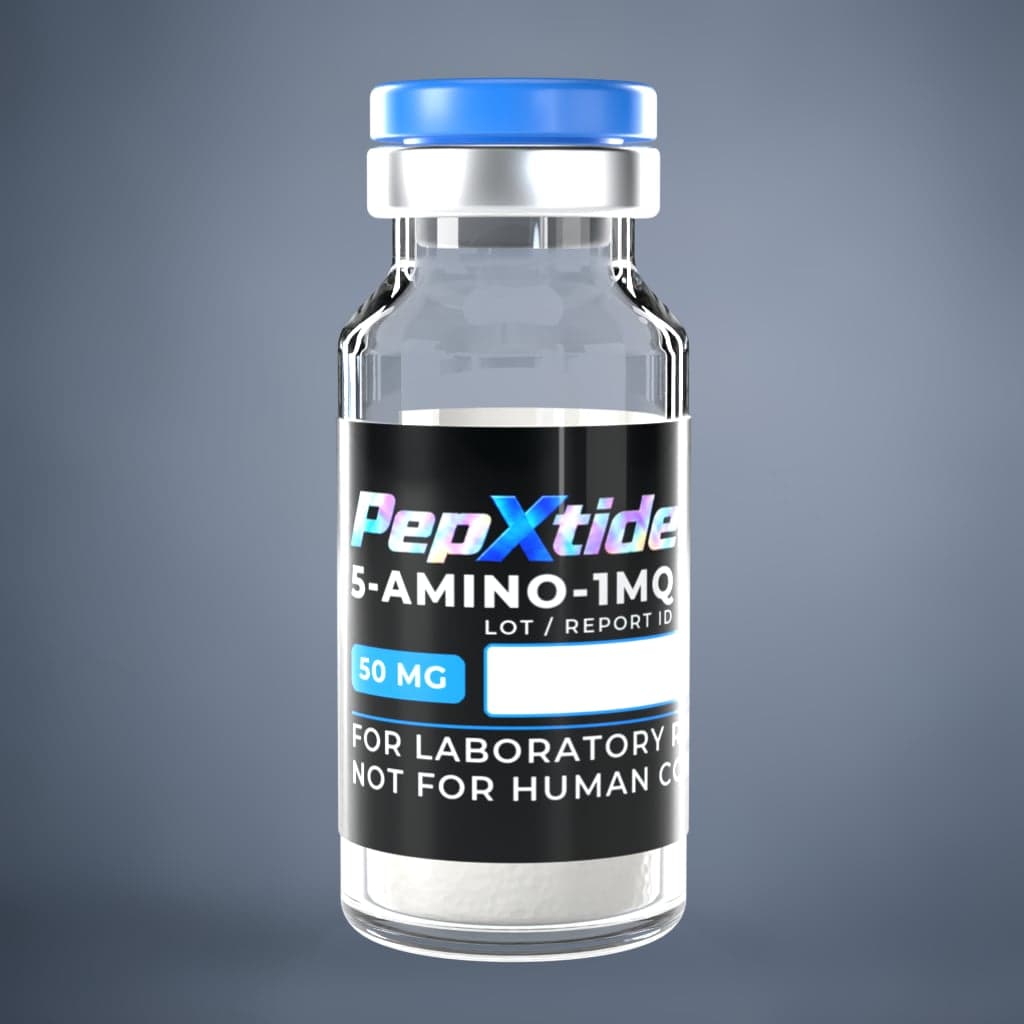 50mg
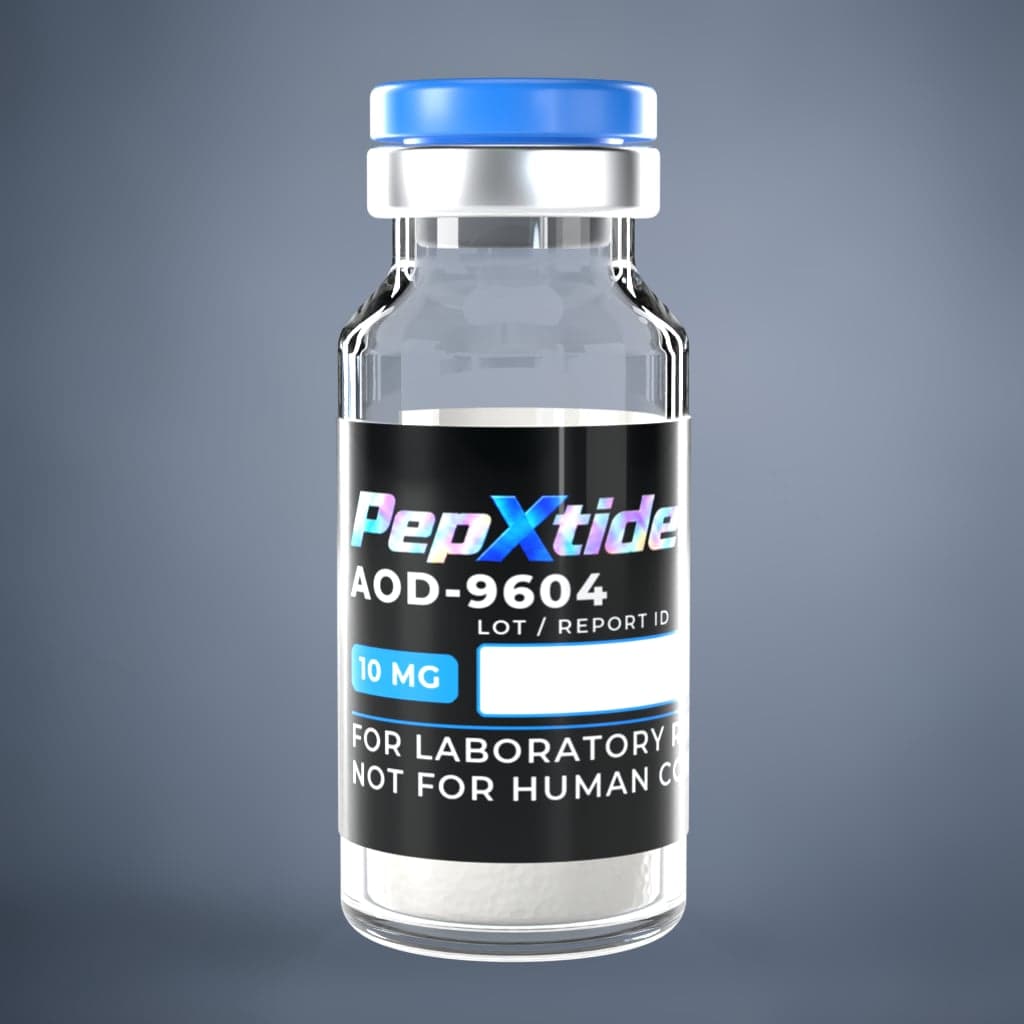 10mg
 10ml