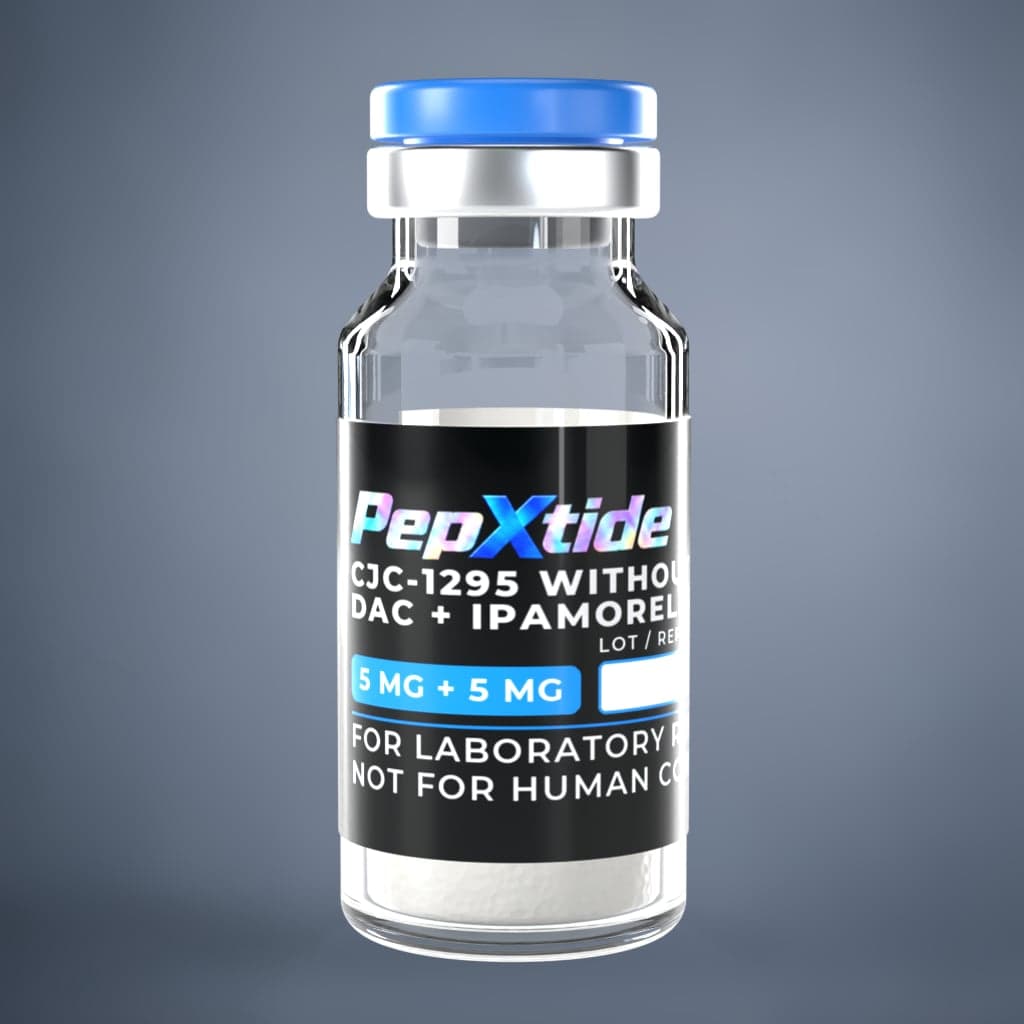
Research use only. This compound is supplied for in-vitro laboratory research by qualified researchers. It is not for human or veterinary consumption and has not been evaluated by the FDA.
Buy more of this strength and the price comes down. The store applies it at checkout - there is nothing to enter.
Free US shipping - no minimum
Tell us the Report ID or Laboratory ID shown on the certificate, and what you observed. If independent testing shows a discrepancy against our published certificate, we refund the lot in full and pull it from sale pending investigation.
1
$69.99each
Tell us the Report ID or Laboratory ID shown on the certificate, and what you observed. If independent testing shows a discrepancy against our published certificate, we refund the lot in full and pull it from sale pending investigation.
Identifiers are published properties of the molecule. Values we cannot confirm are omitted rather than estimated.
Also known as Mod GRF 1-29: the 29-residue fragment of growth hormone releasing factor carrying four substitutions (D-Ala at 2, Gln at 8, Ala at 15, Leu at 27) with an amidated C-terminus. Drawn in the PepXtide structural library, where its computed mass matches the published molecular weight.
It is the same engineered backbone as the DAC-bearing analogue with the conjugation handle removed: no thirtieth lysine, no maleimidopropionyl group, and therefore no covalent albumin chemistry. What remains is the set of four substitutions, each of which answers a distinct degradation route in the native sequence.
The D-alanine at position two is the load-bearing one. Dipeptidyl peptidase IV cleaves the native releasing factor at the bond after the N-terminal tyrosine, and a D-configured residue at position two is not a substrate for that enzyme, so the cleavage is blocked. The glutamine at position eight removes an asparagine that would otherwise deamidate slowly to an inactive isoaspartate. The leucine at position 27 removes the methionine that would otherwise oxidise to the sulfoxide. The alanine at position 15 is a potency substitution rather than a stability one. Reported half-lives for the modified fragment are in the region of half an hour against a few minutes for the unmodified sequence, and that difference is attributed to the position-two substitution.
The molecular target is the GHRH receptor, the class B secretin-family G-protein-coupled receptor that couples to adenylyl cyclase, the same receptor used by sermorelin and tesamorelin and a different receptor from the ghrelin receptor used by ipamorelin.
Two identification cautions apply. First, the name: suppliers and databases use the bare designation CJC-1295 for both this molecule and the DAC-bearing one, which differ by about 279 daltons, so material should be identified by formula rather than by name. Second, the specification: public sources do not agree on this compound's molecular formula, and at least one supplier lists a formula corresponding to a free C-terminal acid alongside a printed sequence ending in an amide, which cannot both be right. The figure published on this page is the amide-consistent mass.
No published receptor binding constant or cyclic AMP half-maximal concentration specific to this modified fragment was located; the receptor-level values in circulation are generally those of the parent releasing factor or of the DAC-bearing analogue, and should not be quoted as this compound's own.
Background
CJC-1295 without DAC, also known as Mod GRF 1-29, is the 29-residue fragment of growth hormone releasing factor with an amidated C-terminus and four substitutions: D-alanine at 2, glutamine at 8, alanine at 15 and leucine at 27. It is the DAC-bearing analogue's backbone without the thirtieth lysine and maleimidopropionyl group, so it has no covalent albumin chemistry. The D-alanine blocks dipeptidyl peptidase IV cleavage, and the glutamine and leucine remove a deamidation-prone asparagine and an oxidisable methionine. Its target is the GHRH receptor, a class B G-protein-coupled receptor coupled to adenylyl cyclase.
Research applications
Where this compound appears in the published literature. Each area points to the papers listed under Primary literature below. These describe what was studied, not an application of this product.
Receptor and growth models (DAC-bearing analogue)
Studied in rat anterior-pituitary receptor work and a GHRH knockout mouse growth model, in 2005 Endocrinology and 2006 physiology papers that concern the long-acting, albumin-conjugating CJC-1295 rather than this unconjugated fragment.[2][3]
Analytical detection
Characterised in two 2019 Drug Testing and Analysis papers describing LC-MS/MS and immuno-PCR methods for detecting CJC-1295 and related GHRH analogues in equine plasma.[4][5]
Specifications
Supplied as
Lyophilized powder
Available strengths
5mg
Storage
Store lyophilized at -20C, protected from light and moisture.
Intended use
In-vitro laboratory research only
Primary literature
Peer-reviewed papers indexed on PubMed that study this compound. We did not write them and we do not summarise them — each reference opens the record on PubMed so you can read the work itself. Publication is not evidence of safety or efficacy, and none of this research was conducted by PepXtide.
PubMed, PubChem and ClinicalTrials.gov are independent scientific databases. A record or a published paper is not an endorsement of this product, and nothing indexed there describes an application, dose or outcome supported by PepXtide.
Storage & handling
Lyophilized
Store lyophilized at -20C, protected from light and moisture. The four substitutions remove this sequence's two chemical liabilities, the oxidisable methionine at 27 and the deamidation-prone asparagine at 8, so the remaining handling concerns are moisture uptake and adsorptive loss rather than chemical change.
Reconstituted
Once reconstituted, refrigerate at 2-8C and use within the period appropriate to the material.
Handling notes
Store lyophilized at -20C, protected from light and moisture.
The substitutions remove the oxidisable methionine at 27 and the deamidation-prone asparagine at 8, so the remaining concerns are moisture uptake and adsorptive loss rather than chemical change.
Once reconstituted, refrigerate at 2-8C and use within the period appropriate to the material.
The bare name CJC-1295 is used for both this molecule and the DAC-bearing one, which differ by about 279 daltons; identify material by formula rather than by name.
Safety & handling
Bench handling, not a dosing guide.
Intended use
Supplied strictly as a laboratory research material for in-vitro study by qualified researchers. Not for human or veterinary use, not for ingestion or injection, and not for any clinical or diagnostic application.
Personal protective equipment
Handle with gloves, eye protection and a laboratory coat. Weigh and transfer lyophilized powder in a ventilated enclosure to avoid generating an inhalable dust.
Reconstitution
Reconstitute against the diluent and volume appropriate to your protocol, adding solvent slowly down the vial wall rather than directly onto the pellet. Do not shake. This is a handling note, not a dosing guide.
Storage after opening
Once reconstituted, refrigerate and use within the period appropriate to the material. Avoid repeated freeze-thaw cycles, which degrade peptides faster than continuous storage at the listed temperature.
Disposal
Dispose of material and containers in accordance with your institution's chemical waste procedures and applicable local regulations.
Also sold as part of a set
5mg
10mg
1mg
10ml
Growth & Secretagogue · 4 vials
CJC-1295 (no DAC), Ipamorelin and IGF-1 LR3 Set
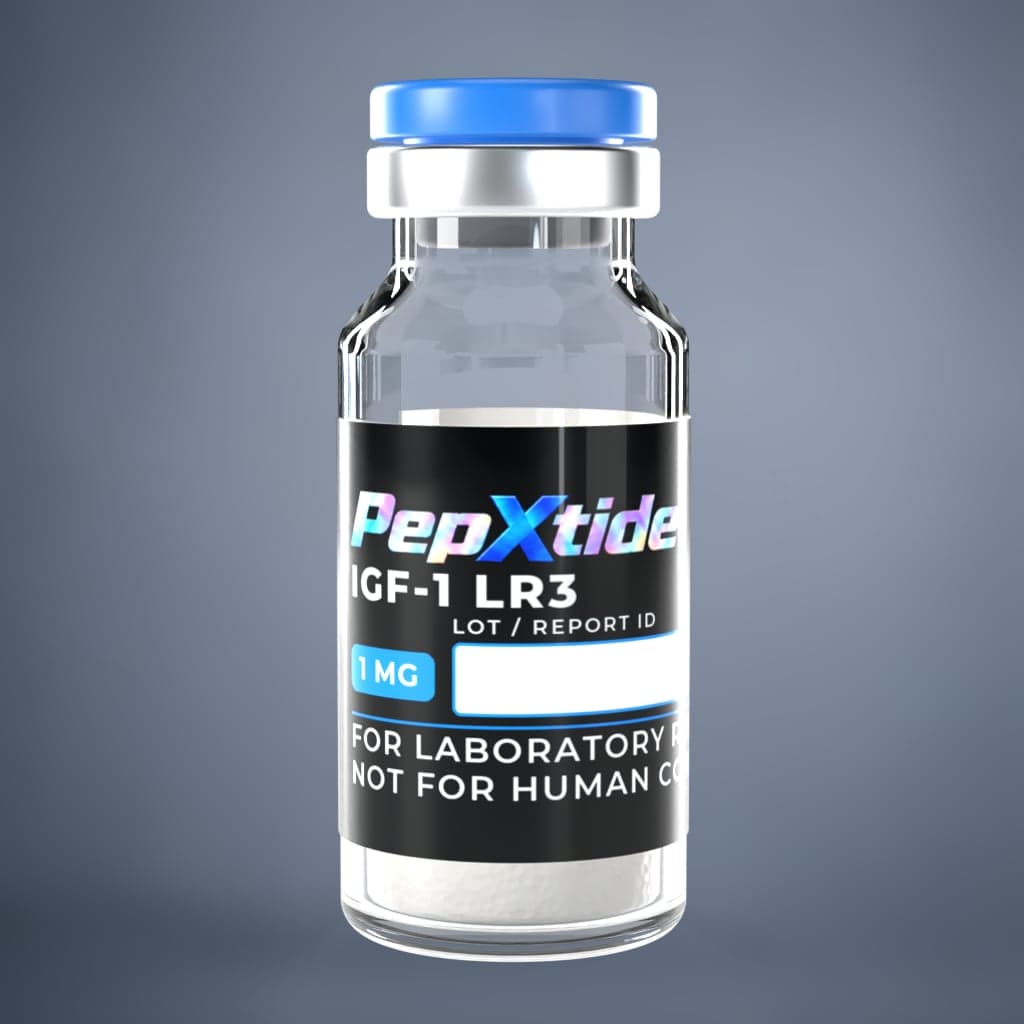
A 5mg and a 10mg secretagogue-class vial and a 1mg IGF-1 LR3 vial, plus water.
On its own this set comes to $254.97 at checkout: $45.00 Bundle & Save is taken off there.
CJC-1295 without DAC at 5mg, Ipamorelin at 10mg, IGF-1 LR3 at 1mg and a 10ml bacteriostatic water vial. The catalogue also sells CJC-1295 and Ipamorelin as a single pre-blended vial; this set is the opposite of that, giving you separate lyophilised vials so each compound can be reconstituted and handled on its own.
CJC-1295 without DAC and Ipamorelin belong to the growth-hormone secretagogue class; IGF-1 LR3 is an 83-residue growth-factor analogue. All three are filed under Growth & Secretagogue in this catalogue.
Adds 4 separate cart lines. Remove any one of them in the cart.
Supplied for in-vitro laboratory research only. Not for human or veterinary consumption, and not evaluated by the FDA. No statement on this page describes an application, benefit, dose, route or outcome. Descriptions are structural and mechanistic, and reference data such as CAS numbers and molecular formulas is published information about the compound itself, provided for identification. No measured result is shown for this strength because a certificate has not yet been published for its lot.


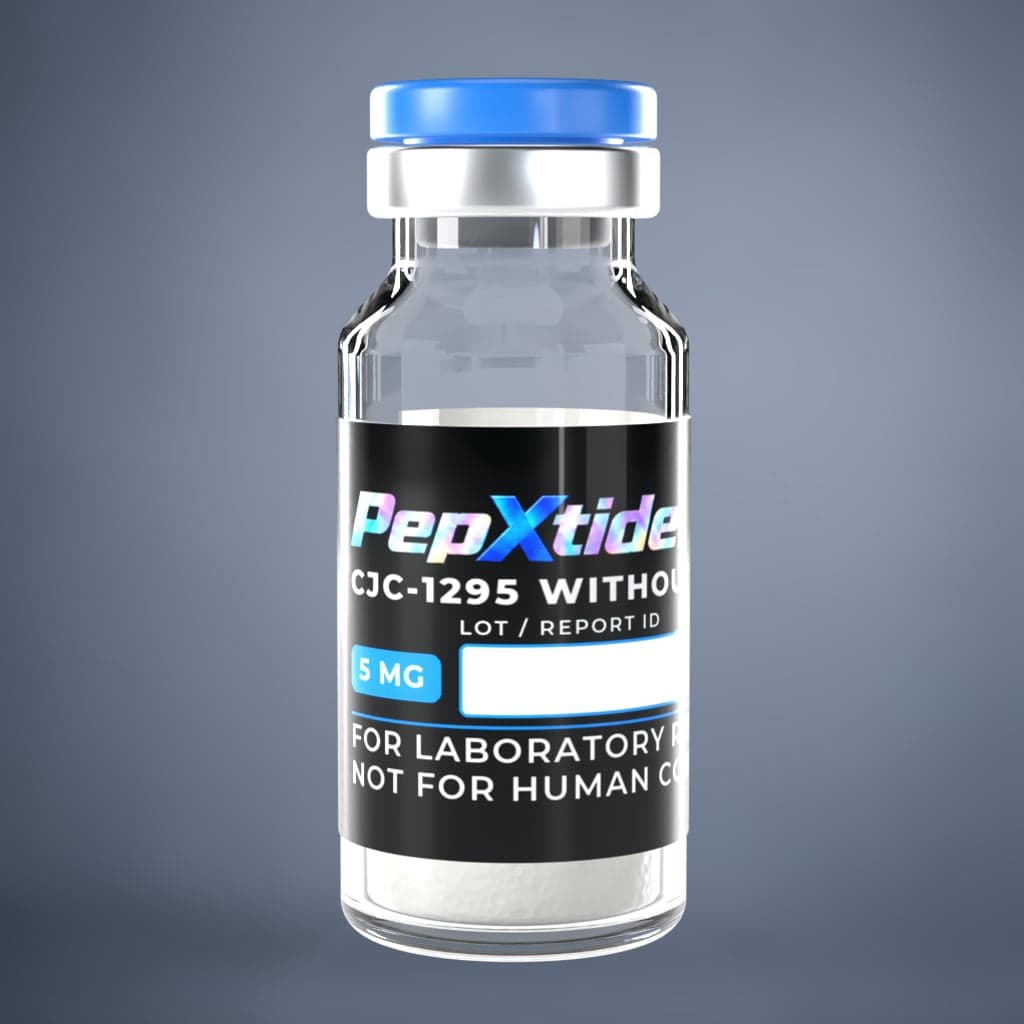 5mg
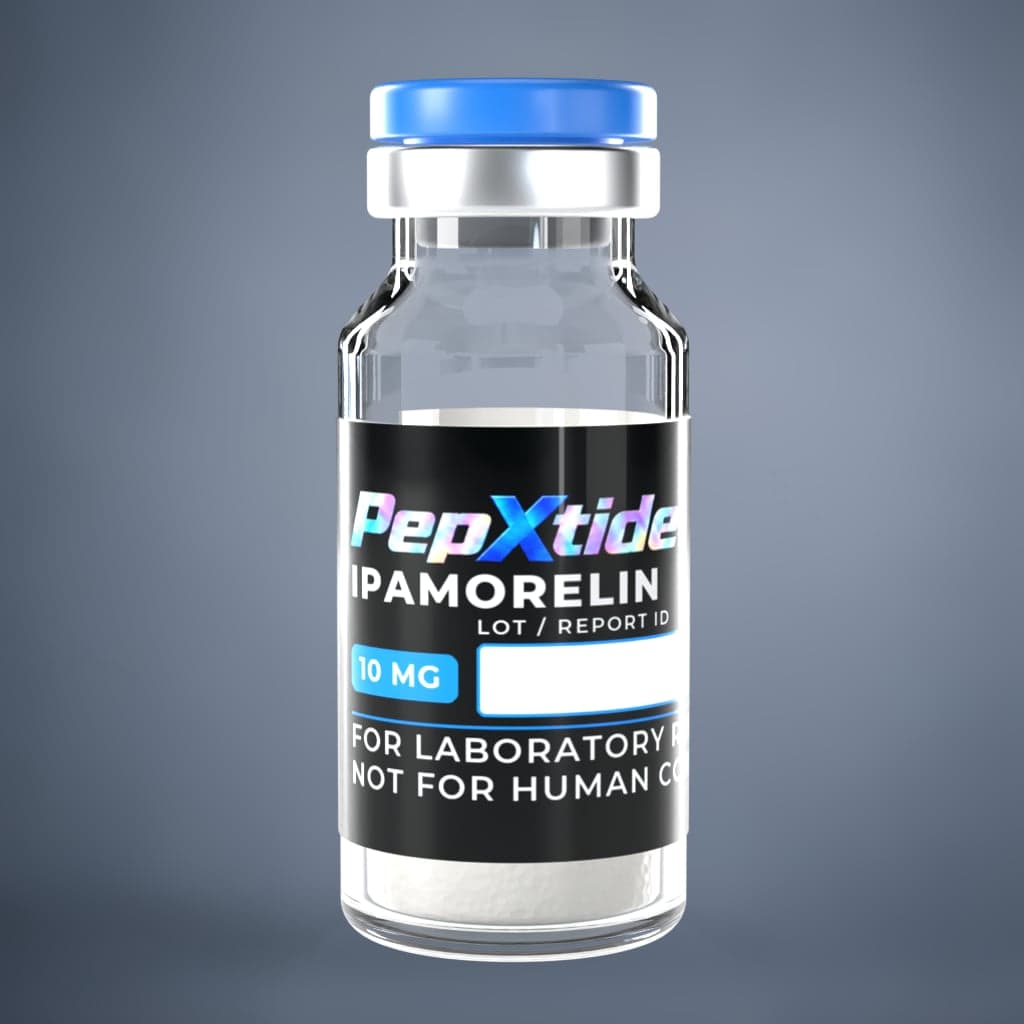 10mg
 1mg
 10ml