Research use only. This compound is supplied for in-vitro laboratory research by qualified researchers. It is not for human or veterinary consumption and has not been evaluated by the FDA.
Buy more of this strength and the price comes down. The store applies it at checkout - there is nothing to enter.
Free US shipping - no minimum
Tell us the Report ID or Laboratory ID shown on the certificate, and what you observed. If independent testing shows a discrepancy against our published certificate, we refund the lot in full and pull it from sale pending investigation.
1
$79.99each
Tell us the Report ID or Laboratory ID shown on the certificate, and what you observed. If independent testing shows a discrepancy against our published certificate, we refund the lot in full and pull it from sale pending investigation.
Certificate published
Discreet packaging
Dispatched within one business day
Free US shipping, no minimum
In stock, ships from our US fulfilment partner
Compound information
Type
Growth & Secretagogue
Molecular weight
3357.93 g/mol
Sequence
YADAIFTNSYRKVLGQLSARKLLQDIMSR, C-terminal amide
Form
Lyophilized powder
Vial strength
10mg
Catalogue number
PX-SERM-10MG
Purity
See the laboratory report V260204-18-017
Identifiers are published properties of the molecule. Values we cannot confirm are omitted rather than estimated.
Sermorelin is the first 29 residues of growth hormone releasing hormone, ending in a C-terminal amide. That fragment is the shortest one still recognised at the GHRH receptor, which is why the analogue is 29 residues rather than the full 44.
The sequence is modelled in the PepXtide structural library, where its computed weight of 3357.93 g/mol agrees with the published figure. The molecular formula is not printed: the engine counts one or two hydrogens more than the published formula at the terminal caps, and a formula that does not match the reference is worse than none.
The parent hormone was isolated in 1982 from human pancreatic islet tumours and characterised independently by two groups in the same year, establishing the 44-residue releasing factor. Work published in 1984 then showed that the first 29 residues, carried as the C-terminal amide, retain the full intrinsic activity of the parent in vitro, which is the finding this compound exists to exploit. Unlike the analogues that followed it, sermorelin carries no engineered substitution: it is the native sequence, truncated and amidated.
Its molecular target is the GHRH receptor, a 423-residue class B G-protein-coupled receptor of the secretin family, related to the VIP, PACAP and calcitonin receptors, which couples to adenylyl cyclase and raises intracellular cyclic AMP. That receptor identity is what distinguishes this family from the secretagogues that act at the ghrelin receptor, a class A receptor with entirely different signalling.
The absence of engineering is also the compound's chief chemical liability, and it is well documented. Dipeptidyl peptidase IV cleaves the native releasing factor at the bond following the N-terminal tyrosine, removing the first two residues and yielding an inactive fragment; a second, trypsin-like cleavage has also been described. Work published in 1989 showed that acetylating the N-terminus, methylating the N-terminal tyrosine, or substituting a D-tyrosine at position one each completely blocked that cleavage, and every later analogue in this family is a variation on that finding. Reported half-lives for the unmodified 1-29 fragment are correspondingly short, on the order of minutes.
The classical assay for this class is primary pituitary cell culture from rat or pig, in which releasing-factor analogues are ranked against one another; receptor-level work uses cyclic AMP accumulation in transfected HEK293 cells expressing the human receptor. Supplier technical data report water solubility around 1 mg/mL and storage at -20C, with identity confirmed by mass spectrometry, HPLC and capillary zone electrophoresis.
Background
Sermorelin is the first 29 residues of growth hormone releasing hormone carried as the C-terminal amide, the shortest fragment still recognised at the GHRH receptor. It is the native sequence truncated and amidated, with no engineered substitution. Its target is the GHRH receptor, a class B secretin-family G-protein-coupled receptor that couples to adenylyl cyclase, which separates it from secretagogues acting at the class A ghrelin receptor.
Specifications
Supplied as
Lyophilized powder
Available strengths
10mg
Storage
Store lyophilized at -20C, protected from light and moisture.
Intended use
In-vitro laboratory research only
Research overview
Human GHRH residues 1 to 29
The first 29 residues of growth hormone releasing hormone, which is the shortest fragment that retains full activity at the receptor. Modelled as an alpha helix.
Residues
29
Atoms
236
Primary literature
We have not compiled a reading list for this compound, and would rather show nothing than pad one out.
Search the databases
The list above is a selection, not the whole literature. These open the public databases themselves, each one confirmed to return results on 29 August 2026.
PubMed, PubChem and ClinicalTrials.gov are independent scientific databases. A record or a published paper is not an endorsement of this product, and nothing indexed there describes an application, dose or outcome supported by PepXtide.
Storage & handling
Lyophilized
Store lyophilized at -20C, protected from light and moisture. The sequence carries a methionine at position 27, which is oxidation-prone, and an unprotected N-terminus that is the documented cleavage site for dipeptidyl peptidase IV, so exposure to air and to peptidase-containing matrices are both worth limiting.
Reconstituted
Once reconstituted, keep refrigerated and use within the working period established by the laboratory.
Handling notes
Store the lyophilized powder at -20C, protected from light and moisture.
Methionine at position 27 is oxidation-prone, so limit exposure to air.
The unprotected N-terminus is the documented dipeptidyl peptidase IV cleavage site, so limit exposure to peptidase-containing matrices.
Once reconstituted, keep refrigerated and use within the working period established by the laboratory.
Safety & handling
Bench handling, not a dosing guide.
Intended use
Supplied strictly as a laboratory research material for in-vitro study by qualified researchers. Not for human or veterinary use, not for ingestion or injection, and not for any clinical or diagnostic application.
Personal protective equipment
Handle with gloves, eye protection and a laboratory coat. Weigh and transfer lyophilized powder in a ventilated enclosure to avoid generating an inhalable dust.
Reconstitution
Reconstitute against the diluent and volume appropriate to your protocol, adding solvent slowly down the vial wall rather than directly onto the pellet. Do not shake. This is a handling note, not a dosing guide.
Storage after opening
Once reconstituted, refrigerate and use within the period appropriate to the material. Avoid repeated freeze-thaw cycles, which degrade peptides faster than continuous storage at the listed temperature.
Disposal
Dispose of material and containers in accordance with your institution's chemical waste procedures and applicable local regulations.
Also sold as part of a set
10mg
10mg
10mg
10ml
Growth & Secretagogue · 4 vials
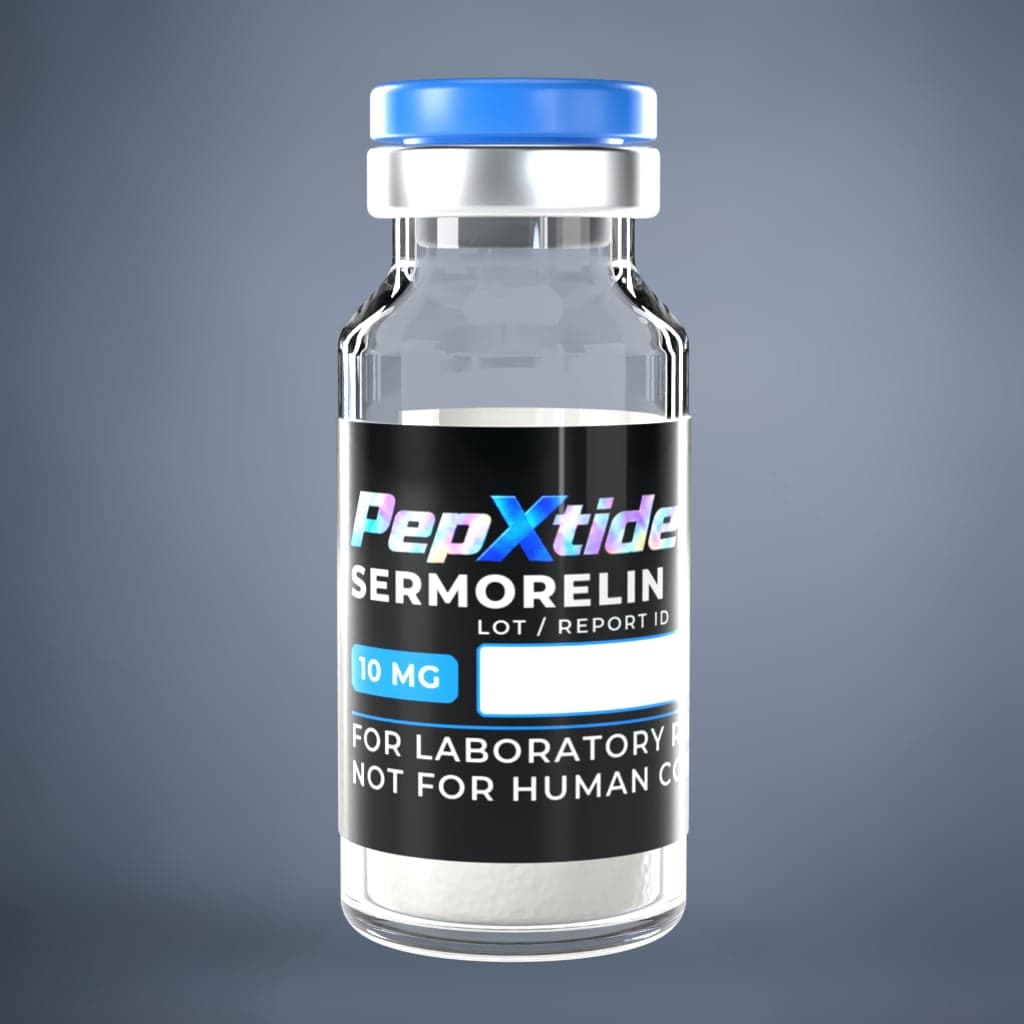
Sermorelin, Ipamorelin and Tesamorelin Set
Three 10mg secretagogue-class vials and a 10ml water vial.
On its own this set comes to $212.47 at checkout: $37.49 Bundle & Save is taken off there.
Sermorelin at 10mg, Ipamorelin at 10mg, Tesamorelin at 10mg and a 10ml bacteriostatic water vial. Four separate cart lines, four separate vials, no compounding. Ipamorelin is also stocked at 5mg and Tesamorelin at 20mg on their own pages; this set uses the 10mg of each. Certificate status is per product and per strength, so check each product page for the lot currently published.
Sermorelin is a 29-residue GHRH analogue, Tesamorelin a stabilised 44-residue GHRH analogue and Ipamorelin a pentapeptide. All three sit in the Growth & Secretagogue category.
Adds 4 separate cart lines. Remove any one of them in the cart.
Supplied as a lyophilized powder for in-vitro laboratory research only. No statement on this page describes an application, benefit, dose, route or outcome. Descriptions are structural and mechanistic, and reference data such as CAS numbers and molecular formulas is published information about the compound itself, provided for identification. The certificate shown above is the testing laboratory's report V260204-18-017 for this strength; its results are for that report only and are not averaged across the product line.


 10mg
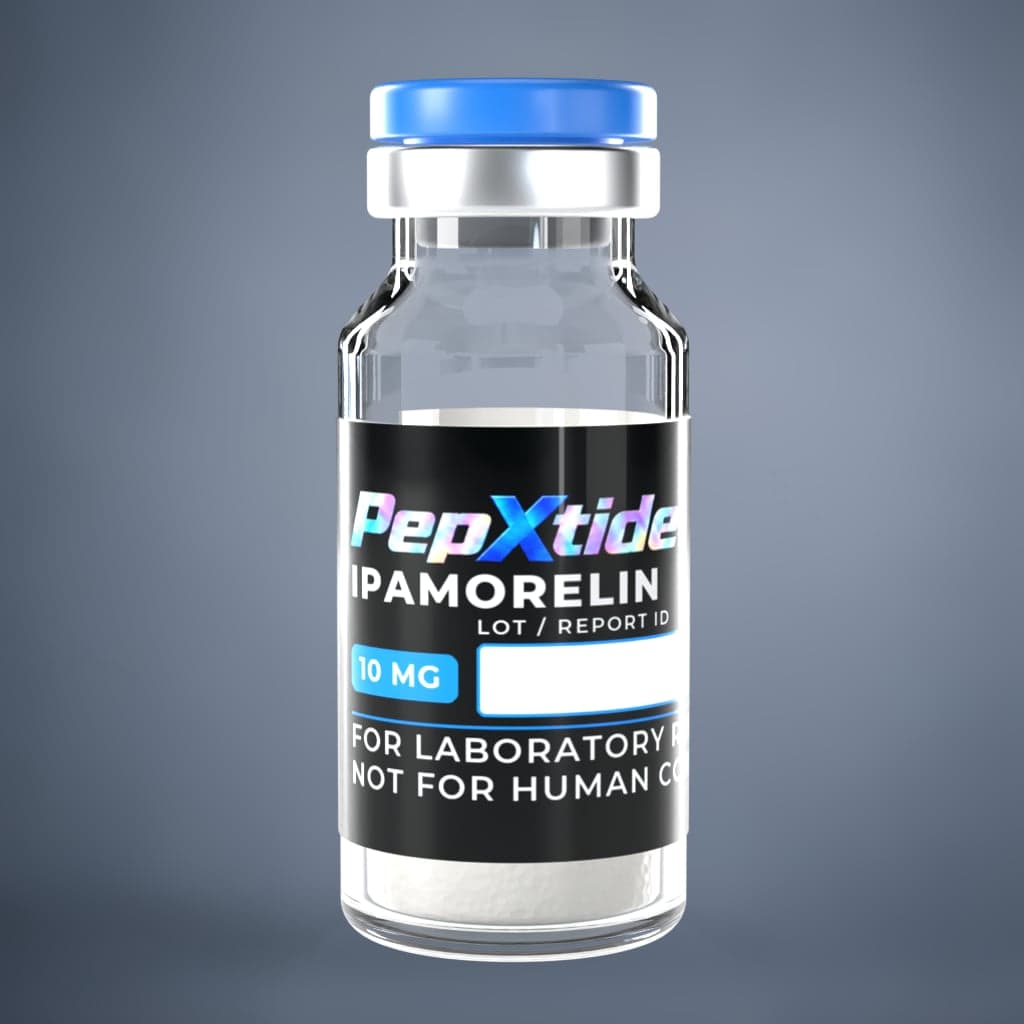 10mg
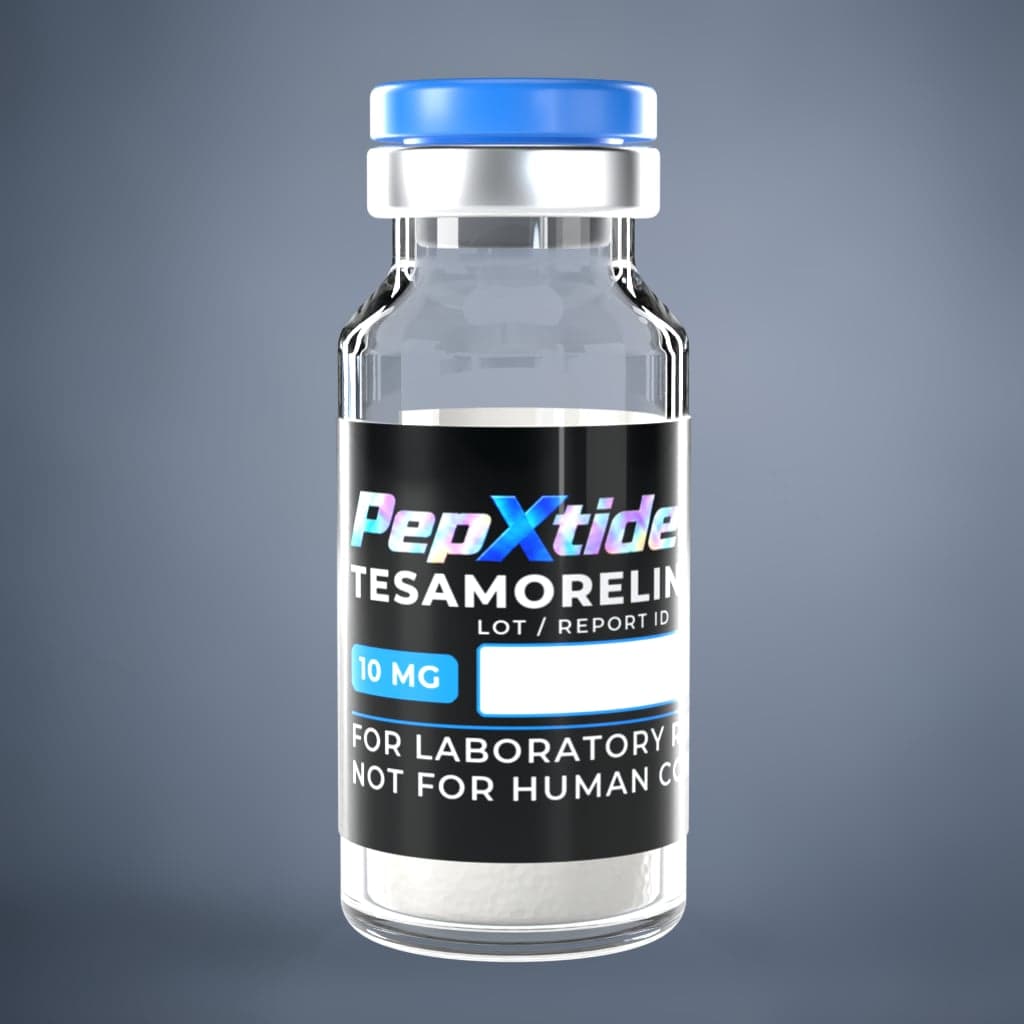 10mg
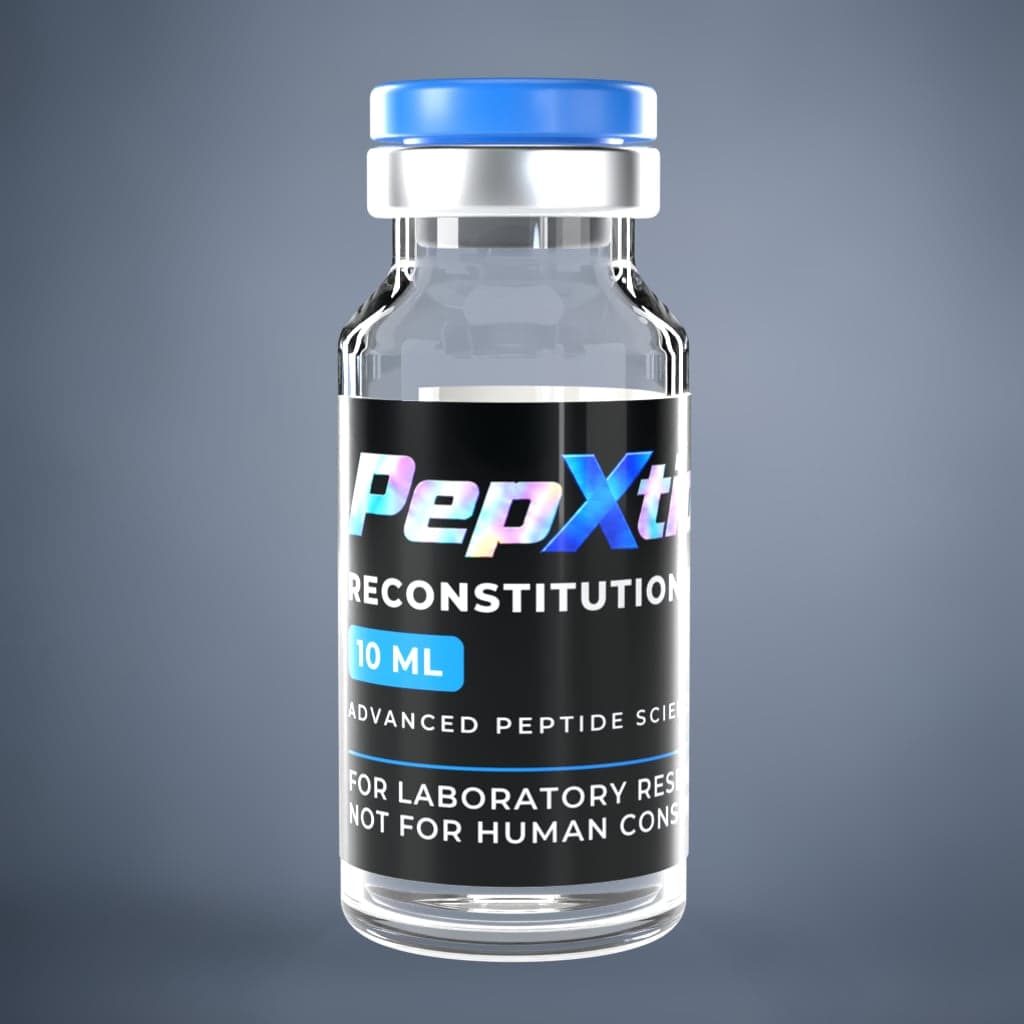 10ml