Research use only. This compound is supplied for in-vitro laboratory research by qualified researchers. It is not for human or veterinary consumption and has not been evaluated by the FDA.
Buy more of this strength and the price comes down. The store applies it at checkout - there is nothing to enter.
Free US shipping - no minimum
Tell us the Report ID or Laboratory ID shown on the certificate, and what you observed. If independent testing shows a discrepancy against our published certificate, we refund the lot in full and pull it from sale pending investigation.
1
$69.99each
Tell us the Report ID or Laboratory ID shown on the certificate, and what you observed. If independent testing shows a discrepancy against our published certificate, we refund the lot in full and pull it from sale pending investigation.
Certificate published
Discreet packaging
Dispatched within one business day
Free US shipping, no minimum
In stock, ships from our US fulfilment partner
Compound information
Type
Growth & Secretagogue
Molecular weight
711.86 g/mol
Sequence
Aib-His-D-2-Nal-D-Phe-Lys-NH2
Form
Lyophilized powder
Vial strength
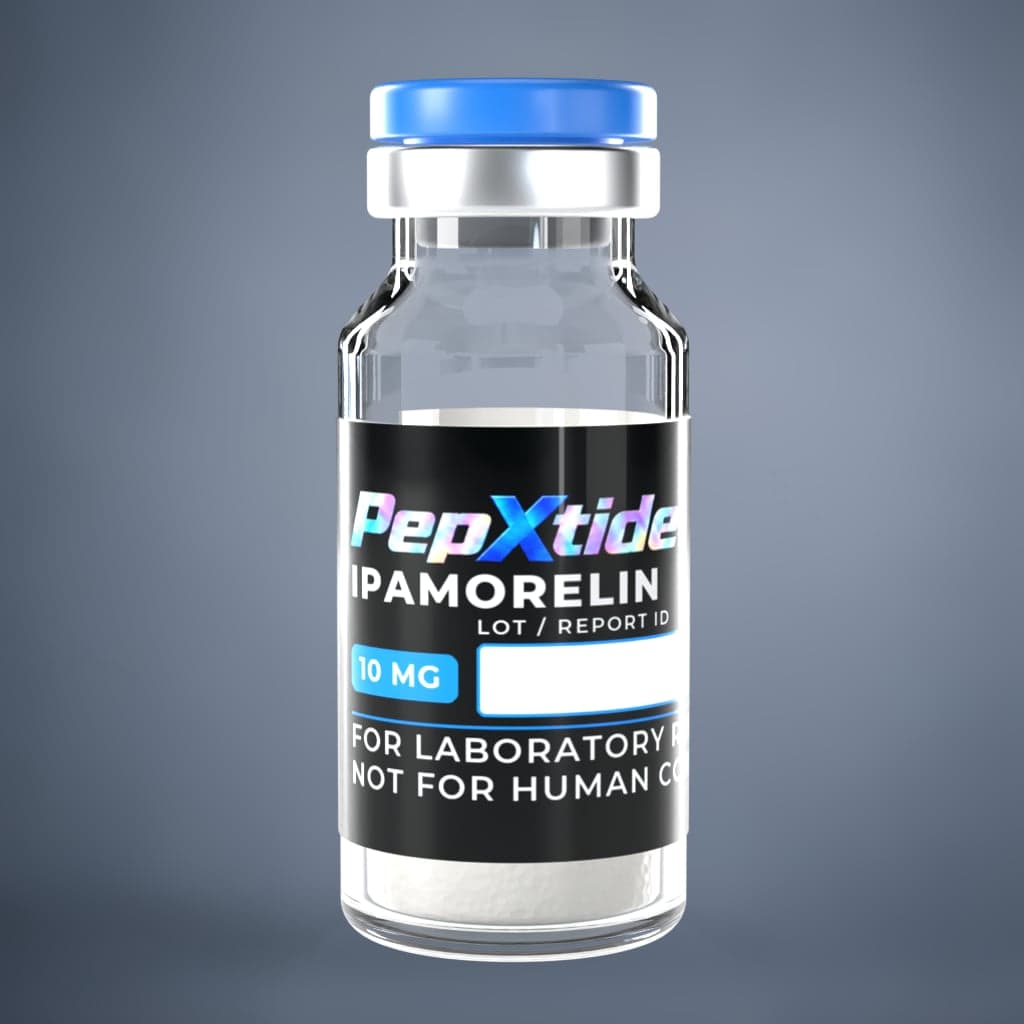
10mg
Catalogue number
PX-IPAM-10MG
Purity
See the laboratory report V260213-14-013
Identifiers are published properties of the molecule. Values we cannot confirm are omitted rather than estimated.
A pentapeptide built on non-standard residues: aminoisobutyric acid at position 1, then D-2-naphthylalanine and D-phenylalanine, with an amidated C-terminus. Drawn in the PepXtide structural library, where its computed mass matches the published molecular weight.
Despite sitting in the same catalogue category as the releasing-factor analogues, this compound is not related to them. It is not a fragment of growth hormone releasing hormone and shares no sequence homology with it. It was developed at Novo Nordisk and first described in 1998 as the first selective growth hormone secretagogue, identified from a series of compounds derived from the growth-hormone-releasing-peptide chemotype and lacking the central alanine-tryptophan dipeptide of GHRP-1.
Four of its five positions are unusual. Position one is alpha-aminoisobutyric acid, a non-proteinogenic residue whose two methyl groups on the alpha carbon severely restrict backbone rotation. Position three is D-2-naphthylalanine and position four is D-phenylalanine, both of the D configuration, and the C-terminus is an amide rather than a free acid. Only the histidine at position two and the lysine at position five are ordinary L-amino acids. D-residues are not substrates for the peptidases that recognise L-configured backbones, which is the general reason this architecture is used, though the primary literature does not name a specific protease that each substitution was chosen to resist.
The molecular target is the growth hormone secretagogue receptor type 1a, also called the ghrelin receptor, a 366-residue class A G-protein-coupled receptor of the rhodopsin family that signals through phospholipase C to inositol phosphates and calcium mobilisation. This is a different receptor and a different signalling route from the class B, cyclic-AMP-coupled GHRH receptor used by sermorelin, tesamorelin and the CJC-1295 analogues, which is the substantive distinction within this category.
Reported in-vitro values give a binding affinity of about 63 nM at the receptor expressed in COS-7 cells, and a half-maximal effective concentration of roughly 1.3 nM in the primary rat pituitary cell assay historically used to rank secretagogues, against about 2.2 nM for GHRP-6 in the same system. The word selective in the original title refers to the receptor and hormone-axis selectivity reported in that characterisation relative to earlier compounds of the class.
Supplier technical data report solubility of about 20 mg/mL in dimethylformamide and dimethyl sulfoxide, about 30 mg/mL in ethanol and about 10 mg/mL in phosphate-buffered saline at pH 7.2, with storage at -20C. Published plasma-stability half-life figures for this compound specifically were not located in the primary literature.
Background
Ipamorelin is a pentapeptide, Aib-His-D-2-Nal-D-Phe-Lys-NH2, developed at Novo Nordisk and described in 1998 as a selective growth hormone secretagogue derived from the growth-hormone-releasing-peptide chemotype. It shares no sequence homology with growth hormone releasing hormone. Aminoisobutyric acid restricts backbone rotation at position one, two D-residues and a C-terminal amide make it a poor peptidase substrate, and its target is the ghrelin receptor GHS-R1a, a class A GPCR signalling through phospholipase C.
Research applications
Where this compound appears in the published literature. Each area points to the papers listed under Primary literature below. These describe what was studied, not an application of this product.
Gastrointestinal motility models
Studied in a 2012 rodent model of postoperative gastric dysmotility.[5]
Chemotherapy-model research
Examined in a 2024 ferret model of cisplatin-induced body-weight change, alongside the related GHS-R1a agonist anamorelin.[1]
Endocrine models
Investigated in a 2004 study of insulin release from the pancreas of normal and diabetic rats, and in a 2024 study of the hypothalamic-pituitary-testicular axis in a cichlid fish.[3][2]
Specifications
Supplied as
Lyophilized powder
Available strengths
10mg · 5mg
Storage
Store lyophilized at -20C, protected from light and moisture.
Intended use
In-vitro laboratory research only
Research overview
Pentapeptide secretagogue
A five-residue peptide carrying three non-standard residues: alpha-aminoisobutyric acid at position one, D-2-naphthylalanine at three and D-phenylalanine at four. All three are modelled, and the two D residues have their side chains mirrored so they read as distinct from the L form.
Residues
5
Atoms
98
Primary literature
Peer-reviewed papers indexed on PubMed that study this compound. We did not write them and we do not summarise them — each reference opens the record on PubMed so you can read the work itself. Publication is not evidence of safety or efficacy, and none of this research was conducted by PepXtide.
The list above is a selection, not the whole literature. These open the public databases themselves, each one confirmed to return results on 29 August 2026.
PubMed, PubChem and ClinicalTrials.gov are independent scientific databases. A record or a published paper is not an endorsement of this product, and nothing indexed there describes an application, dose or outcome supported by PepXtide.
Storage & handling
Lyophilized
Store lyophilized at -20C, protected from light and moisture. Two of the five residues are D-configured and the C-terminus is amidated, which makes the molecule a poor substrate for ordinary peptidases, so the practical handling concerns are moisture and solvent choice rather than enzymatic loss.
Reconstituted
Once reconstituted, refrigerate at 2-8C and use within the period appropriate to the material.
Handling notes
Store the lyophilized material at -20C, protected from light and moisture.
Two D-configured residues and an amidated C-terminus make it a poor substrate for ordinary peptidases, so the practical concerns are moisture and solvent choice.
Supplier data report solubility of about 10 mg/mL in phosphate-buffered saline at pH 7.2, with higher figures in DMSO, DMF and ethanol.
Once reconstituted, refrigerate at 2-8C and use within the period appropriate to the material.
Safety & handling
Bench handling, not a dosing guide.
Intended use
Supplied strictly as a laboratory research material for in-vitro study by qualified researchers. Not for human or veterinary use, not for ingestion or injection, and not for any clinical or diagnostic application.
Personal protective equipment
Handle with gloves, eye protection and a laboratory coat. Weigh and transfer lyophilized powder in a ventilated enclosure to avoid generating an inhalable dust.
Reconstitution
Reconstitute against the diluent and volume appropriate to your protocol, adding solvent slowly down the vial wall rather than directly onto the pellet. Do not shake. This is a handling note, not a dosing guide.
Storage after opening
Once reconstituted, refrigerate and use within the period appropriate to the material. Avoid repeated freeze-thaw cycles, which degrade peptides faster than continuous storage at the listed temperature.
Disposal
Dispose of material and containers in accordance with your institution's chemical waste procedures and applicable local regulations.
Also sold as part of these sets
5mg
10mg
1mg
10ml
Growth & Secretagogue · 4 vials
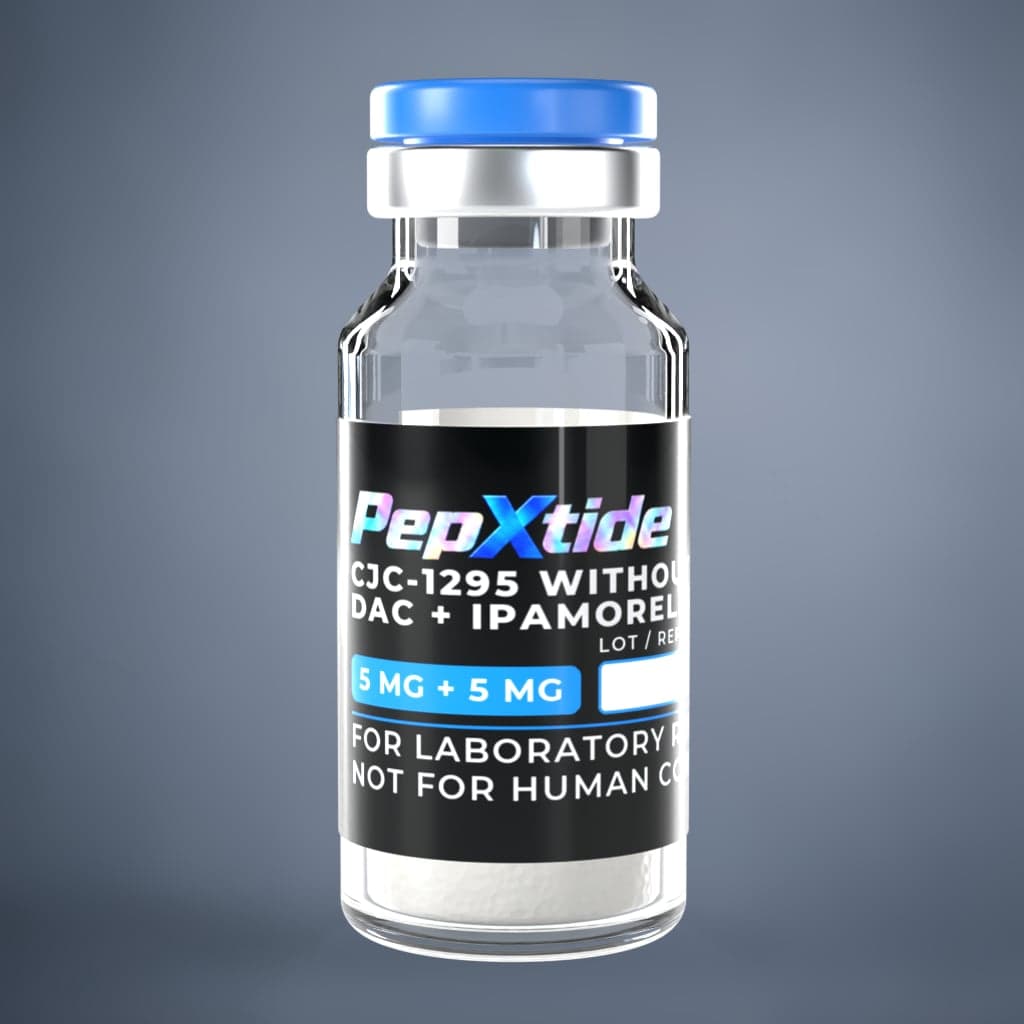
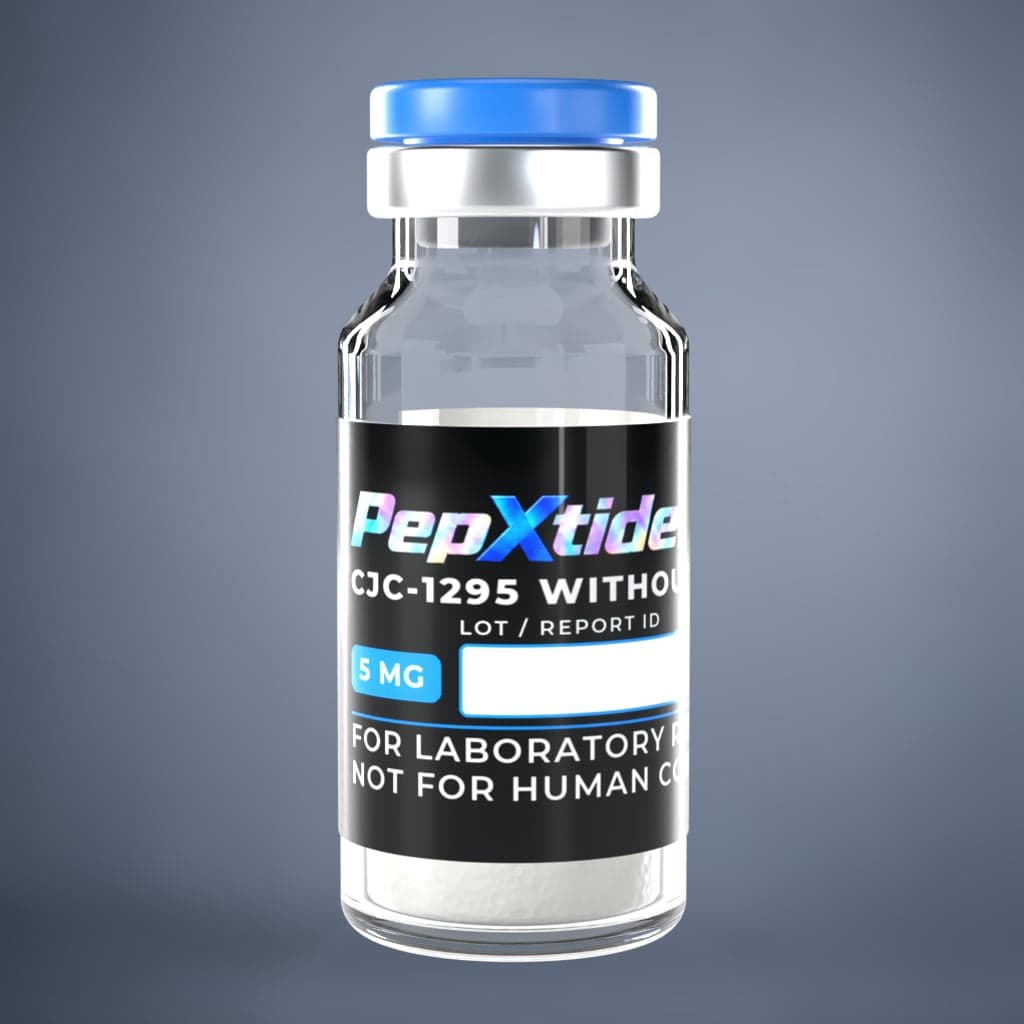
CJC-1295 (no DAC), Ipamorelin and IGF-1 LR3 Set
A 5mg and a 10mg secretagogue-class vial and a 1mg IGF-1 LR3 vial, plus water.
On its own this set comes to $254.97 at checkout: $45.00 Bundle & Save is taken off there.
CJC-1295 without DAC at 5mg, Ipamorelin at 10mg, IGF-1 LR3 at 1mg and a 10ml bacteriostatic water vial. The catalogue also sells CJC-1295 and Ipamorelin as a single pre-blended vial; this set is the opposite of that, giving you separate lyophilised vials so each compound can be reconstituted and handled on its own.
CJC-1295 without DAC and Ipamorelin belong to the growth-hormone secretagogue class; IGF-1 LR3 is an 83-residue growth-factor analogue. All three are filed under Growth & Secretagogue in this catalogue.
Adds 4 separate cart lines. Remove any one of them in the cart.
10mg
10mg
10mg
10ml
Growth & Secretagogue · 4 vials
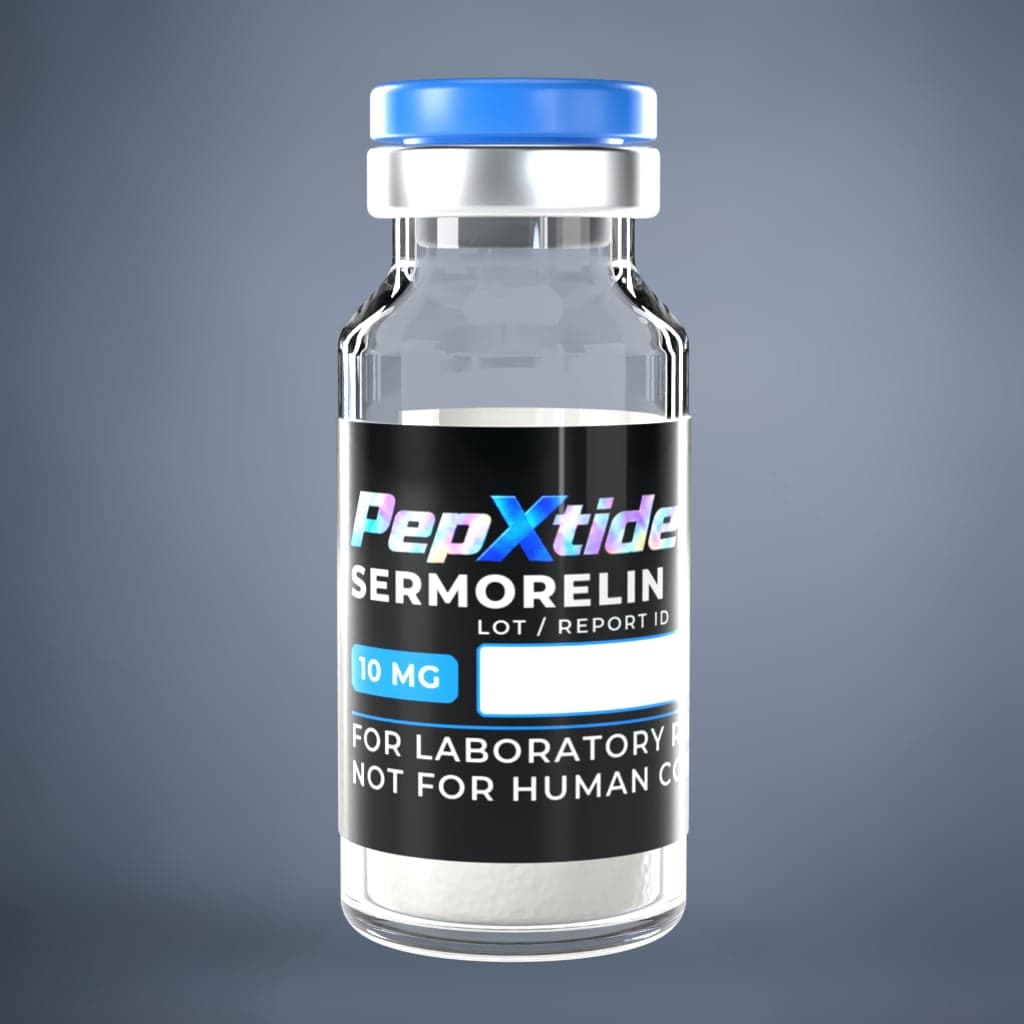
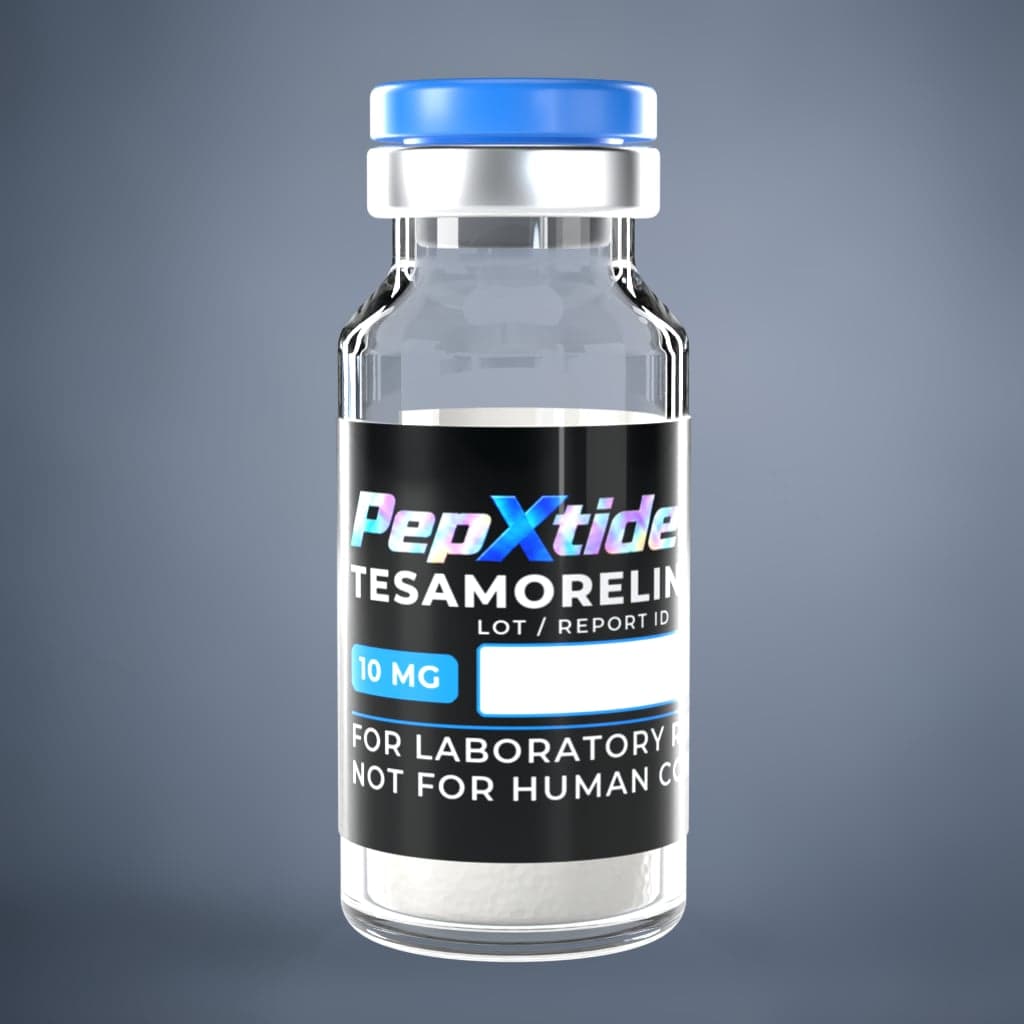
Sermorelin, Ipamorelin and Tesamorelin Set
Three 10mg secretagogue-class vials and a 10ml water vial.
On its own this set comes to $212.47 at checkout: $37.49 Bundle & Save is taken off there.
Sermorelin at 10mg, Ipamorelin at 10mg, Tesamorelin at 10mg and a 10ml bacteriostatic water vial. Four separate cart lines, four separate vials, no compounding. Ipamorelin is also stocked at 5mg and Tesamorelin at 20mg on their own pages; this set uses the 10mg of each. Certificate status is per product and per strength, so check each product page for the lot currently published.
Sermorelin is a 29-residue GHRH analogue, Tesamorelin a stabilised 44-residue GHRH analogue and Ipamorelin a pentapeptide. All three sit in the Growth & Secretagogue category.
Adds 4 separate cart lines. Remove any one of them in the cart.
Supplied for in-vitro laboratory research only. Not for human or veterinary consumption, and not evaluated by the FDA. No statement on this page describes an application, benefit, dose, route or outcome. Descriptions are structural and mechanistic, and reference data such as CAS numbers and molecular formulas is published information about the compound itself, provided for identification. The certificate shown above is the testing laboratory's report V260213-14-013 for this strength; its results are for that report only and are not averaged across the product line.


 5mg
 10mg
 1mg
 10ml