Research use only. This compound is supplied for in-vitro laboratory research by qualified researchers. It is not for human or veterinary consumption and has not been evaluated by the FDA.
Buy more of this strength and the price comes down. The store applies it at checkout - there is nothing to enter.
Free US shipping - no minimum
Tell us the Report ID or Laboratory ID shown on the certificate, and what you observed. If independent testing shows a discrepancy against our published certificate, we refund the lot in full and pull it from sale pending investigation.
1
$79.99each
Tell us the Report ID or Laboratory ID shown on the certificate, and what you observed. If independent testing shows a discrepancy against our published certificate, we refund the lot in full and pull it from sale pending investigation.
Certificate published
Discreet packaging
Dispatched within one business day
Free US shipping, no minimum
In stock, ships from our US fulfilment partner
Compound information
Type
Neuro Research
Molecular weight
848.83 g/mol
Sequence
Trp-Ala-Gly-Gly-Asp-Ala-Ser-Gly-Glu (WAGGDASGE)
Form
Lyophilized powder
Vial strength
10mg
Catalogue number
PX-DSIP-10MG
Purity
See the laboratory report 2607210507
Identifiers are published properties of the molecule. Values we cannot confirm are omitted rather than estimated.
DSIP is a nine-residue peptide. Its initials are the name given at isolation, delta sleep inducing peptide, which records an experimental context rather than a function. Four of the nine residues are glycine or alanine, leaving the backbone unusually flexible, and two acidic residues sit at the tail.
The peptide was isolated from the cerebral venous blood dialysate of rabbits by the Schoenenberger and Monnier group in Basel and characterised and synthesised in 1977. The name records the experimental context of that isolation rather than an established function, and the distinction matters here more than usual.
Structurally it is entirely unmodified: Trp-Ala-Gly-Gly-Asp-Ala-Ser-Gly-Glu, all L-residues, with a free N-terminal amine and a free C-terminal acid, no amidation and no disulfide. Four glycine or alanine residues give the backbone unusual conformational freedom, and solution studies by NMR, circular dichroism, infrared spectroscopy and fluorescence describe a dynamic equilibrium between unordered and folded states rather than a single structure. The N-terminal tryptophan is the only aromatic residue, which makes it both the molecule's sole absorbance chromophore and its most oxidation-prone side chain.
Two things about this peptide are more uncertain than its forty-year presence in the literature suggests, and both are worth knowing. No precursor gene or precursor protein has ever been identified for it; its entry in the protein sequence databases exists at protein level only, with no nucleotide cross-reference. And no specific receptor or binding protein has been isolated, with a peer-reviewed review describing the evidence for its identity as a sleep peptide as poorly documented and weak. A related caution on naming: the gene DSIPI, also called TSC22D3 or GILZ, was named for immunoreactivity with this peptide and is an unrelated protein; it should not be cited as this peptide's gene.
The reported molecular observations are indirect. In rat median eminence preparations the peptide inhibited somatostatin release in a manner blocked by the dopamine antagonist pimozide, which the authors read as dopaminergically mediated rather than as a direct receptor action; calcium-dependent release of met-enkephalin from rat synaptosomes has also been reported, as have changes in antioxidant enzyme activities in rodent tissue preparations.
One property has been measured cleanly, and it is a transport property rather than a pharmacological one. In vascularly perfused guinea-pig brain the peptide crosses the blood-brain barrier by a high-affinity saturable mechanism that is self-inhibited by unlabelled peptide and, interestingly, by L-tryptophan. Against that, it is rapidly degraded in human and rat blood in a species-, time- and temperature-dependent manner; the phosphorylated serine-7 variant degrades more slowly. No numeric plasma half-life has been published.
Background
DSIP is an unmodified nine-residue linear peptide (WAGGDASGE) isolated in 1977 by the Schoenenberger and Monnier group from cerebral venous blood dialysate of rabbits. Its name reflects the experimental setting of that isolation rather than an established function. Glycine and alanine make up four of its positions, so the backbone is highly flexible, and solution studies describe an equilibrium between unordered and folded states. No precursor gene, receptor or binding protein has been identified for it.
Research applications
Where this compound appears in the published literature. Each area points to the papers listed under Primary literature below. These describe what was studied, not an application of this product.
Literature reviews
Reported in a run of reviews from 1984 to 2006 in Neuroscience and Biobehavioral Reviews, Peptides, the European Journal of Anaesthesiology and the Journal of Neurochemistry, the last of which frames the compound as a still unresolved riddle.[1][4][3][2]
Pituitary cell preparations
Studied in rat anterior pituitary gland preparations in vitro, in a 1986 Hormone and Metabolic Research paper examining CRF-induced ACTH secretion.[5]
Specifications
Supplied as
Lyophilized powder
Available strengths
10mg · 15mg
Storage
Store lyophilized at -20C, protected from light and moisture.
Intended use
In-vitro laboratory research only
Research overview
Delta sleep inducing peptide
Nine residues with tryptophan at the N-terminus and a run of small residues through the middle. The glycines give the backbone unusual freedom, so an extended conformation is the honest way to draw it.
Residues
9
Atoms
60
Primary literature
Peer-reviewed papers indexed on PubMed that study this compound. We did not write them and we do not summarise them — each reference opens the record on PubMed so you can read the work itself. Publication is not evidence of safety or efficacy, and none of this research was conducted by PepXtide.
The list above is a selection, not the whole literature. These open the public databases themselves, each one confirmed to return results on 29 August 2026.
PubMed, PubChem and ClinicalTrials.gov are independent scientific databases. A record or a published paper is not an endorsement of this product, and nothing indexed there describes an application, dose or outcome supported by PepXtide.
Storage & handling
Lyophilized
Store lyophilized at -20C, protected from light and moisture. The N-terminal tryptophan is both the only chromophore and the most oxidation-prone residue in the sequence, and published work reports rapid degradation in blood, so protect solutions from light and air and prepare them close to use.
Reconstituted
Once reconstituted, refrigerate at 2-8C and use within the period appropriate to the material.
Handling notes
Store the lyophilized material at -20C, protected from light and moisture.
The N-terminal tryptophan is the only chromophore and the most oxidation-prone residue, so protect solutions from light and air.
Published work reports rapid degradation in blood, so prepare solutions close to use.
Once reconstituted, refrigerate at 2-8C and use within the period appropriate to the material.
Safety & handling
Bench handling, not a dosing guide.
Intended use
Supplied strictly as a laboratory research material for in-vitro study by qualified researchers. Not for human or veterinary use, not for ingestion or injection, and not for any clinical or diagnostic application.
Personal protective equipment
Handle with gloves, eye protection and a laboratory coat. Weigh and transfer lyophilized powder in a ventilated enclosure to avoid generating an inhalable dust.
Reconstitution
Reconstitute against the diluent and volume appropriate to your protocol, adding solvent slowly down the vial wall rather than directly onto the pellet. Do not shake. This is a handling note, not a dosing guide.
Storage after opening
Once reconstituted, refrigerate and use within the period appropriate to the material. Avoid repeated freeze-thaw cycles, which degrade peptides faster than continuous storage at the listed temperature.
Disposal
Dispose of material and containers in accordance with your institution's chemical waste procedures and applicable local regulations.
Also sold as part of a set
10mg
10mg
20mg
10ml
Neuro Research · 4 vials
DSIP, Epithalon and Pinealon Set
A nonapeptide at 10mg, a tetrapeptide at 10mg, a tripeptide at 20mg and a 10ml water vial.
On its own this set comes to $216.72 at checkout: $38.25 Bundle & Save is taken off there.
DSIP at 10mg, Epithalon at 10mg, Pinealon at 20mg and a 10ml bacteriostatic water vial. DSIP and Epithalon are stocked in larger vials on their own pages - DSIP at 15mg, Epithalon at 40mg and 50mg - and this set uses the smaller of each. The price below is the sum of the four items as listed.
DSIP is a nine-residue peptide, Epithalon a four-residue peptide and Pinealon the tripeptide Glu-Asp-Arg. All three are short synthetic sequences; Epithalon and Pinealon both come from the Khavinson short-peptide programme.
Adds 4 separate cart lines. Remove any one of them in the cart.
Supplied for in-vitro laboratory research only. Not for human or veterinary consumption, and not evaluated by the FDA. No statement on this page describes an application, benefit, dose, route or outcome. Descriptions are structural and mechanistic, and reference data such as CAS numbers and molecular formulas is published information about the compound itself, provided for identification. The certificate shown above is the testing laboratory's report 2607210507 for this strength; its results are for that report only and are not averaged across the product line.


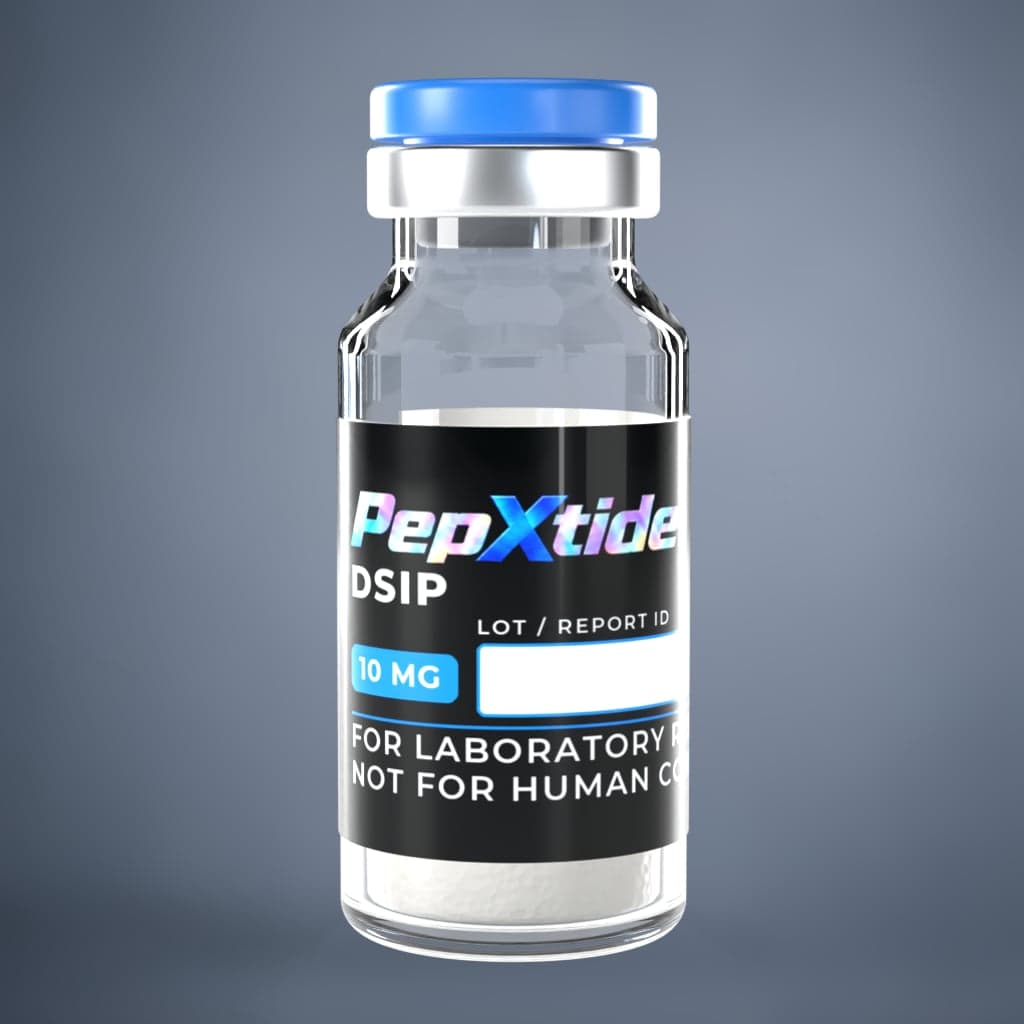 10mg
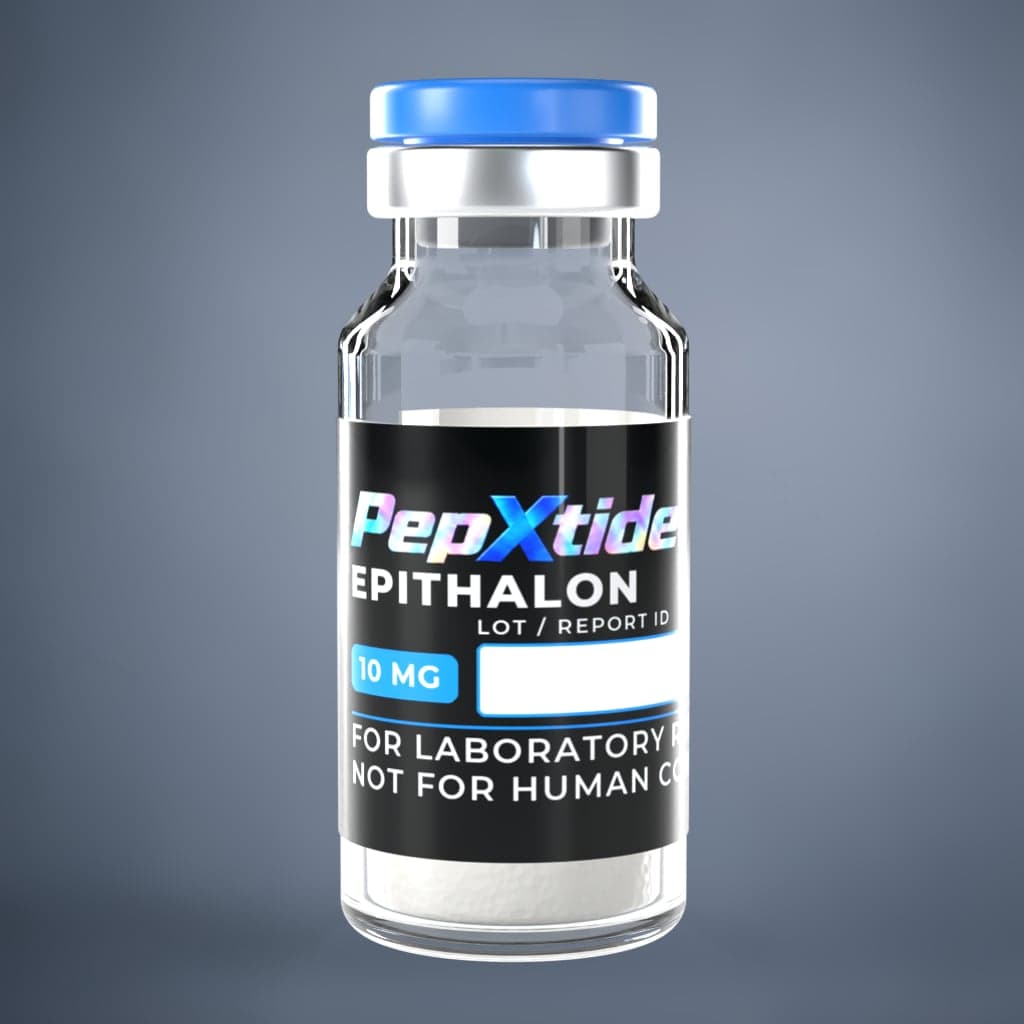 10mg
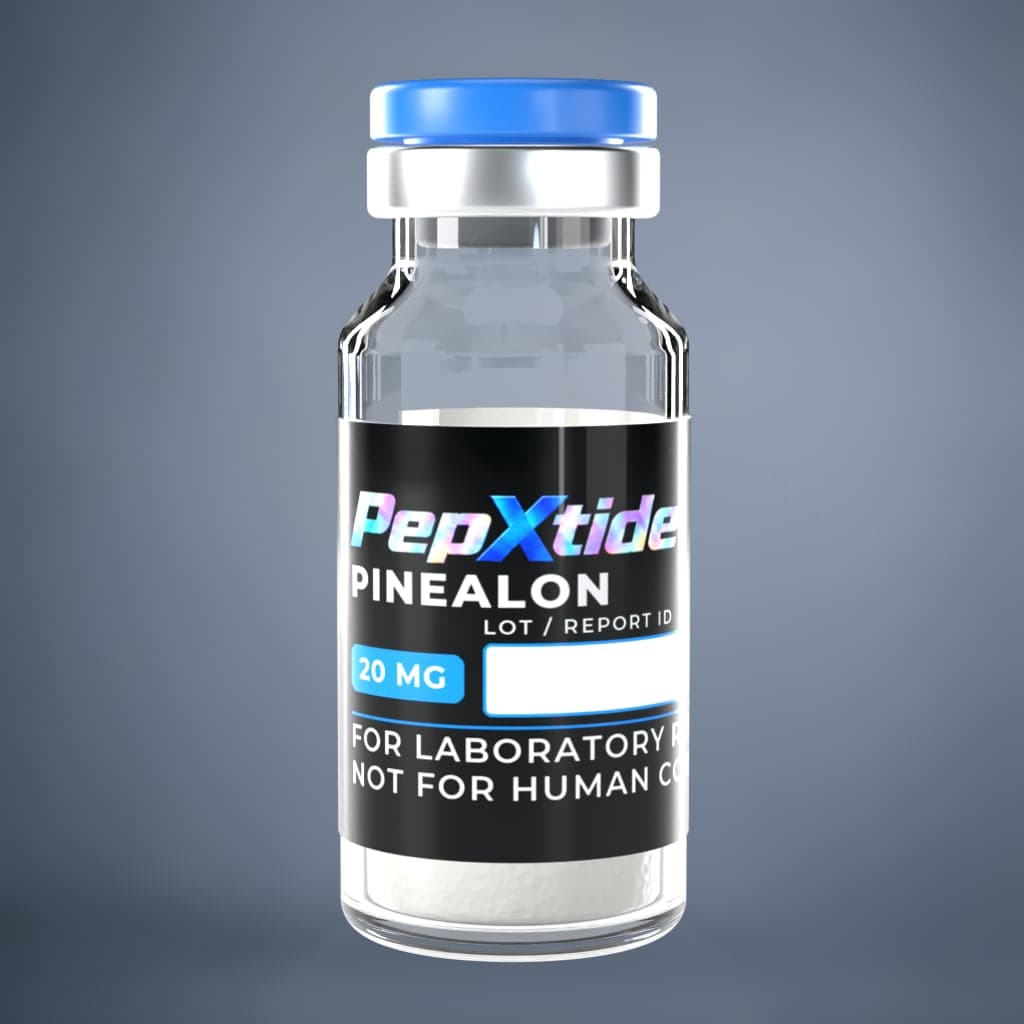 20mg
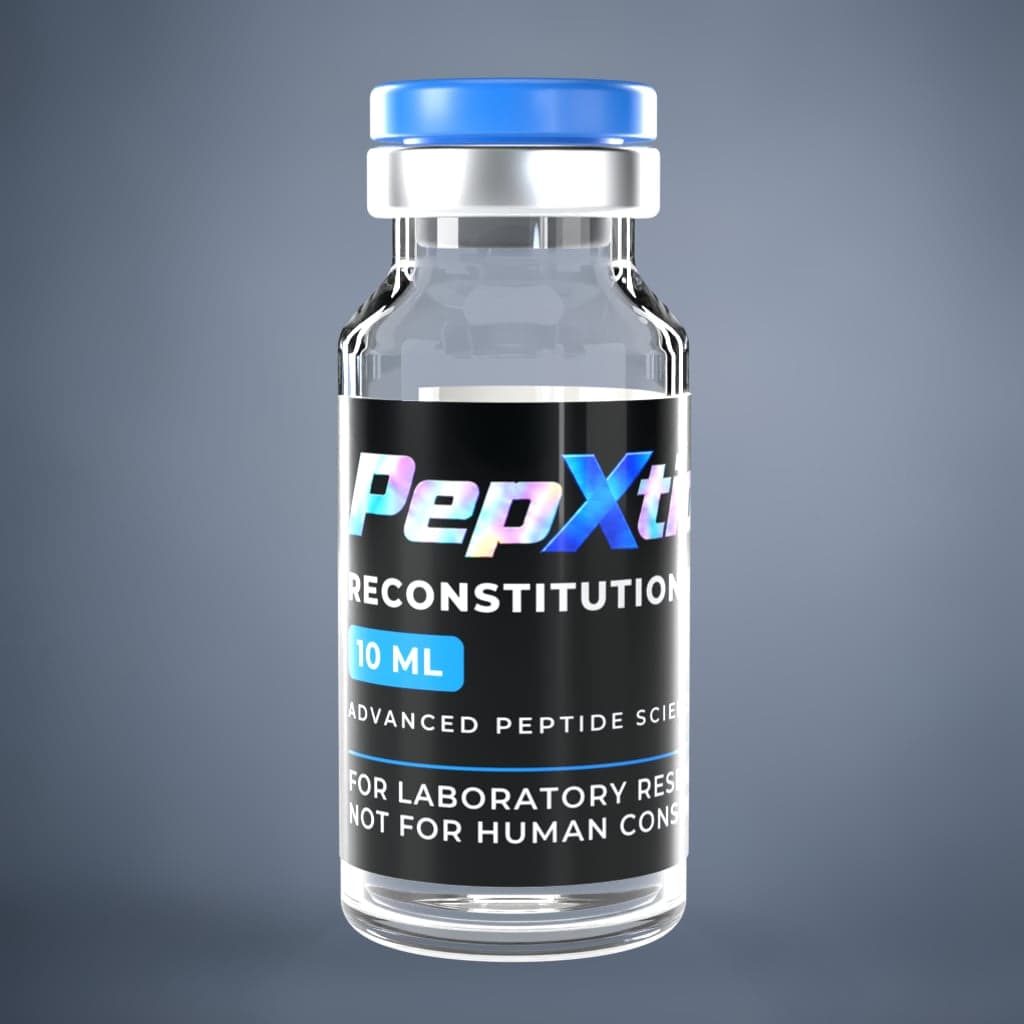 10ml