Research use only. This compound is supplied for in-vitro laboratory research by qualified researchers. It is not for human or veterinary consumption and has not been evaluated by the FDA.
Buy more of this strength and the price comes down. The store applies it at checkout - there is nothing to enter.
Free US shipping - no minimum
Tell us the Report ID or Laboratory ID shown on the certificate, and what you observed. If independent testing shows a discrepancy against our published certificate, we refund the lot in full and pull it from sale pending investigation.
1
$49.99each
Tell us the Report ID or Laboratory ID shown on the certificate, and what you observed. If independent testing shows a discrepancy against our published certificate, we refund the lot in full and pull it from sale pending investigation.
Certificate pending
Discreet packaging
Dispatched within one business day
Free US shipping, no minimum
In stock, ships from our US fulfilment partner
Compound information
Type
Cellular & Redox
Molecular weight
390.35 g/mol
Sequence
Ala-Glu-Asp-Gly
Form
Lyophilized powder
Vial strength
10mg
Catalogue number
PX-EPI-10MG
Purity
Certificate pending for this strength
Identifiers are published properties of the molecule. Values we cannot confirm are omitted rather than estimated.
The tetrapeptide Ala-Glu-Asp-Gly, also written Epitalon. One of the shortest chains in the PepXtide structural library, where its computed mass matches the published molecular weight.
The peptide was designed from the amino-acid composition of Epithalamin, a polypeptide extract of bovine pineal gland described in the literature from the 1970s, by a programme led by Khavinson and Anisimov. The earliest indexed primary papers on the defined tetrapeptide date from 2000. Epithalamin and Epitalon are not the same material, and public database synonym lists conflate them, so a citation to one should not be read as evidence about the other.
Structurally it is as simple as a peptide gets: four L-residues joined by ordinary alpha-peptide bonds, with a free N-terminal amine and a free C-terminal acid, plus free side-chain carboxyls on the glutamate and the aspartate. There is no cyclisation, no acylation, no amidation and no D-residue. Commercial material is generally supplied as an acetate or trifluoroacetate salt, which the certificate should state.
The catalogue will be direct about the evidence, because this is the compound in the range where popular claims run furthest ahead of published work. The frequently repeated account that the peptide induces telomerase and elongates telomeres rests on reports in telomerase-negative human fetal fibroblasts published from 2003 onward. A literature search on the peptide together with telomerase or telomeres returns only around a dozen records in total, of which the primary studies came from a single research group for roughly two decades; the first independent primary replications appeared in 2025, and one carries a published correction. The proposed binding of the peptide to DNA or to gene promoters comes from molecular modelling, not from a measured binding experiment such as a crystal structure, isothermal titration calorimetry or a gel-shift assay. A review published in 2025 states plainly that the mechanism remains unverified.
Reported work on the pineal gland is internally contradictory in the same way, with a direct effect on melatonin-synthesis enzymes reported in pinealocyte culture but no effect on melatonin secretion found in perifused pineal preparations at any concentration or age.
The physicochemical record is close to empty, and that is itself the useful handling fact. A 2025 review states that the quantity of physicochemical and structural investigation of this peptide remains very limited, and no published solubility, stability, half-life or absorption measurements were located. Note what the chemistry implies in their absence: an unmodified tetrapeptide with a free N-terminus and a free C-terminal acid is a textbook substrate for both aminopeptidases and carboxypeptidases, and claims that it is resistant to hydrolysis do not trace to primary data. Treat it as labile in any matrix with peptidase activity until a specific measurement says otherwise.
Background
Epithalon (also written Epitalon) is the tetrapeptide Ala-Glu-Asp-Gly, designed by the Khavinson and Anisimov programme in St Petersburg from the amino-acid composition of Epithalamin, a bovine pineal extract; the defined tetrapeptide and that extract are different materials. It carries a free N-terminal amine, a free C-terminal acid and free side-chain carboxyls on the glutamate and aspartate, with no cyclisation, acylation, amidation or D-residue. Proposed DNA or promoter binding comes from molecular modelling rather than a measured binding experiment, and a 2025 review describes the mechanism as unverified.
Research applications
Where this compound appears in the published literature. Each area points to the papers listed under Primary literature below. These describe what was studied, not an application of this product.
Overview
Reported in a 2025 overview in the International Journal of Molecular Sciences covering the published record on the pineal tetrapeptide.[1]
Cultured cell and oocyte models
Studied in cultured-cell work, including a 2025 in-vitro model of diabetic retinopathy and a 2022 study of post-ovulatory ageing in mouse oocytes in vitro.[3][4]
Immune and neural models
Examined in a 2012 Advances in Gerontology paper on the tetrapeptide and interferon gamma in immune response, and in a 2007 study of neuron activity in the rat neocortex.[2][5]
Specifications
Supplied as
Lyophilized powder
Available strengths
10mg · 40mg · 50mg
Storage
Store lyophilized at -20C, protected from light and moisture.
Intended use
In-vitro laboratory research only
Research overview
Four residues, two of them acidic. One of the shortest peptides in the library, small enough that every hydrogen is drawn. Studied in work on the pineal gland.
Residues
4
Atoms
47
Primary literature
Peer-reviewed papers indexed on PubMed that study this compound. We did not write them and we do not summarise them — each reference opens the record on PubMed so you can read the work itself. Publication is not evidence of safety or efficacy, and none of this research was conducted by PepXtide.
The list above is a selection, not the whole literature. These open the public databases themselves, each one confirmed to return results on 29 August 2026.
PubMed, PubChem and ClinicalTrials.gov are independent scientific databases. A record or a published paper is not an endorsement of this product, and nothing indexed there describes an application, dose or outcome supported by PepXtide.
Storage & handling
Lyophilized
Store lyophilized at -20C, protected from light and moisture. No published stability or solution half-life data were located for this peptide, and its free N-terminus and free C-terminal acid make it a substrate for both aminopeptidases and carboxypeptidases, so prepare solutions fresh rather than assuming they keep.
Reconstituted
Once reconstituted, refrigerate at 2-8C and use within the period appropriate to the material.
Handling notes
Store the lyophilized material at -20C, protected from light and moisture.
No published solubility, stability or solution half-life data were located for this peptide.
The free N-terminus and free C-terminal acid make it a substrate for both aminopeptidases and carboxypeptidases, so regard it as labile in any matrix with peptidase activity.
Prepare solutions fresh; once reconstituted, refrigerate at 2-8C and use within the period appropriate to the material.
Safety & handling
Bench handling, not a dosing guide.
Intended use
Supplied strictly as a laboratory research material for in-vitro study by qualified researchers. Not for human or veterinary use, not for ingestion or injection, and not for any clinical or diagnostic application.
Personal protective equipment
Handle with gloves, eye protection and a laboratory coat. Weigh and transfer lyophilized powder in a ventilated enclosure to avoid generating an inhalable dust.
Reconstitution
Reconstitute against the diluent and volume appropriate to your protocol, adding solvent slowly down the vial wall rather than directly onto the pellet. Do not shake. This is a handling note, not a dosing guide.
Storage after opening
Once reconstituted, refrigerate and use within the period appropriate to the material. Avoid repeated freeze-thaw cycles, which degrade peptides faster than continuous storage at the listed temperature.
Disposal
Dispose of material and containers in accordance with your institution's chemical waste procedures and applicable local regulations.
Also sold as part of a set
10mg
10mg
20mg
10ml
Neuro Research · 4 vials
DSIP, Epithalon and Pinealon Set
A nonapeptide at 10mg, a tetrapeptide at 10mg, a tripeptide at 20mg and a 10ml water vial.
On its own this set comes to $216.72 at checkout: $38.25 Bundle & Save is taken off there.
DSIP at 10mg, Epithalon at 10mg, Pinealon at 20mg and a 10ml bacteriostatic water vial. DSIP and Epithalon are stocked in larger vials on their own pages - DSIP at 15mg, Epithalon at 40mg and 50mg - and this set uses the smaller of each. The price below is the sum of the four items as listed.
DSIP is a nine-residue peptide, Epithalon a four-residue peptide and Pinealon the tripeptide Glu-Asp-Arg. All three are short synthetic sequences; Epithalon and Pinealon both come from the Khavinson short-peptide programme.
Adds 4 separate cart lines. Remove any one of them in the cart.
Supplied for in-vitro laboratory research only. Not for human or veterinary consumption, and not evaluated by the FDA. No statement on this page describes an application, benefit, dose, route or outcome. Descriptions are structural and mechanistic, and reference data such as CAS numbers and molecular formulas is published information about the compound itself, provided for identification. No measured result is shown for this strength because a certificate has not yet been published for its lot.


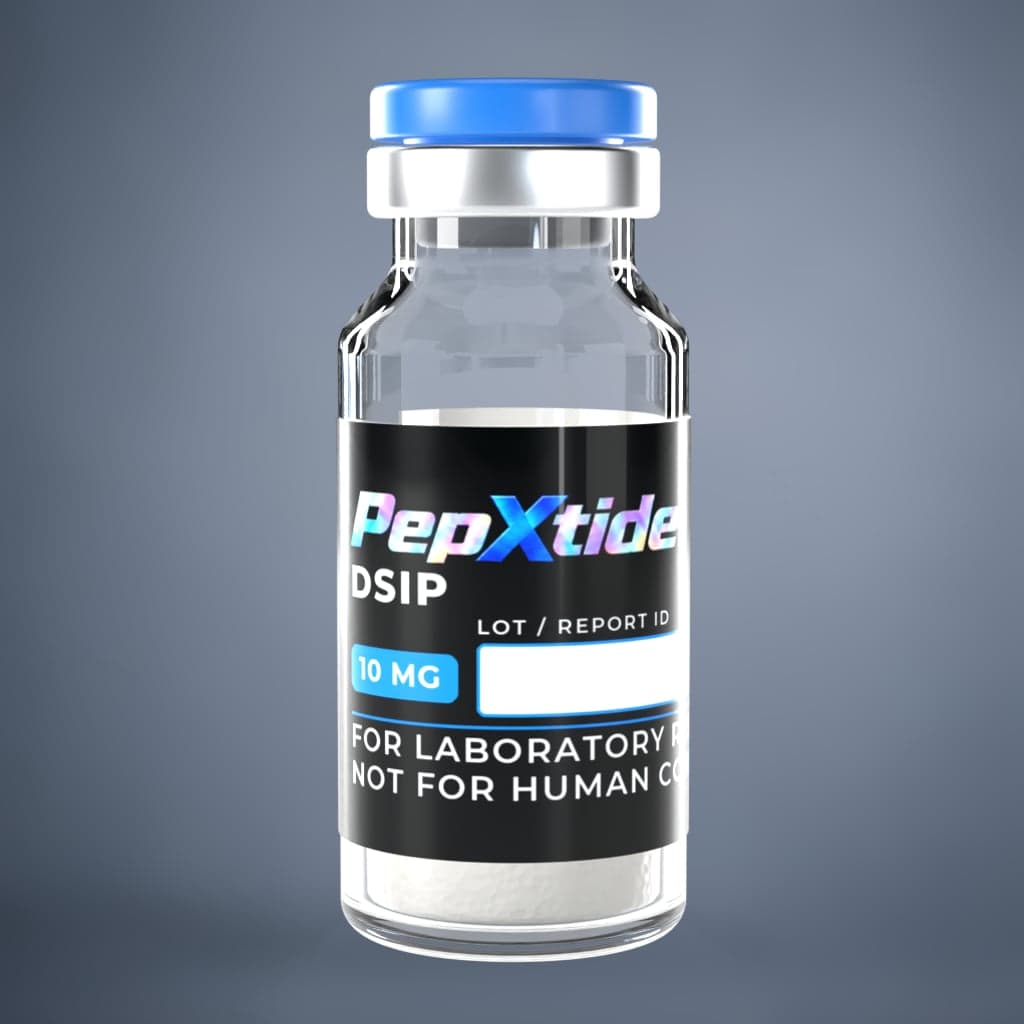 10mg
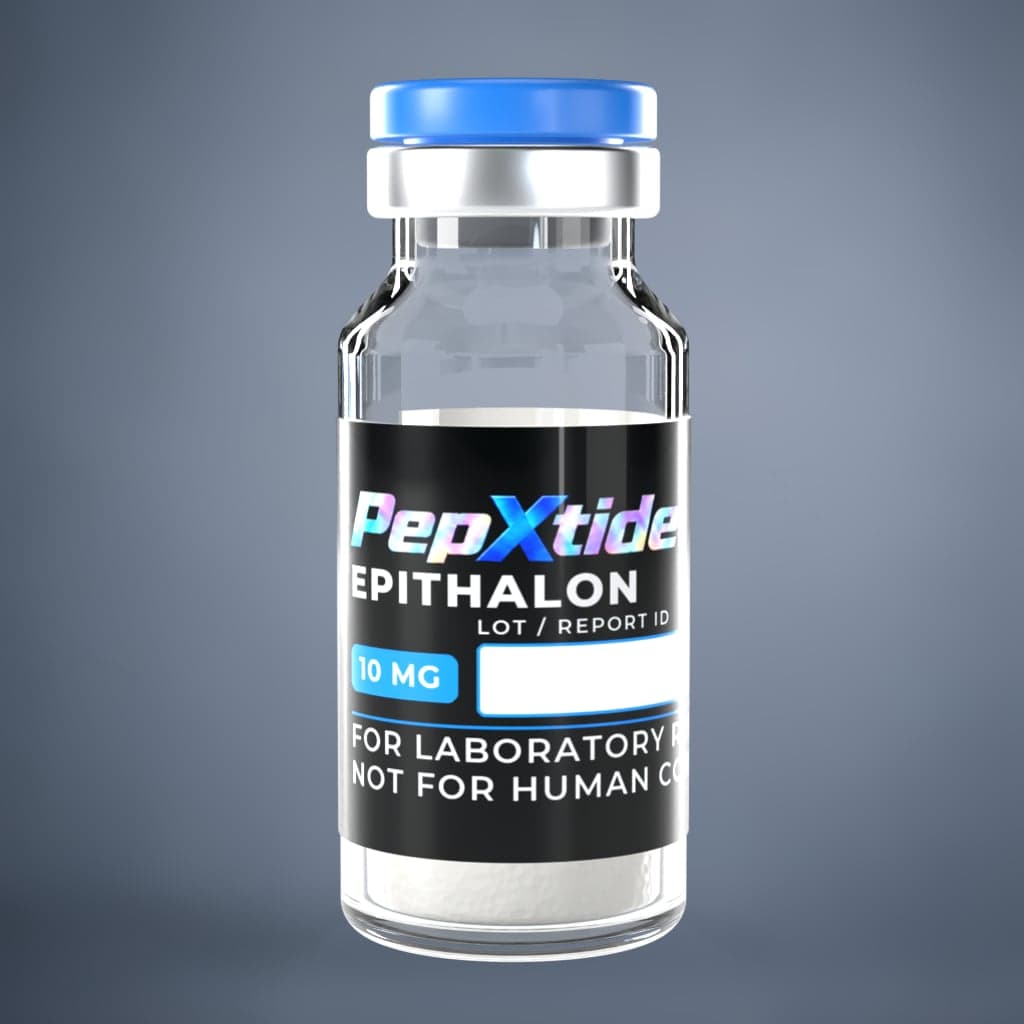 10mg
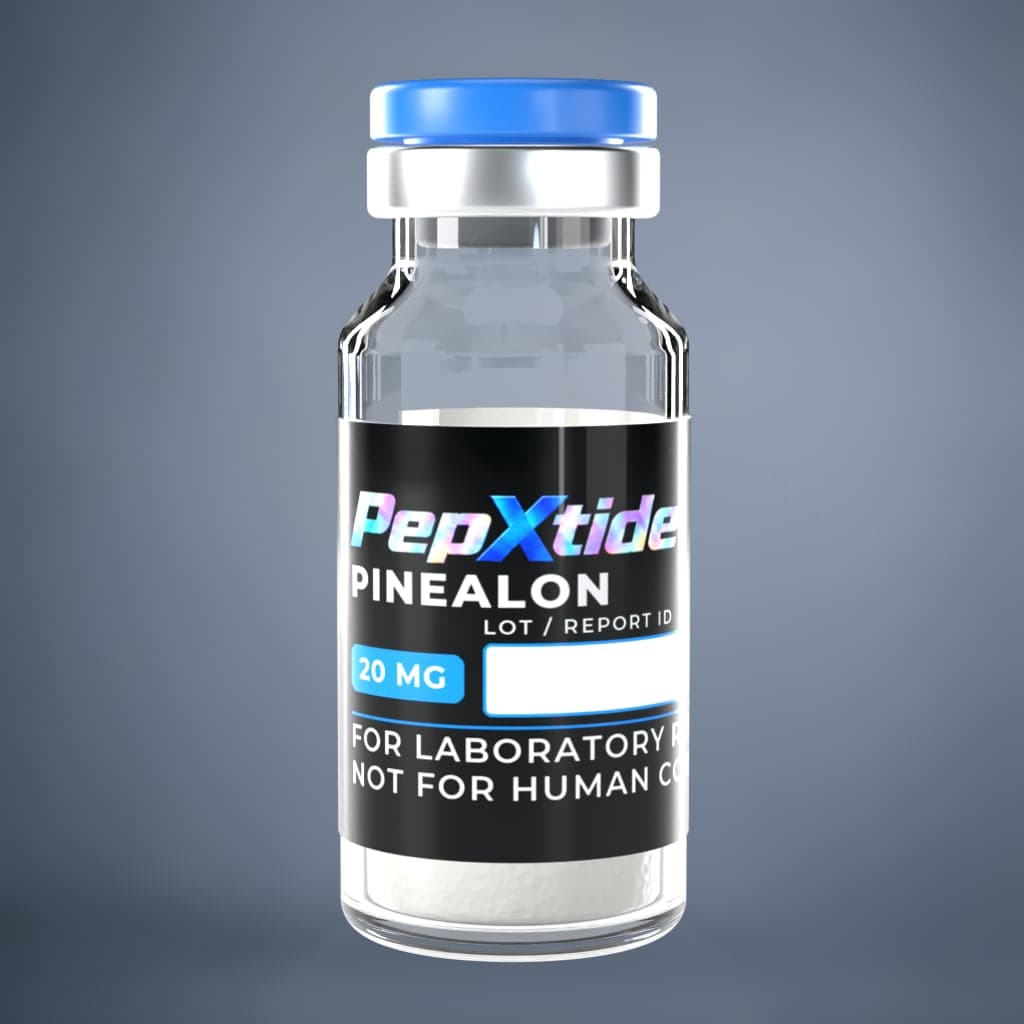 20mg
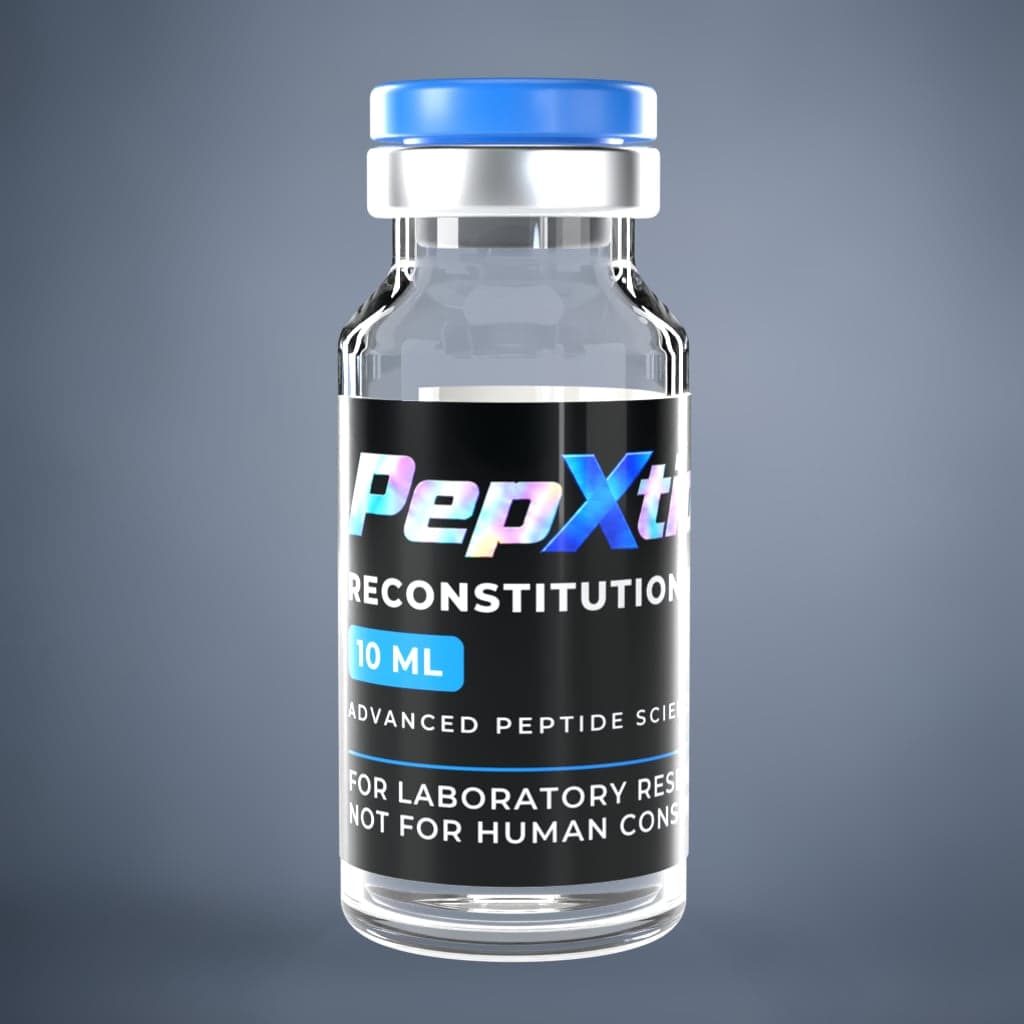 10ml