Research use only. This compound is supplied for in-vitro laboratory research by qualified researchers. It is not for human or veterinary consumption and has not been evaluated by the FDA.
Buy more of this strength and the price comes down. The store applies it at checkout - there is nothing to enter.
Free US shipping - no minimum
Tell us the Report ID or Laboratory ID shown on the certificate, and what you observed. If independent testing shows a discrepancy against our published certificate, we refund the lot in full and pull it from sale pending investigation.
1
$59.99each
Tell us the Report ID or Laboratory ID shown on the certificate, and what you observed. If independent testing shows a discrepancy against our published certificate, we refund the lot in full and pull it from sale pending investigation.
Certificate published
Discreet packaging
Dispatched within one business day
Free US shipping, no minimum
In stock, ships from our US fulfilment partner
Compound information
Type
Neuro Research
Molecular weight
751.89 g/mol
Sequence
Thr-Lys-Pro-Arg-Pro-Gly-Pro (TKPRPGP)
Form
Lyophilized powder
Vial strength
10mg
Catalogue number
PX-SELANK-10MG
Purity
See the laboratory report V260213-13-003
Identifiers are published properties of the molecule. Values we cannot confirm are omitted rather than estimated.
Seven residues built on the same plan as Semax: a short natural fragment, here the immune peptide tuftsin, with the same proline-glycine-proline tail on the end. Both are in the PepXtide structural library, and the shared tail is easy to find in each.
The first four residues, Thr-Lys-Pro-Arg, are tuftsin, a fragment of the immunoglobulin G heavy chain. The last three, Pro-Gly-Pro, are a synthetic extension added for metabolic stability, and the same design appears in Semax. The chain is otherwise unmodified, with a free N-terminus and a free C-terminal acid rather than an amide.
Three prolines in a chain of seven is a high proportion, and it is the structural reason the extension works: proline restricts backbone rotation and is a poor substrate for many peptidases, so the tail both rigidifies the molecule and shields the tuftsin portion. The sequence contains no cysteine, methionine or tryptophan, so there is no oxidation-prone side chain and no aromatic chromophore for absorbance measurement.
The mechanism with the strongest in-vitro support is enzyme inhibition rather than receptor agonism. Inhibition of enkephalin-hydrolysing plasma enzymes has been reported for the peptide. Separately, positive allosteric modulation of tritiated GABA binding has been reported on rat brain plasma membranes. It is explicitly not a direct receptor agonist in the systems tested: applied alone to a human neuroblastoma line it produced no transcript changes, which is a useful negative result for experimental design.
One reported result is a caution about species and strain dependence: prolongation of plasma enkephalin half-life was observed in one inbred mouse strain and not in another, so an effect measured in one background should not be assumed to transfer.
A note on numbers in circulation. Plasma half-life figures for this peptide, widely quoted as single-digit to twenty minutes, trace to supplier pages and a non-peer-reviewed abstract rather than to primary measurement, and no validated pharmacokinetic study was located. Published characterisation is by reversed-phase HPLC for identity, with a tritiated form prepared by solid-phase catalytic isotope exchange for the enzyme work.
Background
Selank is a seven-residue peptide that joins tuftsin (Thr-Lys-Pro-Arg), a fragment of the immunoglobulin G heavy chain, to a synthetic Pro-Gly-Pro extension, the same stabilising tail used in Semax. It carries a free N-terminus and free C-terminal acid. The best-supported in-vitro mechanism is inhibition of enkephalin-hydrolysing plasma enzymes, with positive allosteric modulation of GABA binding also reported on rat brain membranes.
Research applications
Where this compound appears in the published literature. Each area points to the papers listed under Primary literature below. These describe what was studied, not an application of this product.
Haemostasis research
Studied in a 2006 comparison of the anticoagulant activity of proline-containing regulatory oligopeptides, examined alongside Semax and the glyprolines.[1]
Published laboratory studies
Studied in rat stress models for liver morphology and hepatocyte function, in 2017 and 2019 reports on restraint and foot-shock stress.[4][2]
Neurophysiology models
Investigated in rat hippocampal CA1 neurons, in a 2017 report on spontaneous synaptic activity.[3]
Published laboratory studies
Studied in DBA/2 mice, in a 2016 report on ethanol-induced hyperlocomotion and behavioural sensitisation.[5]
Specifications
Supplied as
Lyophilized powder
Available strengths
10mg
Storage
Store lyophilized at -20C, protected from light and moisture.
Intended use
In-vitro laboratory research only
Research overview
Tuftsin analogue with a Pro-Gly-Pro tail
Seven residues, built from the tuftsin fragment with the same proline-glycine-proline extension found in Semax. Three prolines in a chain of seven forces an extended backbone.
Residues
7
Atoms
112
Primary literature
Peer-reviewed papers indexed on PubMed that study this compound. We did not write them and we do not summarise them — each reference opens the record on PubMed so you can read the work itself. Publication is not evidence of safety or efficacy, and none of this research was conducted by PepXtide.
The list above is a selection, not the whole literature. These open the public databases themselves, each one confirmed to return results on 29 August 2026.
PubMed, PubChem and ClinicalTrials.gov are independent scientific databases. A record or a published paper is not an endorsement of this product, and nothing indexed there describes an application, dose or outcome supported by PepXtide.
Storage & handling
Lyophilized
Store lyophilized at -20C, protected from light and moisture. The sequence carries no oxidation-prone residue and its three prolines make it comparatively resistant to peptidases, so moisture uptake and adsorptive loss are the practical concerns rather than chemical change.
Reconstituted
Once reconstituted, refrigerate at 2-8C and use within the period appropriate to the material.
Handling notes
Store the lyophilized powder at -20C, protected from light and moisture.
No cysteine, methionine or tryptophan, so there is no oxidation-prone side chain and no aromatic chromophore for absorbance measurement.
The three prolines make the chain comparatively resistant to peptidases.
Moisture uptake and adsorptive loss are the practical concerns rather than chemical change.
Once reconstituted, refrigerate at 2-8C and use within the period appropriate to the material.
Safety & handling
Bench handling, not a dosing guide.
Intended use
Supplied strictly as a laboratory research material for in-vitro study by qualified researchers. Not for human or veterinary use, not for ingestion or injection, and not for any clinical or diagnostic application.
Personal protective equipment
Handle with gloves, eye protection and a laboratory coat. Weigh and transfer lyophilized powder in a ventilated enclosure to avoid generating an inhalable dust.
Reconstitution
Reconstitute against the diluent and volume appropriate to your protocol, adding solvent slowly down the vial wall rather than directly onto the pellet. Do not shake. This is a handling note, not a dosing guide.
Storage after opening
Once reconstituted, refrigerate and use within the period appropriate to the material. Avoid repeated freeze-thaw cycles, which degrade peptides faster than continuous storage at the listed temperature.
Disposal
Dispose of material and containers in accordance with your institution's chemical waste procedures and applicable local regulations.
Also sold as part of a set
10mg
10mg
20mg
10ml
Neuro Research · 4 vials
Semax, Selank and Cortagen Set
Two seven-residue peptides at 10mg each and a tetrapeptide at 20mg, plus water.
On its own this set comes to $191.22 at checkout: $33.75 Bundle & Save is taken off there.
Semax at 10mg, Selank at 10mg, Cortagen at 20mg and a 10ml bacteriostatic water vial. Added as four ordinary cart lines. The only thing this page does that the catalogue cannot is put all four in the cart at once.
Semax and Selank are seven-residue peptides and Cortagen is the tetrapeptide Ala-Glu-Asp-Pro; all three are listed under Neuro Research in this catalogue.
Adds 4 separate cart lines. Remove any one of them in the cart.
Supplied for in-vitro laboratory research only. Not for human or veterinary consumption, and not evaluated by the FDA. No statement on this page describes an application, benefit, dose, route or outcome. Descriptions are structural and mechanistic, and reference data such as CAS numbers and molecular formulas is published information about the compound itself, provided for identification. The certificate shown above is the testing laboratory's report V260213-13-003 for this strength; its results are for that report only and are not averaged across the product line.


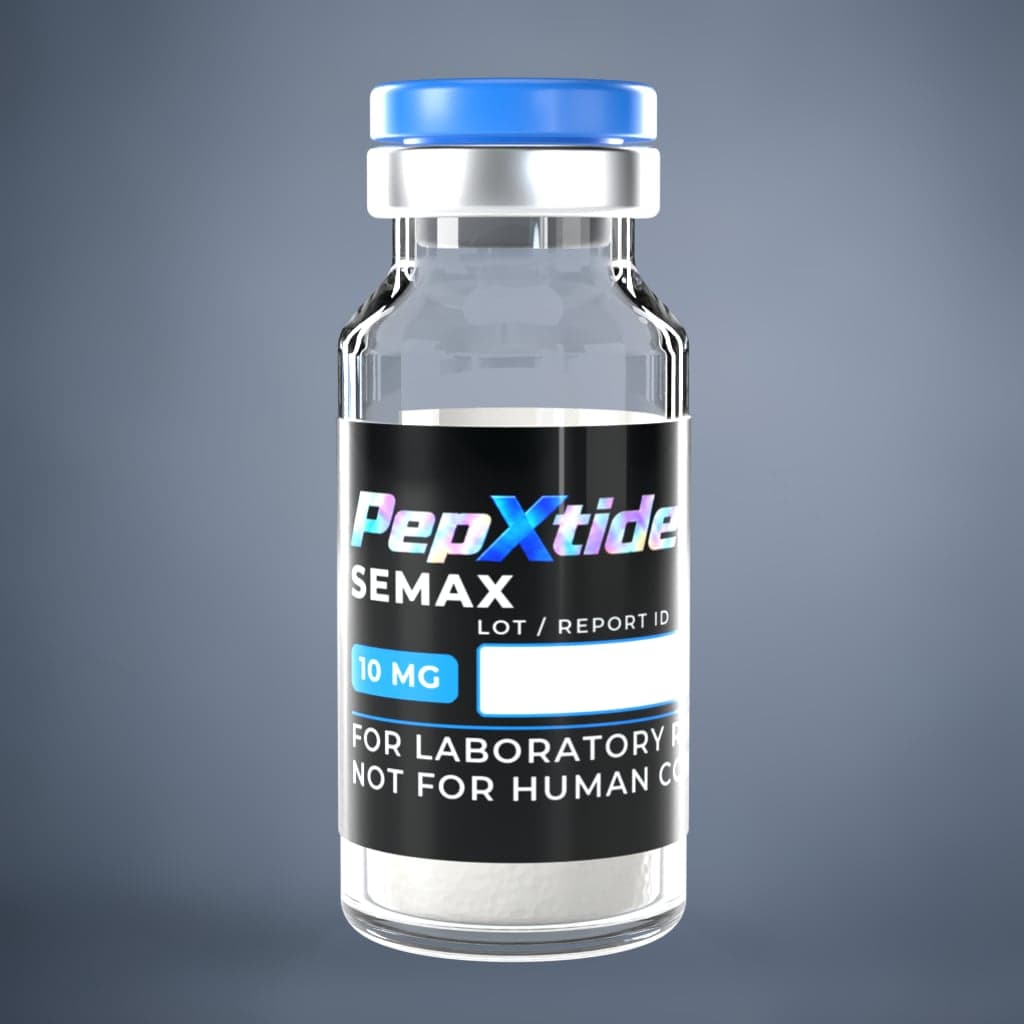 10mg
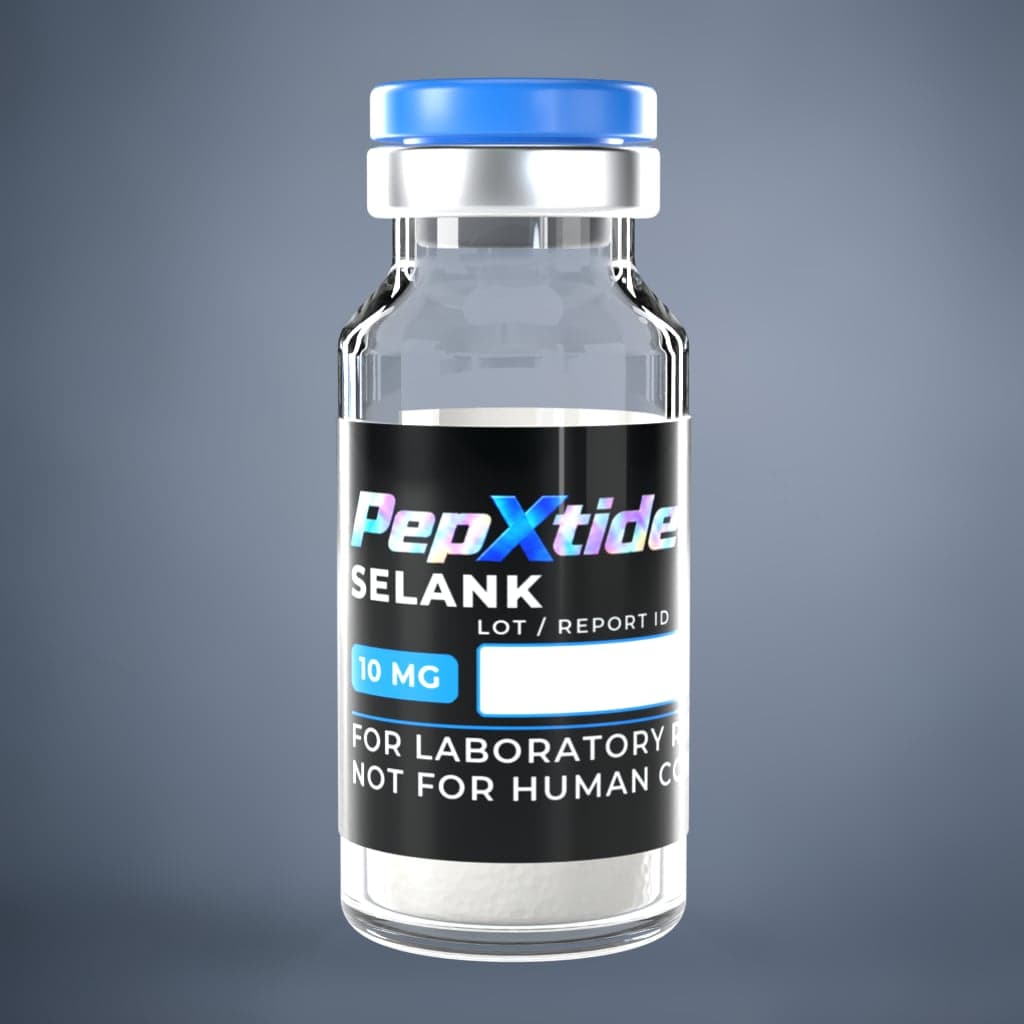 10mg
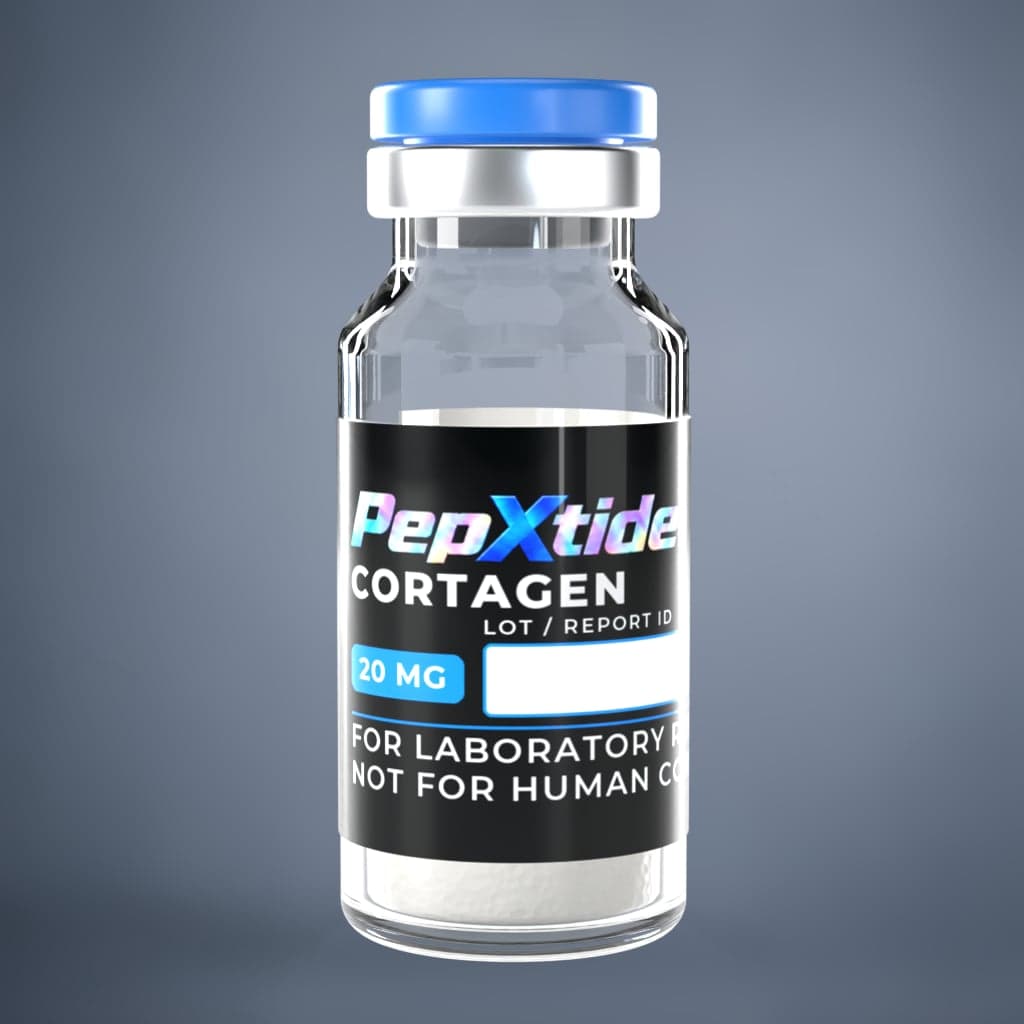 20mg
 10ml