Research use only. This compound is supplied for in-vitro laboratory research by qualified researchers. It is not for human or veterinary consumption and has not been evaluated by the FDA.
Buy more of this strength and the price comes down. The store applies it at checkout - there is nothing to enter.
Free US shipping - no minimum
Tell us the Report ID or Laboratory ID shown on the certificate, and what you observed. If independent testing shows a discrepancy against our published certificate, we refund the lot in full and pull it from sale pending investigation.
1
$59.99each
Tell us the Report ID or Laboratory ID shown on the certificate, and what you observed. If independent testing shows a discrepancy against our published certificate, we refund the lot in full and pull it from sale pending investigation.
Certificate pending
Discreet packaging
Dispatched within one business day
Free US shipping, no minimum
In stock, ships from our US fulfilment partner
Compound information
Type
Neuro Research
Molecular weight
813.93 g/mol
Sequence
Met-Glu-His-Phe-Pro-Gly-Pro (MEHFPGP)
Form
Lyophilized powder
Vial strength
10mg
Catalogue number
PX-SEMAX-10MG
Purity
Certificate pending for this strength
Identifiers are published properties of the molecule. Values we cannot confirm are omitted rather than estimated.
Seven residues: the ACTH 4-7 fragment with a proline-glycine-proline tail added to the C-terminus. That tail is the reason the peptide exists, since the four-residue fragment on its own is broken down very quickly.
The first four residues, Met-Glu-His-Phe, are the 4 to 7 region of adrenocorticotropic hormone, itself a product of proopiomelanocortin processing. The Pro-Gly-Pro extension is synthetic and is not part of the hormone. It is unmodified at both ends, with a free N-terminal amine and a free C-terminal acid; the N-acetylated and amidated derivative sold elsewhere as N-acetyl-Semax amidate is a chemically distinct compound with its own registry number and should not be substituted for this one.
The methionine at position one is the molecule's chemical weak point, being readily oxidised to the sulfoxide, and it is also, with the phenylalanine and histidine, part of the only aromatic content in a short and otherwise polar sequence.
The best-supported molecular observations concern neurotrophin expression. Published rodent work reports increased brain-derived neurotrophic factor protein and its receptor TrkB phosphorylation in hippocampus, with corresponding transcript increases, and in primary rat glial culture reports several-fold increases in brain-derived neurotrophic factor and nerve growth factor transcripts within thirty minutes.
A specific and reversible binding site for the peptide has been measured in rat basal forebrain preparations, with a dissociation constant in the low nanomolar range, but the authors did not identify that site as a melanocortin receptor. This is worth stating because the claim that the peptide binds the melanocortin-4 receptor is widely repeated and no primary binding or functional receptor assay supporting it was located; one paper merely speculates. A related claim linking the peptide to HIF-1 is also unsupported by the record cited for it, which measured a vascular growth factor transcript rather than HIF-1.
Its degradation has been mapped rather than assumed, which is unusual for a compound of this kind. Studies in rat basal-forebrain cultures and plasma membranes using isotopic labelling and HPLC show loss of the N-terminal dipeptide and of the C-terminal glycine-proline, with a pentapeptide as a major product, and the pattern differs between glial and neuronal preparations. The proline-glycine-proline tail slows cleavage but does not prevent it. Radiolabelled transport work using a tritiated form reports that the great majority of brain-associated radioactivity was intact peptide at two minutes, with the proline-glycine-proline fragment predominating later. As with Selank, the short plasma half-life figures in circulation trace to supplier pages rather than to published measurement.
Background
Semax is a seven-residue peptide made from the ACTH 4-7 fragment, Met-Glu-His-Phe, extended with a synthetic Pro-Gly-Pro tail that slows the rapid breakdown of the bare fragment. It is unmodified at both termini, distinct from the acetylated and amidated derivative sold under another name. A specific binding site has been measured in rat basal forebrain preparations but not identified as a melanocortin receptor, and the best-supported molecular observations concern neurotrophin expression.
Research applications
Where this compound appears in the published literature. Each area points to the papers listed under Primary literature below. These describe what was studied, not an application of this product.
Cerebral ischaemia models
Studied in rat cerebral ischaemia models, with a 2010 report on neurotrophin and neurotrophin-receptor gene transcription and a 2014 genome-wide transcriptional analysis in focal ischaemia.[2][4]
Neuronal calcium signalling
Investigated in rat brain neurons, in a 2025 report on intracellular calcium dynamics.[3]
Spinal cord injury models
Studied in a female mouse spinal cord injury model, in a 2025 report examining the mu opioid receptor gene Oprm1 and deubiquitination.[1]
Specifications
Supplied as
Lyophilized powder
Available strengths
10mg
Storage
Store lyophilized at -20C, protected from light and moisture.
Intended use
In-vitro laboratory research only
Research overview
ACTH 4-7 with a Pro-Gly-Pro tail
A seven-residue peptide: the four-residue ACTH fragment with a proline-glycine-proline extension. The proline-rich tail is why the backbone is modelled in a polyproline-II conformation rather than a helix.
Residues
7
Atoms
107
Primary literature
Peer-reviewed papers indexed on PubMed that study this compound. We did not write them and we do not summarise them — each reference opens the record on PubMed so you can read the work itself. Publication is not evidence of safety or efficacy, and none of this research was conducted by PepXtide.
The list above is a selection, not the whole literature. These open the public databases themselves, each one confirmed to return results on 29 August 2026.
PubMed, PubChem and ClinicalTrials.gov are independent scientific databases. A record or a published paper is not an endorsement of this product, and nothing indexed there describes an application, dose or outcome supported by PepXtide.
Storage & handling
Lyophilized
Store lyophilized at -20C, protected from light and moisture. The N-terminal methionine oxidises readily to the sulfoxide, which is the principal chemical degradation route for this peptide, so minimise headspace air and avoid holding solutions warm or for long periods.
Reconstituted
Once reconstituted, refrigerate at 2-8C and use within the period appropriate to the material.
Handling notes
Store the lyophilized powder at -20C, protected from light and moisture.
The N-terminal methionine oxidises readily to the sulfoxide, the principal chemical degradation route, so minimise headspace air.
Avoid holding solutions warm or for long periods.
The Pro-Gly-Pro tail slows peptidase cleavage but does not prevent it.
Once reconstituted, refrigerate at 2-8C and use within the period appropriate to the material.
Safety & handling
Bench handling, not a dosing guide.
Intended use
Supplied strictly as a laboratory research material for in-vitro study by qualified researchers. Not for human or veterinary use, not for ingestion or injection, and not for any clinical or diagnostic application.
Personal protective equipment
Handle with gloves, eye protection and a laboratory coat. Weigh and transfer lyophilized powder in a ventilated enclosure to avoid generating an inhalable dust.
Reconstitution
Reconstitute against the diluent and volume appropriate to your protocol, adding solvent slowly down the vial wall rather than directly onto the pellet. Do not shake. This is a handling note, not a dosing guide.
Storage after opening
Once reconstituted, refrigerate and use within the period appropriate to the material. Avoid repeated freeze-thaw cycles, which degrade peptides faster than continuous storage at the listed temperature.
Disposal
Dispose of material and containers in accordance with your institution's chemical waste procedures and applicable local regulations.
Also sold as part of a set
10mg
10mg
20mg
10ml
Neuro Research · 4 vials
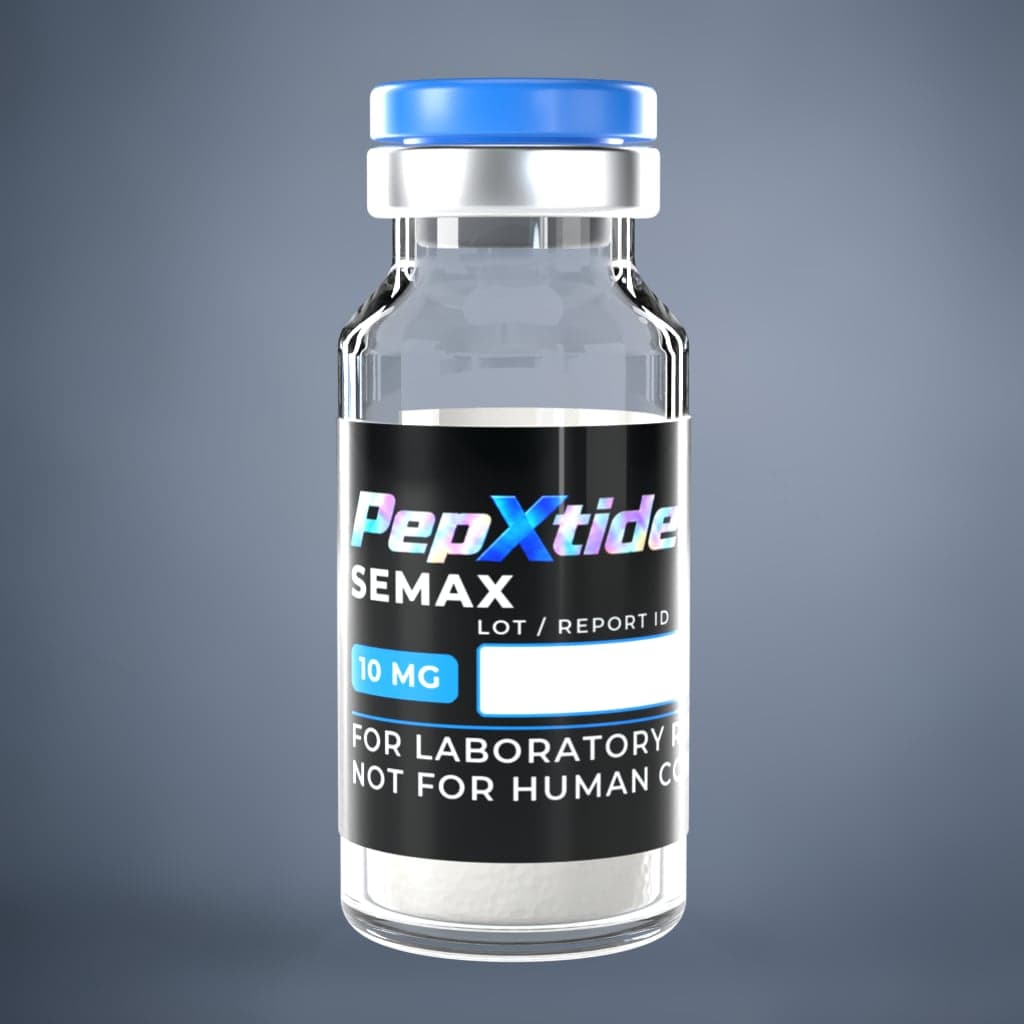
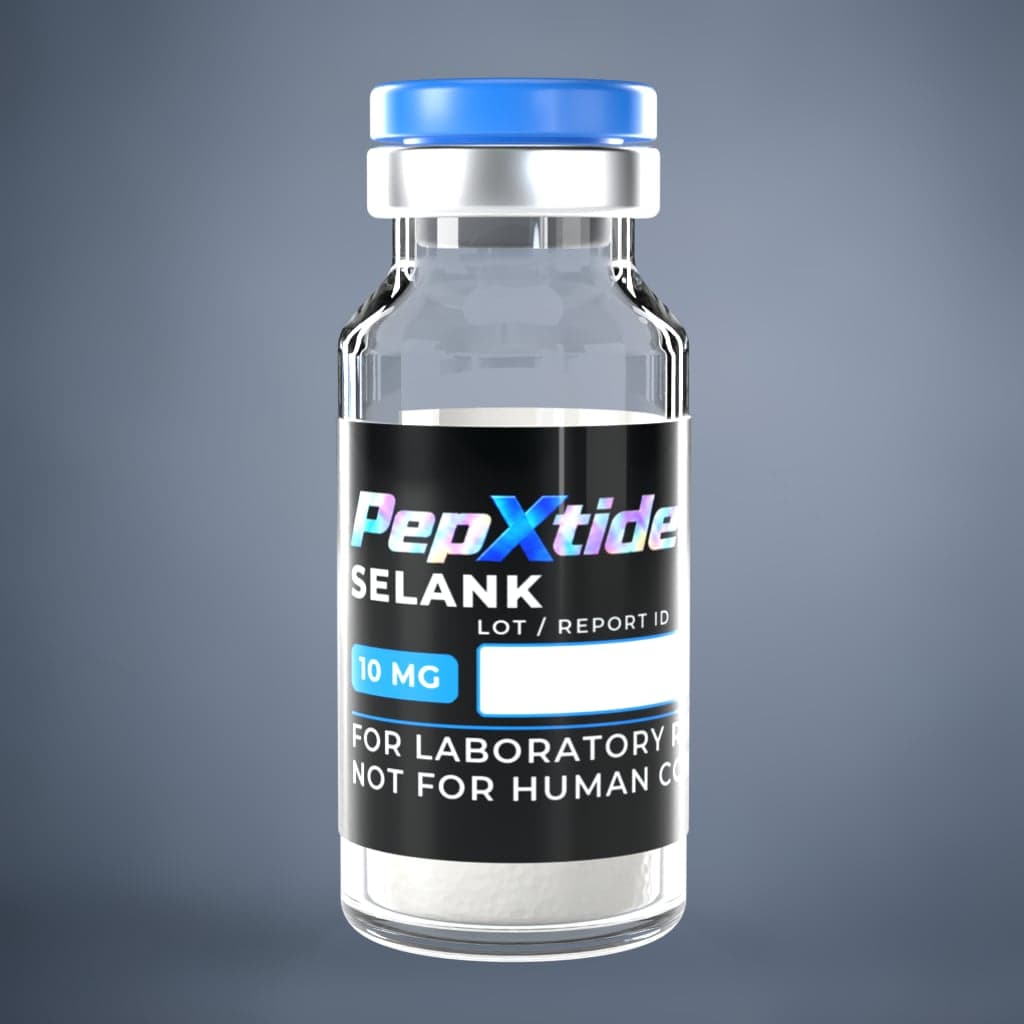
Semax, Selank and Cortagen Set
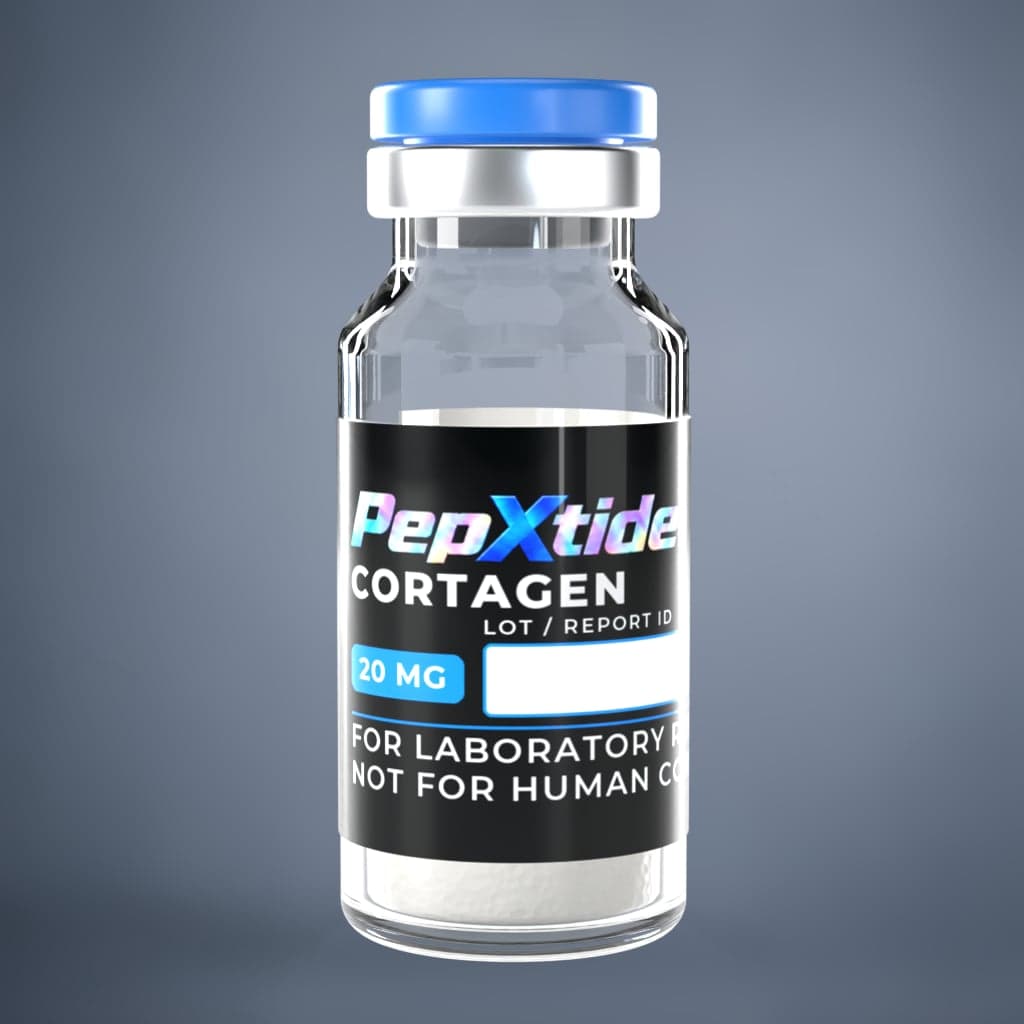
Two seven-residue peptides at 10mg each and a tetrapeptide at 20mg, plus water.
On its own this set comes to $191.22 at checkout: $33.75 Bundle & Save is taken off there.
Semax at 10mg, Selank at 10mg, Cortagen at 20mg and a 10ml bacteriostatic water vial. Added as four ordinary cart lines. The only thing this page does that the catalogue cannot is put all four in the cart at once.
Semax and Selank are seven-residue peptides and Cortagen is the tetrapeptide Ala-Glu-Asp-Pro; all three are listed under Neuro Research in this catalogue.
Adds 4 separate cart lines. Remove any one of them in the cart.
Supplied for in-vitro laboratory research only. Not for human or veterinary consumption, and not evaluated by the FDA. No statement on this page describes an application, benefit, dose, route or outcome. Descriptions are structural and mechanistic, and reference data such as CAS numbers and molecular formulas is published information about the compound itself, provided for identification. No measured result is shown for this strength because a certificate has not yet been published for its lot.


 10mg
 10mg
 20mg
 10ml