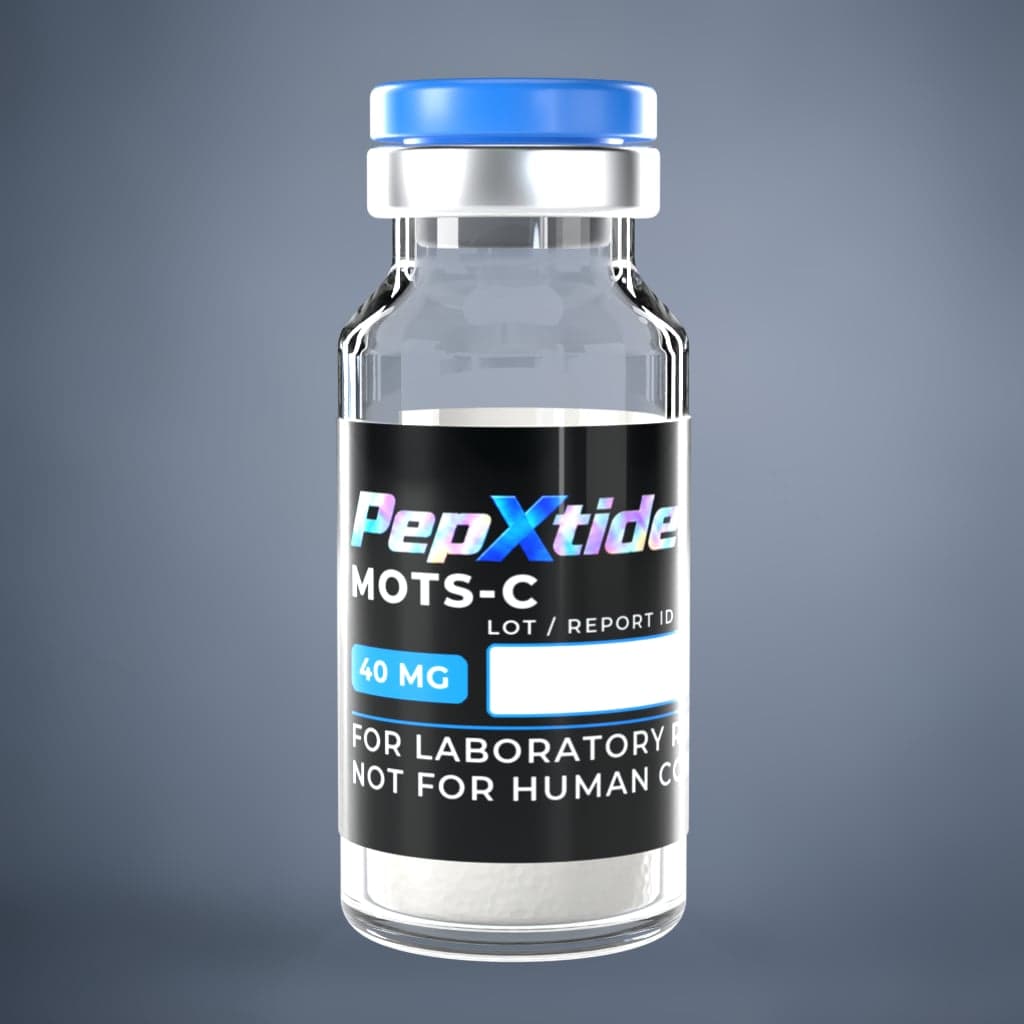
Research use only. This compound is supplied for in-vitro laboratory research by qualified researchers. It is not for human or veterinary consumption and has not been evaluated by the FDA.
Buy more of this strength and the price comes down. The store applies it at checkout - there is nothing to enter.
Free US shipping - no minimum
Tell us the Report ID or Laboratory ID shown on the certificate, and what you observed. If independent testing shows a discrepancy against our published certificate, we refund the lot in full and pull it from sale pending investigation.
1
$149.99each
Tell us the Report ID or Laboratory ID shown on the certificate, and what you observed. If independent testing shows a discrepancy against our published certificate, we refund the lot in full and pull it from sale pending investigation.
Certificate published
Discreet packaging
Dispatched within one business day
Free US shipping, no minimum
In stock, ships from our US fulfilment partner
Compound information
Type
Cellular & Redox
CAS number
736992-21-5
Molecular formula
C32H49N9O5
Molecular weight
639.79 g/mol
Sequence
D-Arg-Dmt-Lys-Phe-NH2
Form
Lyophilized powder
Vial strength
50mg
Catalogue number
PX-SS31-50MG
Purity
See the laboratory report KVR-2026-814088
Identifiers are published properties of the molecule. Values we cannot confirm are omitted rather than estimated.
SS-31, also known as elamipretide, is a four-residue peptide with an alternating aromatic-cationic motif that concentrates at the inner mitochondrial membrane. Residue 2 is 2,6-dimethyltyrosine, modelled with both ring methyls in the PepXtide structural library, and the C-terminus is an amide rather than a free acid.
The compound belongs to the Szeto-Schiller series, first described in the Journal of Biological Chemistry in 2004 as cell-permeable peptides targeted to the inner mitochondrial membrane and built on alternating aromatic and basic residues. Its sequence is D-arginine, 2',6'-dimethyltyrosine, lysine and phenylalanine, carried as the C-terminal amide.
Every one of those four choices is doing work. The D-configured arginine and the C-terminal amide both remove ordinary peptidase recognition points. The amide also preserves the net charge at plus three by removing the C-terminal carboxylate that would otherwise offset one positive charge, and that net charge is the feature the alternating aromatic-cationic design depends on. The dimethylated tyrosine is a non-proteinogenic residue; analogues of the series lacking it were reported inactive in the original work.
The mechanism is the best evidenced in this part of the catalogue. The peptide binds cardiolipin, the signature phospholipid of the inner mitochondrial membrane, at roughly one-to-one stoichiometry with cardiolipin-containing model membranes, and inhibits the peroxidase activity that the cytochrome c and cardiolipin complex acquires. Reported observations in isolated mitochondria include higher cytochrome c reduction, retained cristae morphology and lower mitochondrial reactive oxygen species signal at nanomolar concentrations. The compound is reported to concentrate roughly a thousand-fold in the inner mitochondrial membrane relative to the surrounding medium.
Two refinements published since deserve to be stated alongside that account rather than omitted. Biophysical work shows the peptide partitions into the membrane interface with an affinity proportional to surface charge, so the interaction is not strictly cardiolipin-exclusive; and chemical cross-linking mass spectrometry on isolated mitochondria found contacts with numerous cardiolipin-binding oxidative-phosphorylation proteins, leading its authors to describe cardiolipin binding as necessary but not sufficient. The older framing of the compound as a free-radical scavenger rests mainly on the early work with the dimethylated tyrosine and is the weaker of the two accounts.
Laboratory characterisation uses solution NMR, isothermal titration calorimetry, membrane-potential and interface-sensitive fluorescent probes, and molecular dynamics, alongside isolated-mitochondria preparations for permeability-transition and swelling measurements. One specification point: the free base and the trihydrochloride salt differ substantially in formula mass, and the clinical-grade material is the trihydrochloride, which is freely soluble in water. The figure published on this page is the free-base mass, so a certificate stating a salt will not match it unless the basis is converted.
Background
SS-31, also known as elamipretide, is a four-residue Szeto-Schiller peptide, D-Arg-Dmt-Lys-Phe carried as the C-terminal amide, built on an alternating aromatic-cationic motif. The D-arginine and amide remove peptidase recognition points, and the amide keeps the net charge at plus three. It concentrates at the inner mitochondrial membrane, where it binds cardiolipin and inhibits the peroxidase activity of the cytochrome c and cardiolipin complex, although later work describes cardiolipin binding as necessary but not sufficient.
Specifications
Supplied as
Lyophilized powder
Available strengths
50mg
CAS number
736992-21-5
Molecular formula
C32H49N9O5
Storage
Store lyophilized at -20C, protected from light and moisture.
Intended use
In-vitro laboratory research only
Research overview
Elamipretide - D-Arg-Dmt-Lys-Phe-NH2
A four-residue peptide with an alternating aromatic-cationic motif that concentrates at the inner mitochondrial membrane. Studied for its interaction with cardiolipin. Residue 2 is 2,6-dimethyltyrosine, modelled with both ring methyls.
Residues
4
Atoms
97
Primary literature
We have not compiled a reading list for this compound, and would rather show nothing than pad one out.
Search the databases
The list above is a selection, not the whole literature. These open the public databases themselves, each one confirmed to return results on 29 August 2026.
PubMed, PubChem and ClinicalTrials.gov are independent scientific databases. A record or a published paper is not an endorsement of this product, and nothing indexed there describes an application, dose or outcome supported by PepXtide.
Storage & handling
Lyophilized
Store lyophilized at -20C, protected from light and moisture. The D-arginine and the C-terminal amide make the peptide a poor peptidase substrate, so the practical concerns are moisture uptake and adsorptive loss of a highly cationic molecule to glass and plastic; low-binding vessels are worth using at low concentrations.
Reconstituted
Once reconstituted, keep refrigerated and use within the working period established by the laboratory.
Handling notes
Store the lyophilized powder at -20C, protected from light and moisture.
The D-arginine and C-terminal amide make the peptide a poor peptidase substrate.
As a highly cationic molecule it adsorbs to glass and plastic; low-binding vessels are worth using at low concentrations.
The trihydrochloride salt is freely soluble in water; its formula mass differs from the free-base figure on this page.
Once reconstituted, keep refrigerated and use within the working period established by the laboratory.
Safety & handling
Bench handling, not a dosing guide.
Intended use
Supplied strictly as a laboratory research material for in-vitro study by qualified researchers. Not for human or veterinary use, not for ingestion or injection, and not for any clinical or diagnostic application.
Personal protective equipment
Handle with gloves, eye protection and a laboratory coat. Weigh and transfer lyophilized powder in a ventilated enclosure to avoid generating an inhalable dust.
Reconstitution
Reconstitute against the diluent and volume appropriate to your protocol, adding solvent slowly down the vial wall rather than directly onto the pellet. Do not shake. This is a handling note, not a dosing guide.
Storage after opening
Once reconstituted, refrigerate and use within the period appropriate to the material. Avoid repeated freeze-thaw cycles, which degrade peptides faster than continuous storage at the listed temperature.
Disposal
Dispose of material and containers in accordance with your institution's chemical waste procedures and applicable local regulations.
Also sold as part of a set
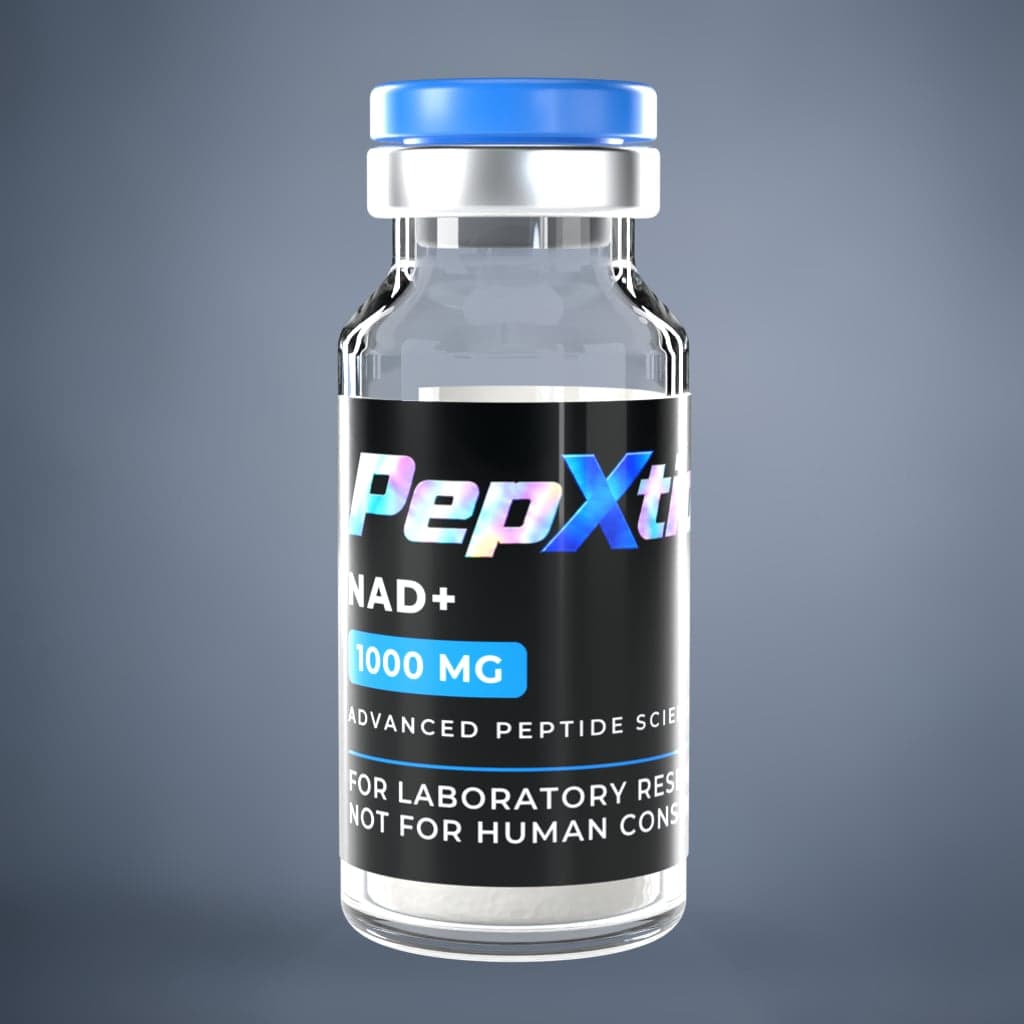
1000mg
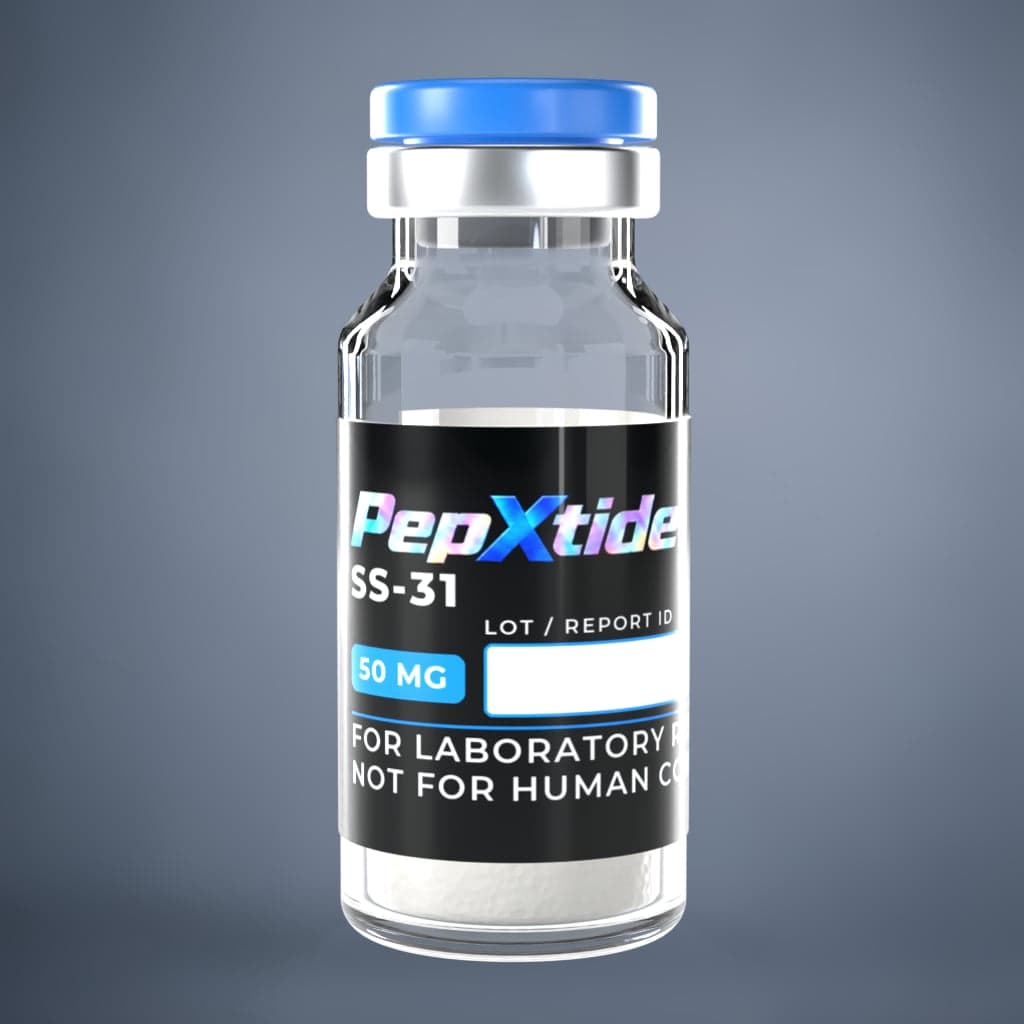
50mg
1500mg
Cellular & Redox · 3 vials
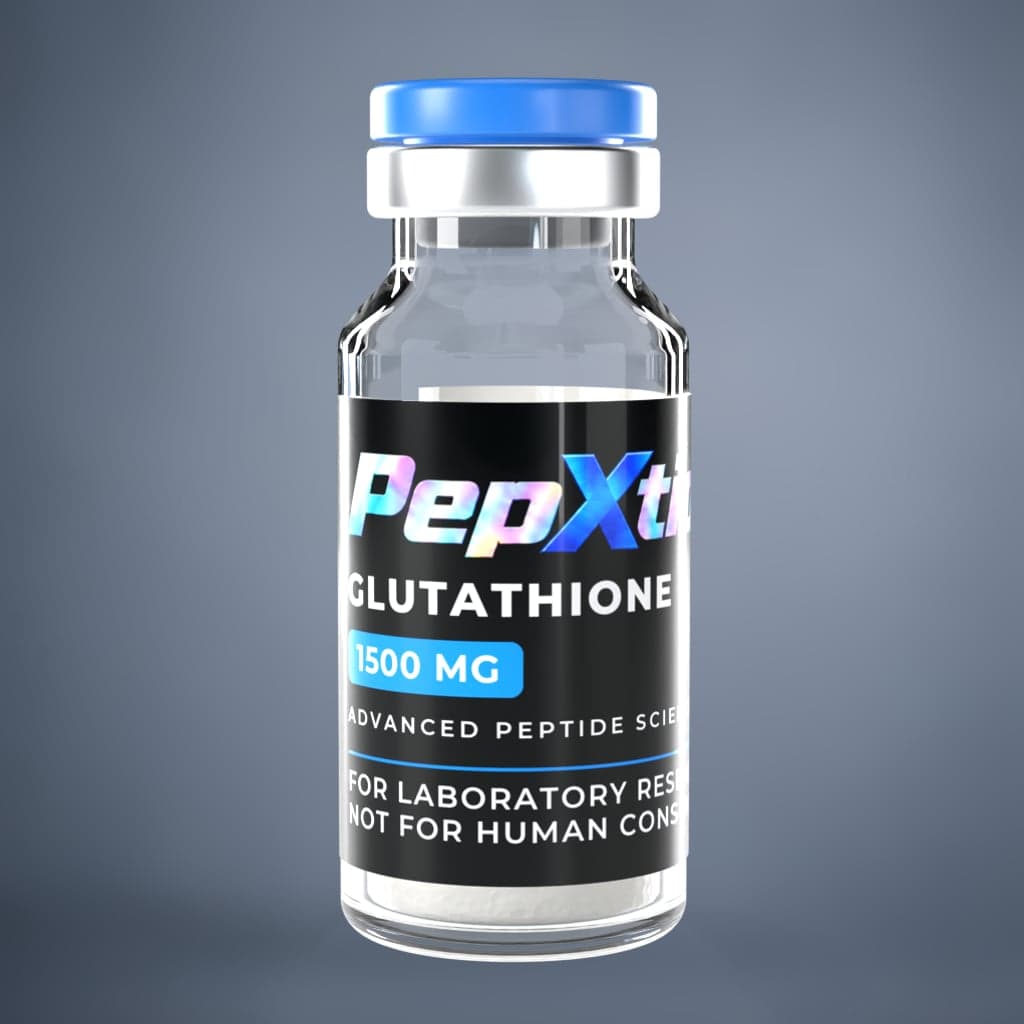
NAD+, SS-31 and Glutathione Set
A coenzyme at 1000mg, a tetrapeptide at 50mg and a tripeptide at 1500mg.
On its own this set comes to $254.97 at checkout: $45.00 Bundle & Save is taken off there.
NAD+ at 1000mg, SS-31 at 50mg and Glutathione at 1500mg. Three lyophilised vials, added as three cart lines. SS-31 is stocked in the 50mg vial only, which is why this set is larger than it was. No bacteriostatic water is included; add the 10ml vial from its own page if you need it.
A coenzyme, a four-residue peptide and a three-residue peptide, all listed under Cellular & Redox in this catalogue.
Adds 3 separate cart lines. Remove any one of them in the cart.
Supplied as a lyophilized powder for in-vitro laboratory research only. No statement on this page describes an application, benefit, dose, route or outcome. Descriptions are structural and mechanistic, and reference data such as CAS numbers and molecular formulas is published information about the compound itself, provided for identification. The certificate shown above is the testing laboratory's report KVR-2026-814088 for this strength; its results are for that report only and are not averaged across the product line.


 1000mg
 50mg
 1500mg