Research use only. This compound is supplied for in-vitro laboratory research by qualified researchers. It is not for human or veterinary consumption and has not been evaluated by the FDA.
Buy more of this strength and the price comes down. The store applies it at checkout - there is nothing to enter.
Free US shipping - no minimum
Tell us the Report ID or Laboratory ID shown on the certificate, and what you observed. If independent testing shows a discrepancy against our published certificate, we refund the lot in full and pull it from sale pending investigation.
1
$79.99each
Tell us the Report ID or Laboratory ID shown on the certificate, and what you observed. If independent testing shows a discrepancy against our published certificate, we refund the lot in full and pull it from sale pending investigation.
Certificate published
Discreet packaging
Dispatched within one business day
Free US shipping, no minimum
In stock, ships from our US fulfilment partner
Compound information
Type
Cellular & Redox
Molecular weight
307.33 g/mol
Sequence
gamma-Glu-Cys-Gly
Form
Lyophilized powder
Vial strength
1500mg
Catalogue number
PX-GLUT-1500MG
Purity
See the laboratory report KVR-2026-AF5592
Identifiers are published properties of the molecule. Values we cannot confirm are omitted rather than estimated.
The tripeptide of glutamate, cysteine and glycine, with the glutamate joined through its side-chain carboxyl (the gamma linkage) and a free thiol on the cysteine. Drawn in the PepXtide structural library, where its computed mass matches the published molecular weight.
That gamma linkage is not a curiosity. Because the glutamate is attached through its side chain rather than its alpha-carboxyl, ordinary peptidases do not recognise the bond, and the gamma-glutamyl transferases are the only enzyme class known to cleave it. The molecule is assembled in two ATP-dependent steps, by glutamate-cysteine ligase, which is the rate-limiting enzyme, and then by glutathione synthetase.
Its biochemistry is organised around a single redox couple, reduced glutathione against the oxidised disulfide dimer. Glutathione peroxidase 1, a selenocysteine enzyme, uses two molecules of the reduced form to reduce hydrogen peroxide or a fatty-acid hydroperoxide to water or the corresponding alcohol; glutathione peroxidase 4 performs the equivalent reaction on phospholipid hydroperoxides within membranes. Glutathione reductase, an FAD enzyme, regenerates the reduced form at the expense of NADPH, and the glutathione S-transferases conjugate the thiol to electrophiles. The half-cell potential of the couple is commonly cited around -240 millivolts, though the figure depends on the cellular state being described and a single value should not be treated as a constant.
For bench work the governing number is the thiol pKa of 8.94. At pH 7.4 only about 2.8 percent of the molecule is present as the reactive thiolate, so nucleophilic reactivity rises steeply with pH; the same shift is what accelerates air oxidation in alkaline buffers.
One frequently misstated point about that oxidation is worth stating correctly: the reduced form is not auto-oxidised by molecular oxygen in the absence of a catalyst. The reaction that actually consumes it in ordinary buffers is catalysed by trace copper, proceeding through a copper-thiol complex, and superoxide will oxidise it to the disulfide along with a sulfonate by-product. This is why buffers for thiol work are chelated and why glassware and water quality matter more here than for most compounds in the catalogue.
It is used on the bench as a redox reference in reduced-to-oxidised ratio assays, as the substrate for peroxidase and transferase enzyme assays, and as a reducing additive in buffers. Supplier technical data give aqueous solubility around 20 mg/mL and advise against holding aqueous solutions beyond a day; a much higher solubility figure that appears in one public database carries no supporting reference and should not be relied on.
Background
Glutathione is the tripeptide gamma-Glu-Cys-Gly, in which the glutamate is joined through its side-chain carboxyl, a bond ordinary peptidases do not recognise and only gamma-glutamyl transferases are known to cleave. It is assembled in two ATP-dependent steps by glutamate-cysteine ligase and glutathione synthetase. Its chemistry centres on the free cysteine thiol and the reduced/oxidised disulfide couple used by glutathione peroxidases, glutathione reductase and the glutathione S-transferases.
Research applications
Where this compound appears in the published literature. Each area points to the papers listed under Primary literature below. These describe what was studied, not an application of this product.
Synthesis, metabolism and degradation
Characterised in reviews of its metabolism (Methods in Enzymology, 1995), its synthesis (Biochimica et Biophysica Acta, 2013) and its degradation (Antioxidants and Redox Signaling, 2017).[1][5][3]
Mitochondrial biochemistry
Reported in a 2014 Frontiers in Pharmacology review on glutathione and mitochondria.[4]
Glutathione-dependent enzymes
Examined in a 2023 Ageing Research Reviews paper on glutathione and glutathione-dependent enzymes, from biochemistry to gerontology.[2]
Specifications
Supplied as
Lyophilized powder
Available strengths
1500mg
Storage
Store lyophilized at -20C, protected from light and moisture.
Intended use
In-vitro laboratory research only
Research overview
Gamma-glutamyl-cysteinyl-glycine
A tripeptide of glutamate, cysteine and glycine. One honest caveat about this model: the first bond is a gamma-glutamyl linkage from the side chain rather than the usual backbone bond, and the engine draws a standard peptide bond, so the connection point is drawn conventionally rather than exactly.
Residues
3
Atoms
36
Primary literature
Peer-reviewed papers indexed on PubMed that study this compound. We did not write them and we do not summarise them — each reference opens the record on PubMed so you can read the work itself. Publication is not evidence of safety or efficacy, and none of this research was conducted by PepXtide.
The list above is a selection, not the whole literature. These open the public databases themselves, each one confirmed to return results on 29 August 2026.
PubMed, PubChem and ClinicalTrials.gov are independent scientific databases. A record or a published paper is not an endorsement of this product, and nothing indexed there describes an application, dose or outcome supported by PepXtide.
Storage & handling
Lyophilized
Store lyophilized at -20C, protected from light and moisture. The free cysteine thiol is the liability: oxidation to the disulfide is catalysed by trace copper rather than by oxygen alone and accelerates as pH rises toward the thiol pKa of about 8.9, so use chelated buffers, keep solutions near or below neutral pH and prepare them fresh.
Reconstituted
Once reconstituted, refrigerate at 2-8C and use within the period appropriate to the material.
Handling notes
Store the lyophilized material at -20C, protected from light and moisture.
The free cysteine thiol is the liability: oxidation to the disulfide is catalysed by trace copper rather than by oxygen alone, so use chelated buffers.
Oxidation accelerates as pH rises toward the thiol pKa of about 8.9, so keep solutions near or below neutral pH.
Supplier data advise against holding aqueous solutions beyond a day; prepare them fresh, refrigerate at 2-8C once reconstituted and use within the period appropriate to the material.
Safety & handling
Bench handling, not a dosing guide.
Intended use
Supplied strictly as a laboratory research material for in-vitro study by qualified researchers. Not for human or veterinary use, not for ingestion or injection, and not for any clinical or diagnostic application.
Personal protective equipment
Handle with gloves, eye protection and a laboratory coat. Weigh and transfer lyophilized powder in a ventilated enclosure to avoid generating an inhalable dust.
Reconstitution
Reconstitute against the diluent and volume appropriate to your protocol, adding solvent slowly down the vial wall rather than directly onto the pellet. Do not shake. This is a handling note, not a dosing guide.
Storage after opening
Once reconstituted, refrigerate and use within the period appropriate to the material. Avoid repeated freeze-thaw cycles, which degrade peptides faster than continuous storage at the listed temperature.
Disposal
Dispose of material and containers in accordance with your institution's chemical waste procedures and applicable local regulations.
Also sold as part of a set
1000mg
50mg
1500mg
Cellular & Redox · 3 vials
NAD+, SS-31 and Glutathione Set
A coenzyme at 1000mg, a tetrapeptide at 50mg and a tripeptide at 1500mg.
On its own this set comes to $254.97 at checkout: $45.00 Bundle & Save is taken off there.
NAD+ at 1000mg, SS-31 at 50mg and Glutathione at 1500mg. Three lyophilised vials, added as three cart lines. SS-31 is stocked in the 50mg vial only, which is why this set is larger than it was. No bacteriostatic water is included; add the 10ml vial from its own page if you need it.
A coenzyme, a four-residue peptide and a three-residue peptide, all listed under Cellular & Redox in this catalogue.
Adds 3 separate cart lines. Remove any one of them in the cart.
Supplied for in-vitro laboratory research only. Not for human or veterinary consumption, and not evaluated by the FDA. No statement on this page describes an application, benefit, dose, route or outcome. Descriptions are structural and mechanistic, and reference data such as CAS numbers and molecular formulas is published information about the compound itself, provided for identification. The certificate shown above is the testing laboratory's report KVR-2026-AF5592 for this strength; its results are for that report only and are not averaged across the product line.


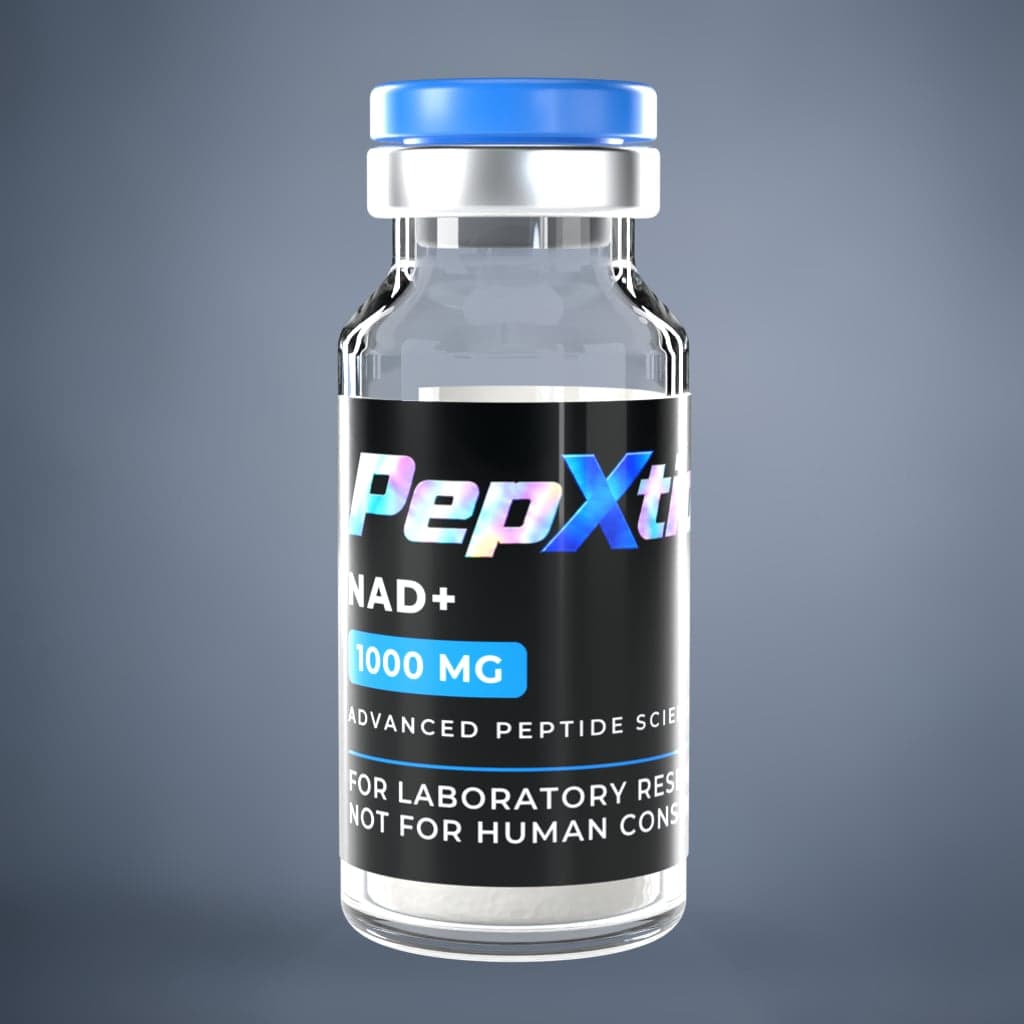 1000mg
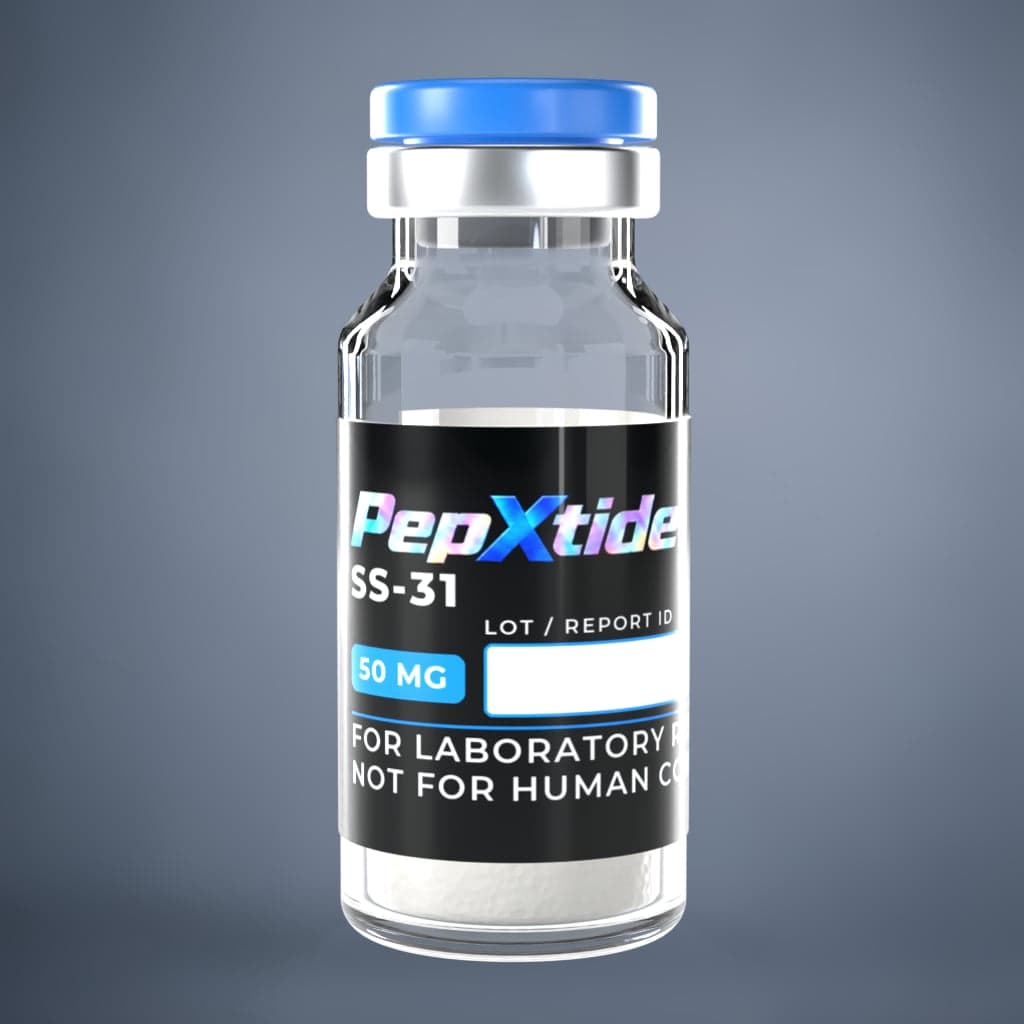 50mg
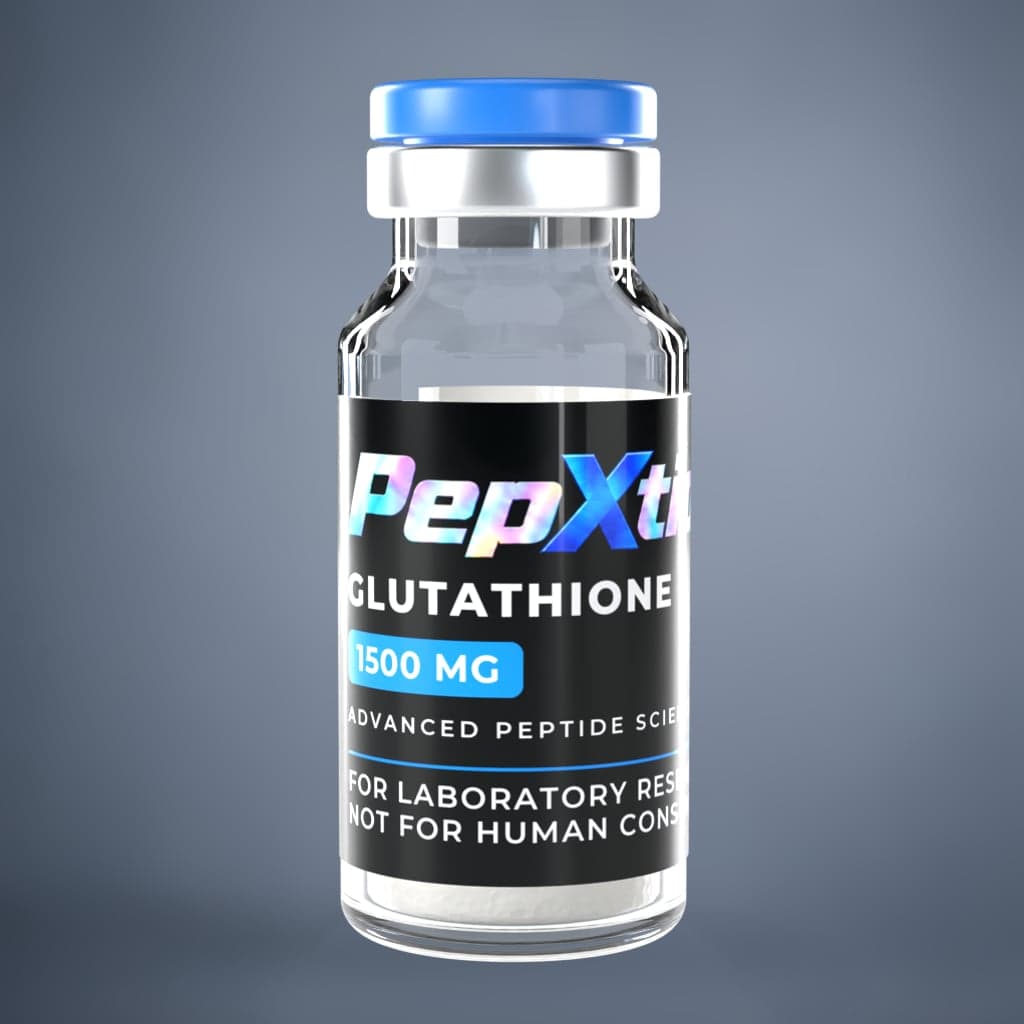 1500mg