Research use only. This compound is supplied for in-vitro laboratory research by qualified researchers. It is not for human or veterinary consumption and has not been evaluated by the FDA.
Buy more of this strength and the price comes down. The store applies it at checkout - there is nothing to enter.
Free US shipping - no minimum
Tell us the Report ID or Laboratory ID shown on the certificate, and what you observed. If independent testing shows a discrepancy against our published certificate, we refund the lot in full and pull it from sale pending investigation.
1
$69.99each
Tell us the Report ID or Laboratory ID shown on the certificate, and what you observed. If independent testing shows a discrepancy against our published certificate, we refund the lot in full and pull it from sale pending investigation.
Certificate published
Discreet packaging
Dispatched within one business day
Free US shipping, no minimum
In stock, ships from our US fulfilment partner
Compound information
Type
Cellular & Redox
Molecular weight
663.43 g/mol
Form
Lyophilized powder
Vial strength
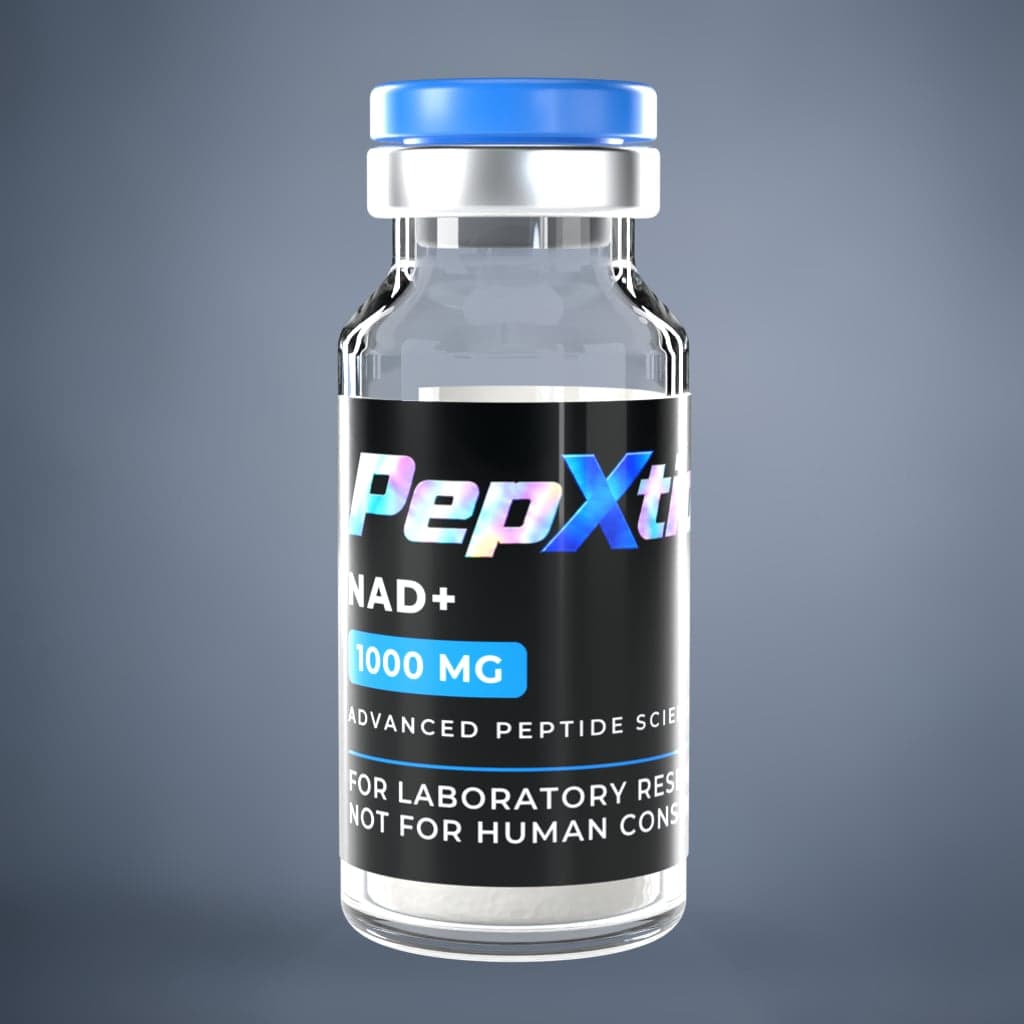
1000mg
Catalogue number
PX-NAD-1000MG
Purity
See the laboratory report V260204-18-024
Identifiers are published properties of the molecule. Values we cannot confirm are omitted rather than estimated.
Nicotinamide adenine dinucleotide. Not a peptide: two nucleotides, one carrying nicotinamide and the other adenine, joined tail to tail through a diphosphate bridge.
It is drawn in the PepXtide structural library as a heavy-atom model, and it is the only nucleotide cofactor in that library.
Three separate routes build it in human cells, which is unusual for a cofactor and is the reason the literature on it is so large. The de novo route runs from tryptophan through the kynurenine pathway; the Preiss-Handler route starts from nicotinic acid; and the salvage route, whose rate-limiting enzyme is nicotinamide phosphoribosyltransferase, recycles the nicotinamide released by the enzymes that consume the cofactor.
It has two quite different jobs, and conflating them is a common error. In redox chemistry it is a hydride carrier, with a standard potential near -320 millivolts, accepting hydride at the nicotinamide ring for glyceraldehyde-3-phosphate dehydrogenase, isocitrate dehydrogenase, malate dehydrogenase and respiratory complex I, and being regenerated without net consumption. In signalling chemistry it is a substrate that is destroyed: the sirtuin deacylases, the poly(ADP-ribose) polymerases and the CD38 and BST1 glycohydrolases all cleave the nicotinamide-ribose bond, releasing nicotinamide and transferring or hydrolysing the ADP-ribose portion. The second class is why cellular concentration is a regulated variable rather than a constant.
Its solution behaviour is directional and matters for assay design. The oxidised form degrades by base catalysis at high pH, while the reduced form degrades by acid catalysis at low pH, so the two have opposite sensitivities and a buffer good for one is poor for the other; work on this reports a combined optimum near pH 8.5 when both species must be held. Degradation has been localised to the phosphate-phosphate linkage, the nicotinamide-ribose bond and the dihydropyridine ring.
Buffer choice has a measurable effect independent of pH. Comparative work over six weeks at room temperature found both forms comparatively stable in Tris, with markedly faster loss in sodium phosphate or HEPES, and loss rates roughly doubling between 19 and 25 degrees Celsius. Supplier data give solubility around 10 mg/mL in phosphate-buffered saline and advise against holding aqueous solutions beyond a day. In the laboratory the compound is standard in spectrophotometric dehydrogenase assays read at 340 nanometres, in sirtuin and polymerase activity assays, and in oxidised-to-reduced ratio determinations.
A specification note for anyone reconciling a certificate. The public databases carry separate records for the cation and for the free acid, whose masses differ by one dalton, and the familiar registry number is attached to the free-acid record rather than the cation. A formula, a mass and a registry number quoted from different records will not agree with one another.
Background
NAD+ (nicotinamide adenine dinucleotide) is not a peptide but a redox cofactor: two nucleotides, one bearing nicotinamide and one adenine, joined through a diphosphate bridge. It serves as a hydride carrier for dehydrogenases and respiratory complex I, and separately as a consumed substrate for sirtuins, poly(ADP-ribose) polymerases and the CD38 and BST1 glycohydrolases. Cells build it by three routes: de novo from tryptophan, the Preiss-Handler route from nicotinic acid, and NAMPT-limited salvage of nicotinamide.
Research applications
Where this compound appears in the published literature. Each area points to the papers listed under Primary literature below. These describe what was studied, not an application of this product.
Neurological research
Studied in neurological disorder and neurodegeneration research, reviewed in Antioxidants and Redox Signaling in 2018 and 2023.[1][3]
Inflammatory bowel disease research
Examined in inflammatory bowel disease research, in a 2023 FEBS Letters review of NAD metabolism.[2]
Mammalian development
Investigated in mammalian development research, in a 2023 Antioxidants and Redox Signaling review of NAD deficiency.[4]
NAD+ homeostasis
Characterised in a 2020 Nature Metabolism review of NAD+ homeostasis in health and disease.[5]
Specifications
Supplied as
Lyophilized powder
Available strengths
1000mg
Storage
Store lyophilized at -20C, protected from light and moisture.
Intended use
In-vitro laboratory research only
Research overview
Nicotinamide adenine dinucleotide
Not a peptide at all: a redox cofactor built from nicotinamide and adenine, each on a ribose, joined by a diphosphate bridge. Every heavy atom is present - C21 N7 O14 P2 - with hydrogens omitted.
Atoms
44
Primary literature
Peer-reviewed papers indexed on PubMed that study this compound. We did not write them and we do not summarise them — each reference opens the record on PubMed so you can read the work itself. Publication is not evidence of safety or efficacy, and none of this research was conducted by PepXtide.
The list above is a selection, not the whole literature. These open the public databases themselves, each one confirmed to return results on 29 August 2026.
PubMed, PubChem and ClinicalTrials.gov are independent scientific databases. A record or a published paper is not an endorsement of this product, and nothing indexed there describes an application, dose or outcome supported by PepXtide.
Storage & handling
Lyophilized
Store lyophilized at -20C, protected from light and moisture. The oxidised form is degraded by base catalysis, so alkaline buffers are the hazard rather than acidic ones, and published comparisons find it notably more stable in Tris than in sodium phosphate or HEPES, with loss rates roughly doubling between 19 and 25 degrees Celsius.
Reconstituted
Once reconstituted, refrigerate at 2-8C and use within the period appropriate to the material, preparing solutions fresh where the assay allows.
Handling notes
Store lyophilized at -20C, protected from light and moisture.
The oxidised form is degraded by base catalysis, so alkaline buffers are the hazard rather than acidic ones.
Published comparisons find it more stable in Tris than in sodium phosphate or HEPES, with loss rates roughly doubling between 19 and 25 degrees Celsius.
Once reconstituted, refrigerate at 2-8C and prepare solutions fresh where the assay allows.
Safety & handling
Bench handling, not a dosing guide.
Intended use
Supplied strictly as a laboratory research material for in-vitro study by qualified researchers. Not for human or veterinary use, not for ingestion or injection, and not for any clinical or diagnostic application.
Personal protective equipment
Handle with gloves, eye protection and a laboratory coat. Weigh and transfer lyophilized powder in a ventilated enclosure to avoid generating an inhalable dust.
Reconstitution
Reconstitute against the diluent and volume appropriate to your protocol, adding solvent slowly down the vial wall rather than directly onto the pellet. Do not shake. This is a handling note, not a dosing guide.
Storage after opening
Once reconstituted, refrigerate and use within the period appropriate to the material. Avoid repeated freeze-thaw cycles, which degrade peptides faster than continuous storage at the listed temperature.
Disposal
Dispose of material and containers in accordance with your institution's chemical waste procedures and applicable local regulations.
Also sold as part of a set
1000mg
50mg
1500mg
Cellular & Redox · 3 vials
NAD+, SS-31 and Glutathione Set
A coenzyme at 1000mg, a tetrapeptide at 50mg and a tripeptide at 1500mg.
On its own this set comes to $254.97 at checkout: $45.00 Bundle & Save is taken off there.
NAD+ at 1000mg, SS-31 at 50mg and Glutathione at 1500mg. Three lyophilised vials, added as three cart lines. SS-31 is stocked in the 50mg vial only, which is why this set is larger than it was. No bacteriostatic water is included; add the 10ml vial from its own page if you need it.
A coenzyme, a four-residue peptide and a three-residue peptide, all listed under Cellular & Redox in this catalogue.
Adds 3 separate cart lines. Remove any one of them in the cart.
Supplied for in-vitro laboratory research only. Not for human or veterinary consumption, and not evaluated by the FDA. No statement on this page describes an application, benefit, dose, route or outcome. Descriptions are structural and mechanistic, and reference data such as CAS numbers and molecular formulas is published information about the compound itself, provided for identification. The certificate shown above is the testing laboratory's report V260204-18-024 for this strength; its results are for that report only and are not averaged across the product line.


 1000mg
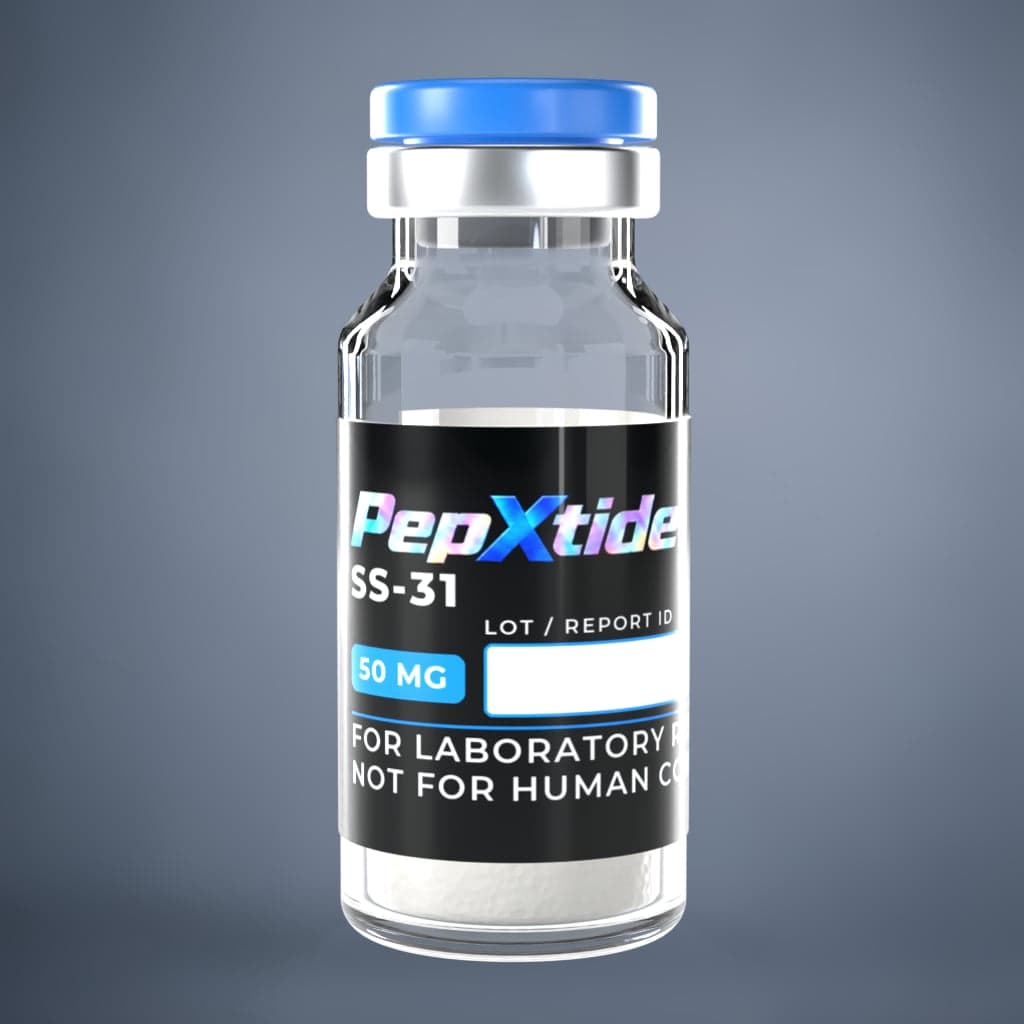 50mg
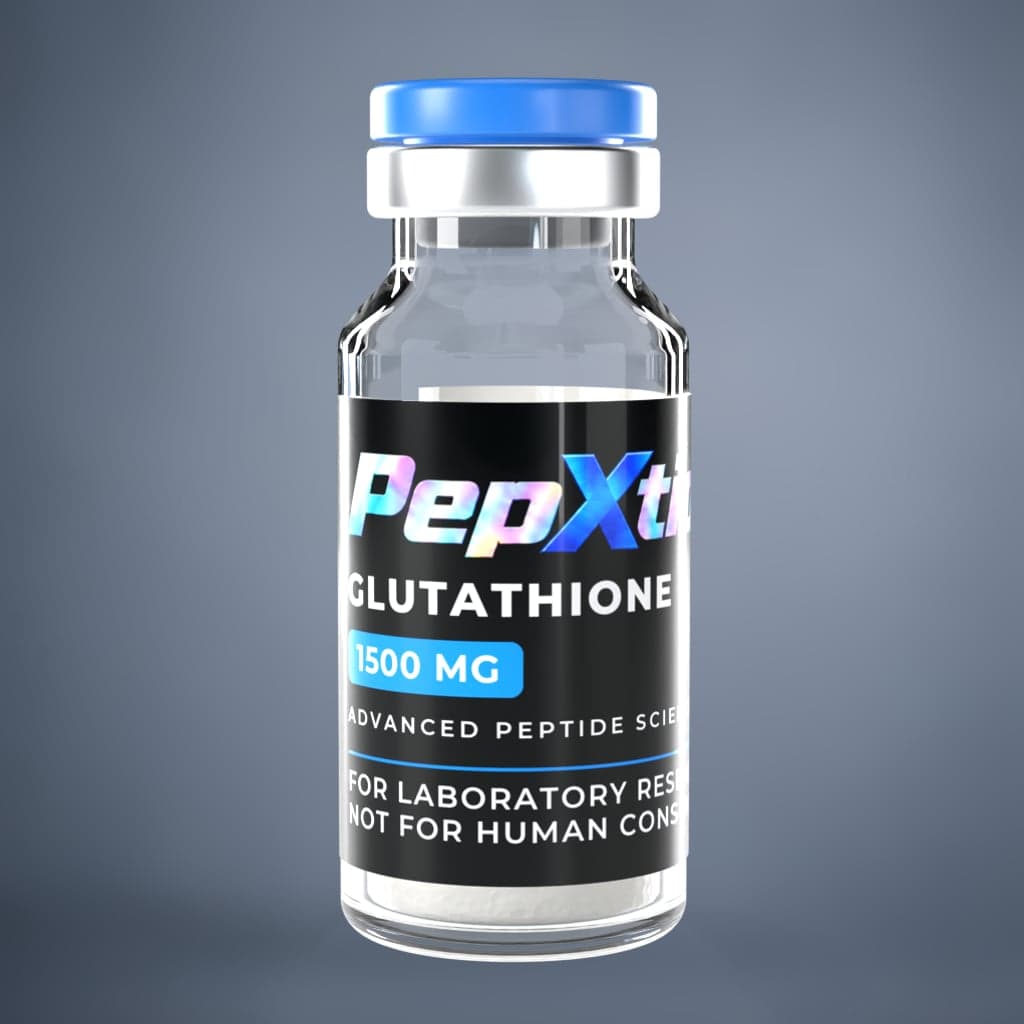 1500mg