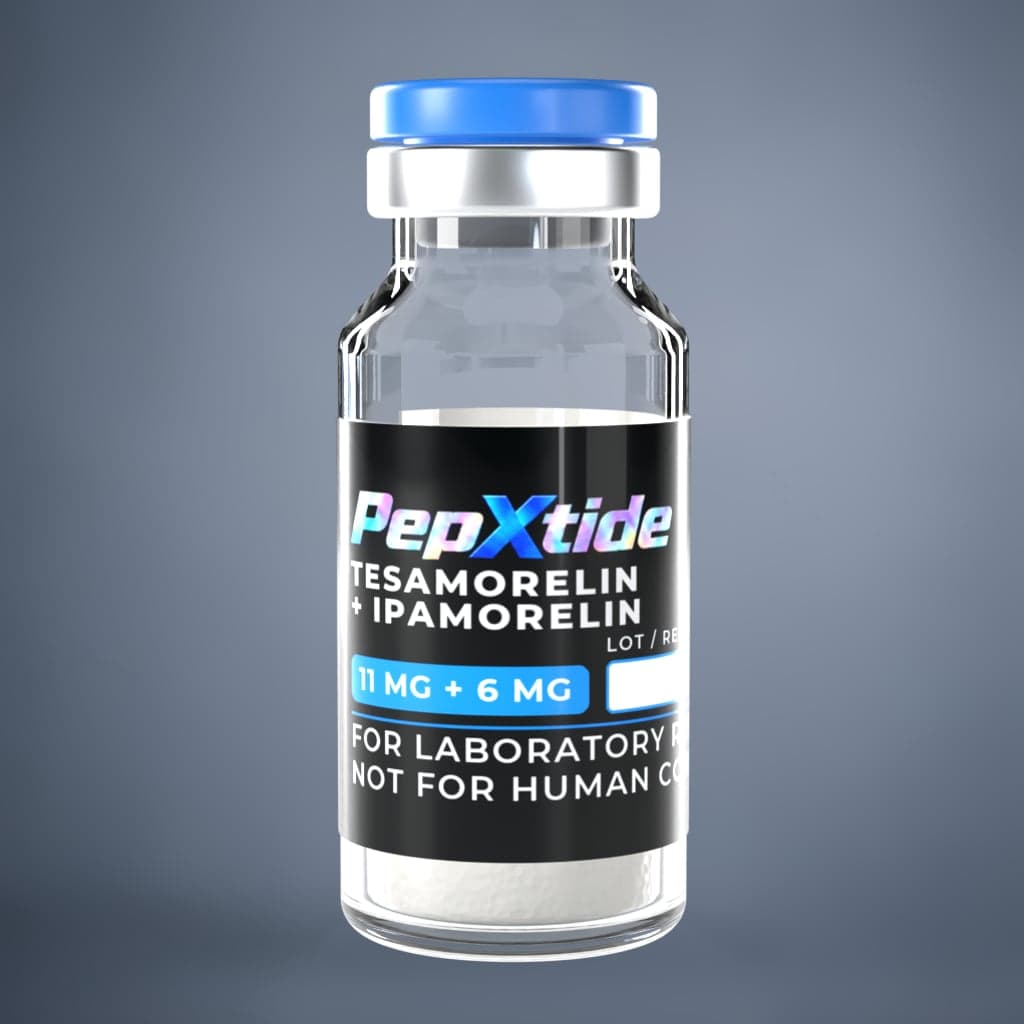
Research use only. This compound is supplied for in-vitro laboratory research by qualified researchers. It is not for human or veterinary consumption and has not been evaluated by the FDA.
Buy more of this strength and the price comes down. The store applies it at checkout - there is nothing to enter.
Free US shipping - no minimum
Tell us the Report ID or Laboratory ID shown on the certificate, and what you observed. If independent testing shows a discrepancy against our published certificate, we refund the lot in full and pull it from sale pending investigation.
1
$149.99each
Tell us the Report ID or Laboratory ID shown on the certificate, and what you observed. If independent testing shows a discrepancy against our published certificate, we refund the lot in full and pull it from sale pending investigation.
Identifiers are published properties of the molecule. Values we cannot confirm are omitted rather than estimated.
Tesamorelin is a stabilised analogue of human growth-hormone-releasing hormone, carrying all 44 residues of GHRH(1-44) with a trans-3-hexenoyl group attached to the N-terminal tyrosine. That acyl group is the structural feature that blocks dipeptidyl peptidase cleavage, and it is the reason the analogue exists at all.
The design is a direct application of a specific piece of chemistry. Dipeptidyl peptidase IV deactivates the native releasing factor by cleaving after the N-terminal tyrosine, and blocking that position was shown in the late 1980s to abolish the cleavage. Where sermorelin leaves the N-terminus bare, this analogue caps it with a six-carbon acyl group carrying a double bond at position three. The peptide chain itself is otherwise the native 44-residue sequence with a C-terminal amide; there are no D-amino acids and no internal substitutions.
The molecular target is the same GHRH receptor as sermorelin, the class B secretin-family receptor coupled to adenylyl cyclase, and the manufacturer's own label describes the analogue as binding and stimulating human releasing-factor receptors with potency similar to the endogenous hormone. What the acylation changes is durability rather than receptor preference.
That claim has been measured rather than asserted. Preclinical characterisation published in 2007 used in-vitro incubations in rat, dog and human plasma and reported that the hexenoyl modification slowed degradation of the peptide in all three, with correspondingly prolonged plasma persistence of the immunoreactive analogue relative to the unmodified 44-residue hormone. Those plasma-stability incubations are the standard bench system for this compound.
One identification note matters for anyone reconciling a label against a certificate. The approved product is an acetate salt, with roughly seven acetate equivalents per peptide stated on the regulatory label, whereas the molecular weight published on this page is the free-base figure. A salt lot will assay higher by mass for the same molar quantity, so the basis has to be stated before two numbers can be compared.
Background
Tesamorelin is a stabilised analogue of human growth-hormone-releasing hormone carrying all 44 residues of GHRH(1-44) as the C-terminal amide, with a trans-3-hexenoyl group on the N-terminal tyrosine. That acyl cap blocks the dipeptidyl peptidase IV cleavage after tyrosine 1; the chain is otherwise native, with no D-amino acids or internal substitutions. It acts at the same class B GHRH receptor as sermorelin, and 2007 plasma incubations reported slower degradation than the unmodified hormone.
Specifications
Supplied as
Lyophilized powder
Available strengths
20mg · 10mg
CAS number
218949-48-5
Molecular formula
C221H366N72O67S
Storage
Store lyophilized at -20C, protected from light and moisture.
Intended use
In-vitro laboratory research only
Research overview
Stabilised human GHRH(1-44)
All 44 residues of human growth-hormone-releasing hormone with a trans-3-hexenoyl group on the N-terminal tyrosine, which is what blocks dipeptidyl peptidase cleavage. The largest structure in the set - modelled as an alpha helix.
Synthetic human GHRH(1-44) with a trans-3-hexenoic acid group on Tyr1.
Residues
44
Atoms
361
Primary literature
We have not compiled a reading list for this compound, and would rather show nothing than pad one out.
Search the databases
The list above is a selection, not the whole literature. These open the public databases themselves, each one confirmed to return results on 29 August 2026.
PubMed, PubChem and ClinicalTrials.gov are independent scientific databases. A record or a published paper is not an endorsement of this product, and nothing indexed there describes an application, dose or outcome supported by PepXtide.
Storage & handling
Lyophilized
Store lyophilized at -20C, protected from light and moisture. The N-terminal acyl cap blocks the dipeptidyl peptidase IV cleavage that limits the unmodified hormone, but the 44-residue chain still contains methionine and the material is supplied as a lyophilized cake that takes up moisture readily.
Reconstituted
Once reconstituted, keep refrigerated and use within the working period established by the laboratory.
Handling notes
Store the lyophilized powder at -20C, protected from light and moisture.
The N-terminal acyl cap blocks dipeptidyl peptidase IV cleavage, but the 44-residue chain still contains methionine.
The lyophilized cake absorbs moisture readily.
The approved material is an acetate salt, so a salt lot assays higher by mass than the free-base figure on this page.
Once reconstituted, keep refrigerated and use within the working period established by the laboratory.
Safety & handling
Bench handling, not a dosing guide.
Intended use
Supplied strictly as a laboratory research material for in-vitro study by qualified researchers. Not for human or veterinary use, not for ingestion or injection, and not for any clinical or diagnostic application.
Personal protective equipment
Handle with gloves, eye protection and a laboratory coat. Weigh and transfer lyophilized powder in a ventilated enclosure to avoid generating an inhalable dust.
Reconstitution
Reconstitute against the diluent and volume appropriate to your protocol, adding solvent slowly down the vial wall rather than directly onto the pellet. Do not shake. This is a handling note, not a dosing guide.
Storage after opening
Once reconstituted, refrigerate and use within the period appropriate to the material. Avoid repeated freeze-thaw cycles, which degrade peptides faster than continuous storage at the listed temperature.
Disposal
Dispose of material and containers in accordance with your institution's chemical waste procedures and applicable local regulations.
Also sold as part of a set
10mg
10mg
10mg
10ml
Growth & Secretagogue · 4 vials
Sermorelin, Ipamorelin and Tesamorelin Set
Three 10mg secretagogue-class vials and a 10ml water vial.
On its own this set comes to $212.47 at checkout: $37.49 Bundle & Save is taken off there.
Sermorelin at 10mg, Ipamorelin at 10mg, Tesamorelin at 10mg and a 10ml bacteriostatic water vial. Four separate cart lines, four separate vials, no compounding. Ipamorelin is also stocked at 5mg and Tesamorelin at 20mg on their own pages; this set uses the 10mg of each. Certificate status is per product and per strength, so check each product page for the lot currently published.
Sermorelin is a 29-residue GHRH analogue, Tesamorelin a stabilised 44-residue GHRH analogue and Ipamorelin a pentapeptide. All three sit in the Growth & Secretagogue category.
Adds 4 separate cart lines. Remove any one of them in the cart.
At 44 residues it is the largest structure in the PepXtide library, modelled as an alpha helix. Supplied as a lyophilized powder for in-vitro laboratory research only. No statement on this page describes an application, benefit, dose, route or outcome. Descriptions are structural and mechanistic, and reference data such as CAS numbers and molecular formulas is published information about the compound itself, provided for identification. The measured result shown above is for laboratory id V260612-20 002 and is not averaged across the product line.


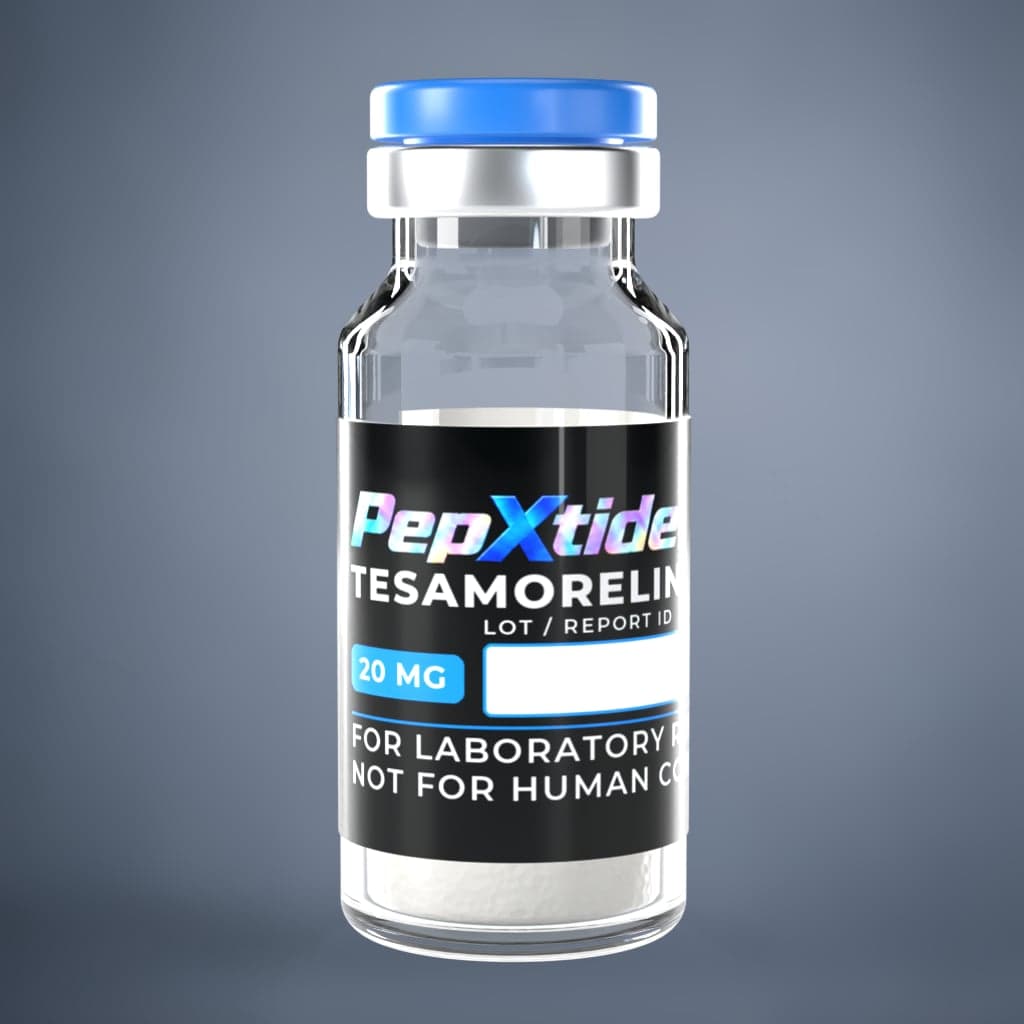
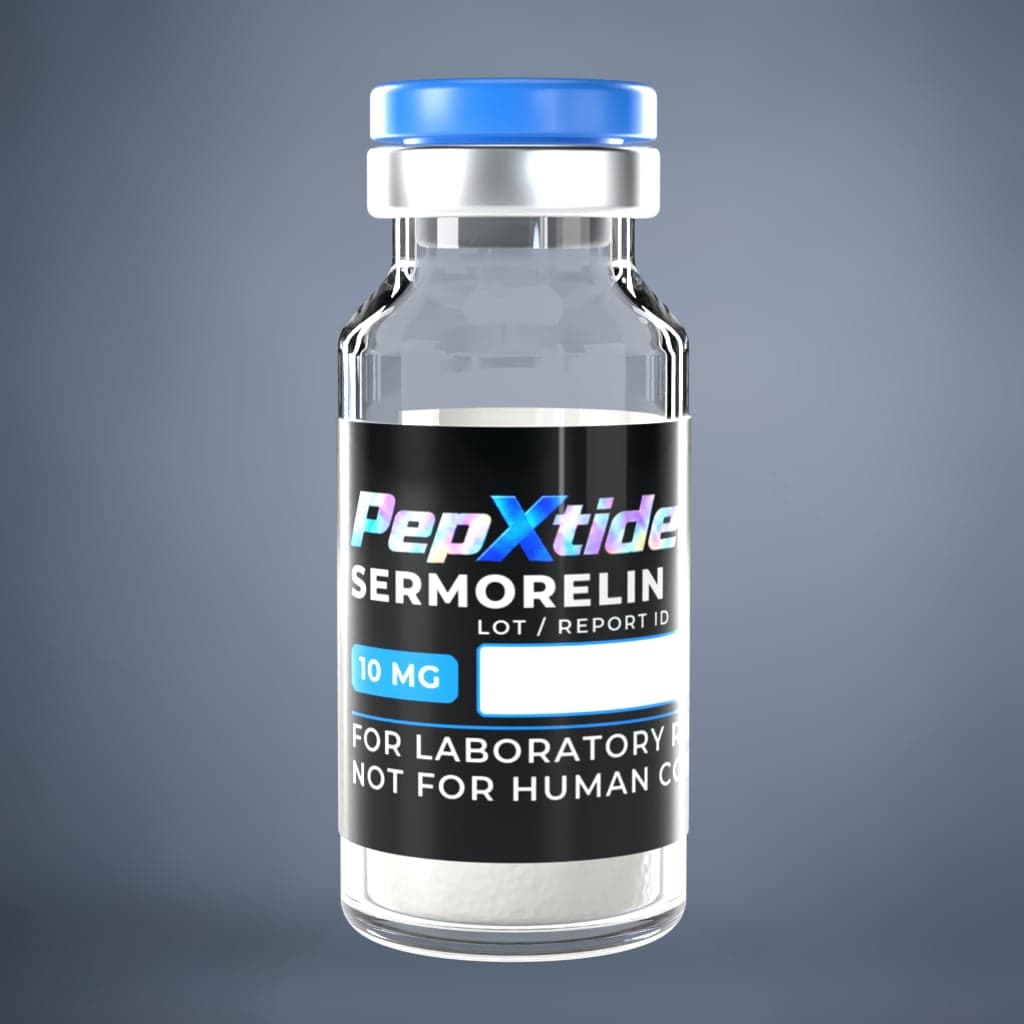 10mg
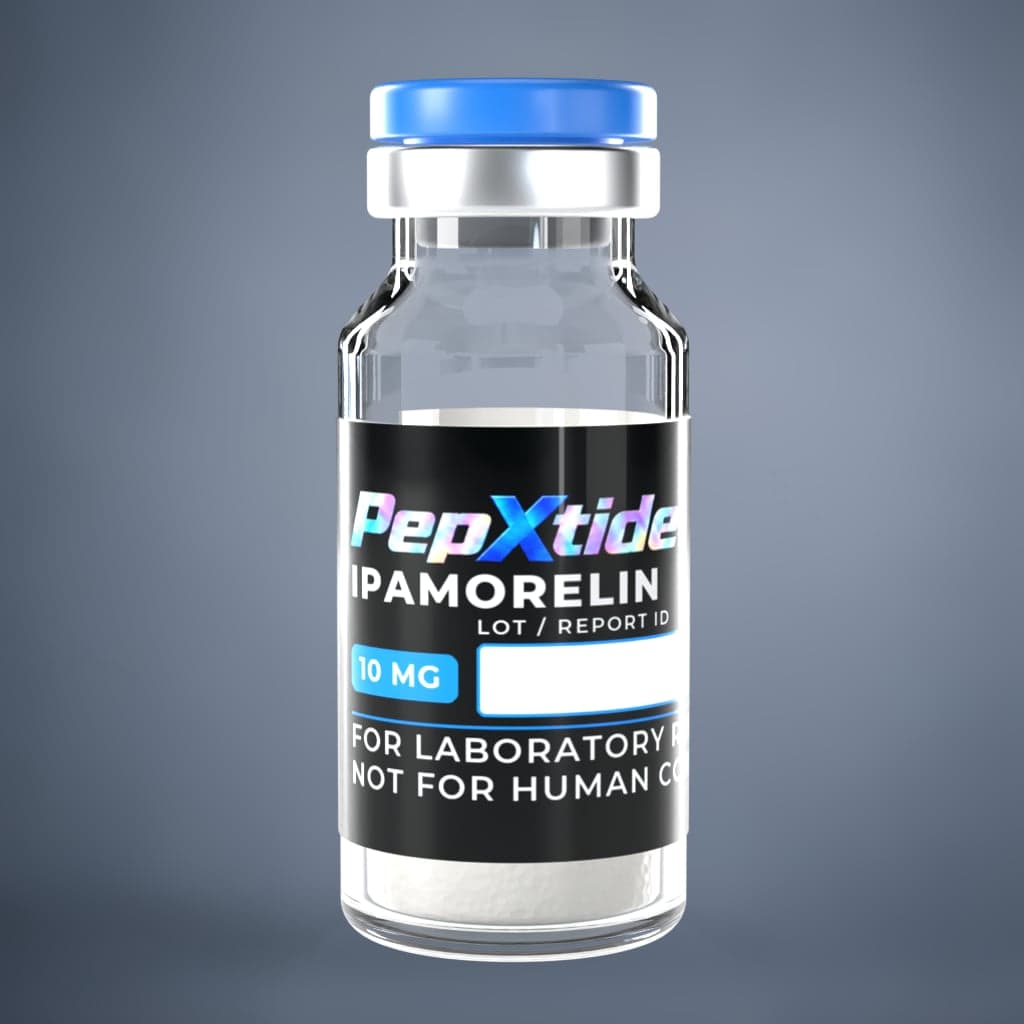 10mg
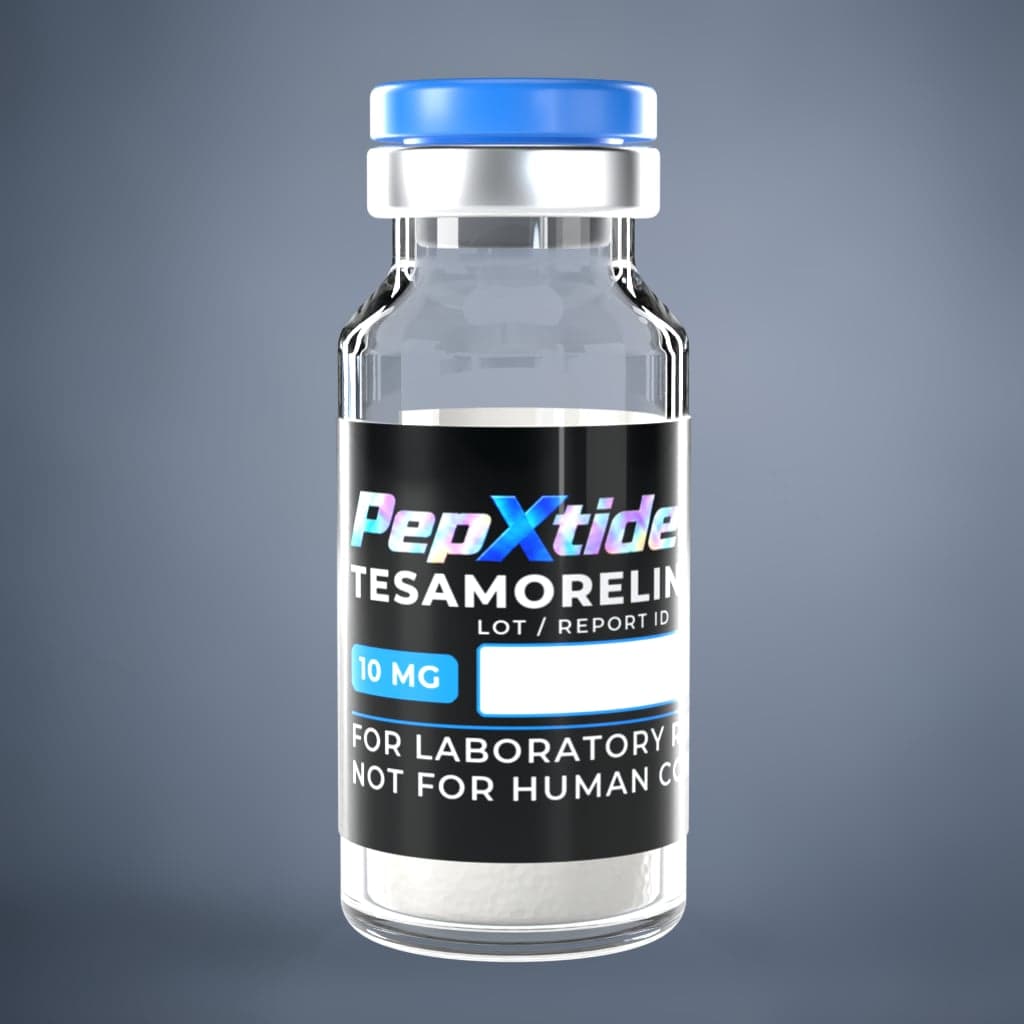 10mg
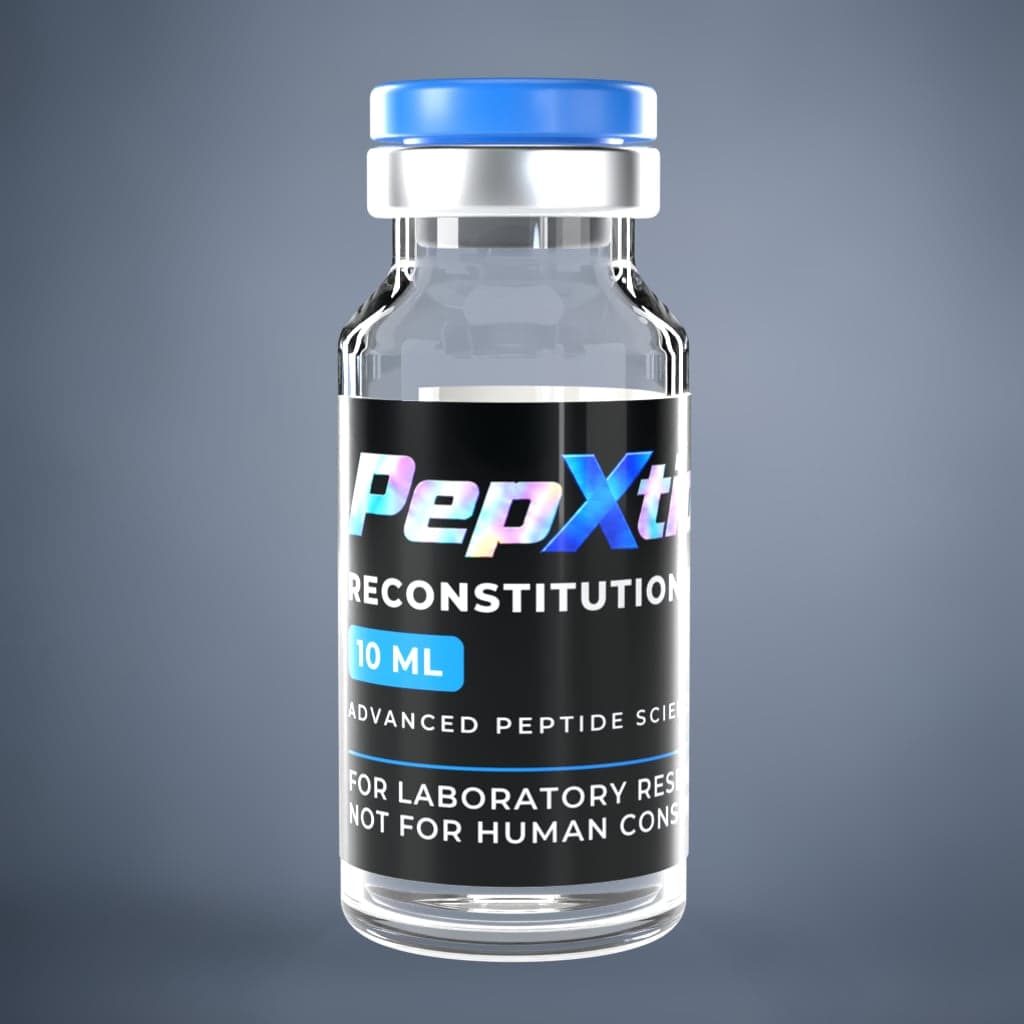 10ml