Research use only. This compound is supplied for in-vitro laboratory research by qualified researchers. It is not for human or veterinary consumption and has not been evaluated by the FDA.
Buy more of this strength and the price comes down. The store applies it at checkout - there is nothing to enter.
Free US shipping - no minimum
Tell us the Report ID or Laboratory ID shown on the certificate, and what you observed. If independent testing shows a discrepancy against our published certificate, we refund the lot in full and pull it from sale pending investigation.
1
$59.99each
Tell us the Report ID or Laboratory ID shown on the certificate, and what you observed. If independent testing shows a discrepancy against our published certificate, we refund the lot in full and pull it from sale pending investigation.
Certificate pending
Discreet packaging
Dispatched within one business day
Free US shipping, no minimum
In stock, ships from our US fulfilment partner
Compound information
Type
Matrix & Cytoskeletal
CAS number
67727-97-3
Molecular formula
C16H30N4O4
Molecular weight
342.43 g/mol
Sequence
Lys-Pro-Val (KPV)
Form
Lyophilized powder
Vial strength
10mg
Catalogue number
PX-KPV-10MG
Purity
Certificate pending for this strength
Identifiers are published properties of the molecule. Values we cannot confirm are omitted rather than estimated.
KPV is the C-terminal tripeptide of alpha-melanocyte-stimulating hormone, corresponding to residues 11 to 13 of alpha-MSH. At three residues it is small enough that the PepXtide structural library renders every hydrogen atom rather than an implicit-hydrogen model.
One structural detail separates the supplied tripeptide from the corresponding piece of the parent hormone, and it is easy to miss. In native alpha-MSH the C-terminal valine is amidated. The isolated tripeptide as catalogued here, and as registered in the public chemical databases, is the free acid. The two are distinct substances with different masses and different charge at working pH, so a comparison against literature that used the amidated form should say which was used.
Beyond that the molecule is unmodified: L-lysine, L-proline and L-valine, no ring, no bridge, no terminal cap. It carries a single basic side chain on the lysine and a free carboxyl at the C-terminus, and it contains no cysteine, methionine or tryptophan, so there is no oxidation-prone residue and no aromatic absorbance to quantify against.
The mechanism reported for this tripeptide is genuinely contested and the catalogue will not pretend otherwise. The most cited work places the effect at the di- and tripeptide transporter PepT1 (SLC15A1), which carries the peptide into cells that express it, where nanomolar concentrations were reported to reduce NF-kappaB and MAP-kinase activation and lower pro-inflammatory cytokine secretion in intestinal epithelial and immune cell culture. A more recent review instead treats the tripeptide as acting through melanocortin-receptor activation. These are different mechanisms with different predictions, and no single account should be quoted as settled.
The compound has a well-characterised analytical profile, which is unusual at this size. A stability-indicating reversed-phase HPLC method has been published using a C18 column with a trifluoroacetic-acid water and acetonitrile gradient, with reported limits of detection and quantitation in the low nanogram- and sub-microgram-per-millilitre range and excellent linearity. Forced-degradation work under acid, alkali and hydrogen peroxide identifies the major degradant as a lysyl-prolyl diketopiperazine, formed by intramolecular cyclisation of the two N-terminal residues.
That diketopiperazine route is the handling fact worth carrying forward. Short peptides with proline in the second position cyclise readily, and the reaction is accelerated by heat and by pH away from neutrality, so solutions held warm or at extreme pH will lose parent compound to a degradant that a suitable HPLC method can resolve.
Background
KPV (Lys-Pro-Val) is the C-terminal tripeptide of alpha-melanocyte-stimulating hormone, residues 11 to 13 of the parent hormone. It is catalogued as the free acid, whereas the valine in native alpha-MSH is amidated, so the two are distinct substances with different masses. Its mechanism is contested: the most cited work routes it through the PepT1 (SLC15A1) peptide transporter and NF-kappaB and MAP-kinase signalling in cultured cells, while a later review attributes activity to melanocortin receptors.
Research applications
Where this compound appears in the published literature. Each area points to the papers listed under Primary literature below. These describe what was studied, not an application of this product.
Intestinal inflammation models
Studied in murine models of inflammatory bowel disease and colitis-associated cancer, in a 2008 Inflammatory Bowel Diseases study and a 2016 study examining the role of the PepT1 transporter.[3][2]
Lipid metabolism in cultured cells
Investigated in cultured-cell models of adipogenesis and hepatic lipid accumulation, including HepG2 cells, in two 2026 studies focused on ROS-linked PPAR-gamma signalling.[1][4]
Keratinocyte stress models
Examined in keratinocytes exposed to fine dust, in a 2025 Tissue and Cell study of oxidative stress and MAPK/NF-kappaB signalling.[5]
Specifications
Supplied as
Lyophilized powder
Available strengths
10mg
CAS number
67727-97-3
Molecular formula
C16H30N4O4
Storage
Store lyophilized at -20C, protected from light and moisture.
Intended use
In-vitro laboratory research only
Research overview
alpha-MSH (11-13)
The C-terminal tripeptide of alpha-melanocyte-stimulating hormone. Small enough to show every hydrogen, and studied for anti-inflammatory signalling.
Residues
3
Atoms
55
Primary literature
Peer-reviewed papers indexed on PubMed that study this compound. We did not write them and we do not summarise them — each reference opens the record on PubMed so you can read the work itself. Publication is not evidence of safety or efficacy, and none of this research was conducted by PepXtide.
The list above is a selection, not the whole literature. These open the public databases themselves, each one confirmed to return results on 29 August 2026.
PubMed, PubChem and ClinicalTrials.gov are independent scientific databases. A record or a published paper is not an endorsement of this product, and nothing indexed there describes an application, dose or outcome supported by PepXtide.
Storage & handling
Lyophilized
Store lyophilized at -20C, protected from light and moisture. The documented degradation route is intramolecular cyclisation of the N-terminal lysine and proline to a diketopiperazine, which is accelerated by heat and by pH away from neutral.
Reconstituted
Once reconstituted, keep refrigerated and use within the working period established by the laboratory, holding the solution near neutral pH and away from elevated temperature.
Handling notes
Store lyophilized at -20C, protected from light and moisture.
The documented degradation route is cyclisation of the N-terminal lysine and proline to a diketopiperazine, accelerated by heat and by pH away from neutral.
Once reconstituted, keep refrigerated, near neutral pH and away from elevated temperature, and use within the working period established by the laboratory.
No cysteine, methionine or tryptophan, so there is no oxidation-prone residue and no aromatic absorbance for quantitation.
Safety & handling
Bench handling, not a dosing guide.
Intended use
Supplied strictly as a laboratory research material for in-vitro study by qualified researchers. Not for human or veterinary use, not for ingestion or injection, and not for any clinical or diagnostic application.
Personal protective equipment
Handle with gloves, eye protection and a laboratory coat. Weigh and transfer lyophilized powder in a ventilated enclosure to avoid generating an inhalable dust.
Reconstitution
Reconstitute against the diluent and volume appropriate to your protocol, adding solvent slowly down the vial wall rather than directly onto the pellet. Do not shake. This is a handling note, not a dosing guide.
Storage after opening
Once reconstituted, refrigerate and use within the period appropriate to the material. Avoid repeated freeze-thaw cycles, which degrade peptides faster than continuous storage at the listed temperature.
Disposal
Dispose of material and containers in accordance with your institution's chemical waste procedures and applicable local regulations.
Also sold as part of these sets
50mg
10mg
10mg
10ml
Matrix & Cytoskeletal · 4 vials
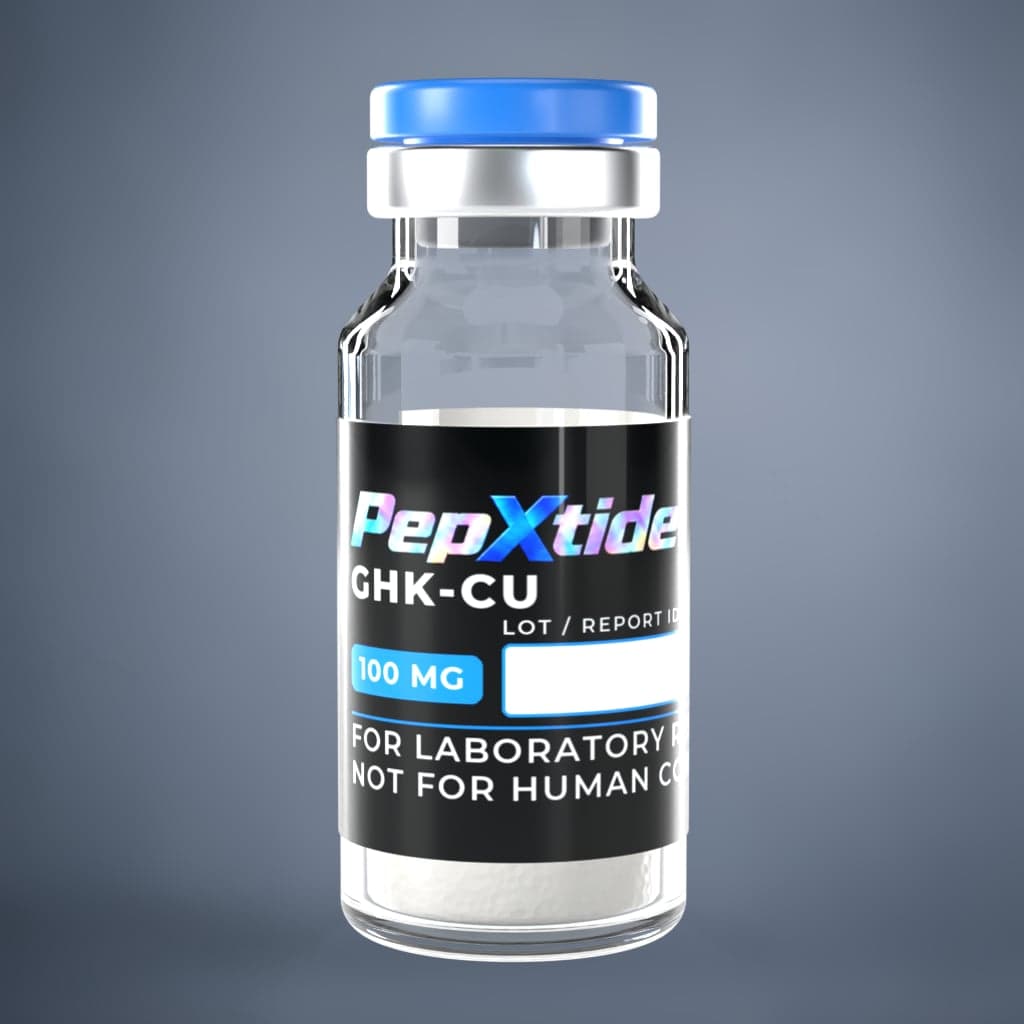
GHK-Cu, KPV and BPC-157 Set
A copper tripeptide at 50mg, a tripeptide fragment at 10mg and a 15-residue peptide at 10mg, plus water.
On its own this set comes to $161.47 at checkout: $28.49 Bundle & Save is taken off there.
GHK-Cu at 50mg, KPV at 10mg, BPC-157 at 10mg and a 10ml bacteriostatic water vial, added as four separate cart lines. The set exists to save you four trips through the catalogue, not to change what is in the box: each vial is the same item, same lot and same certificate status as the one on its own page.
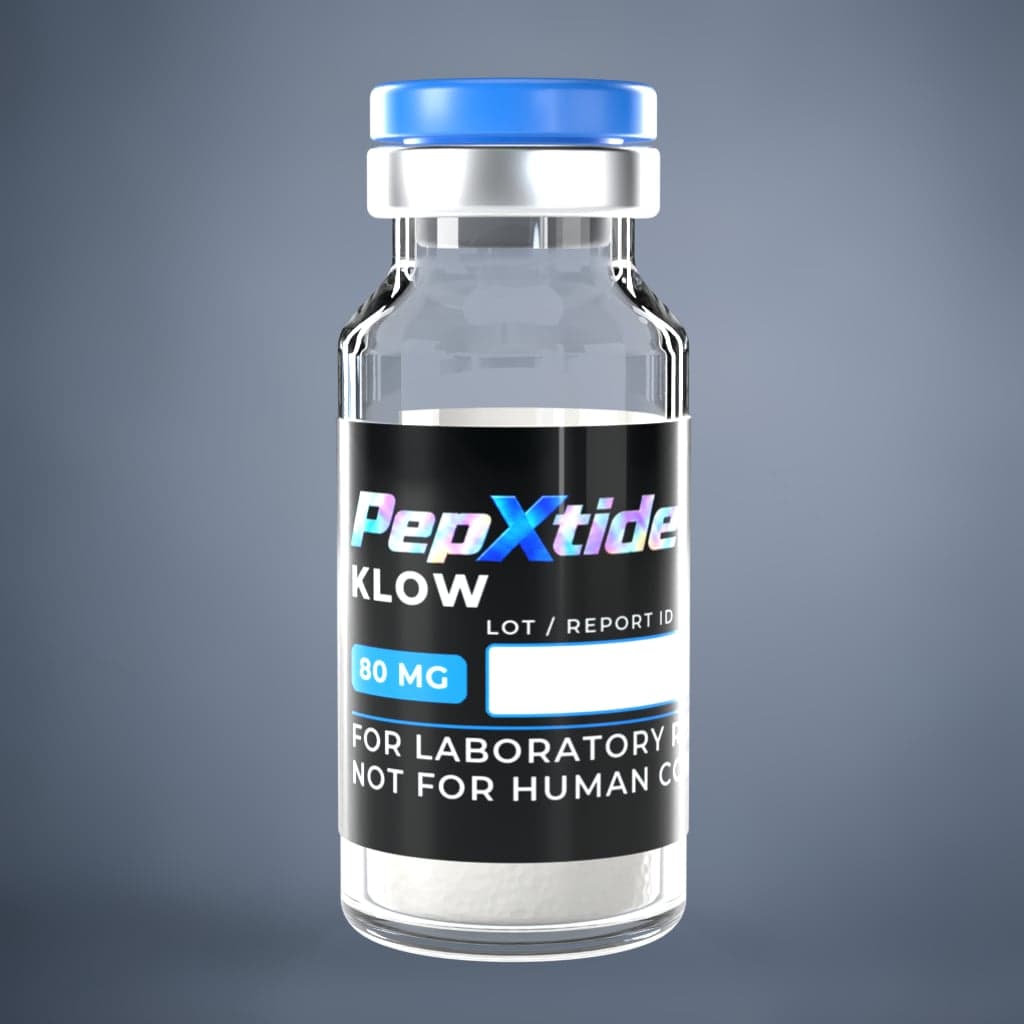
GHK-Cu is a copper-binding tripeptide, KPV a three-residue fragment and BPC-157 a 15-residue peptide. All three are single compounds that the catalogue's KLOW blend also contains.
Adds 4 separate cart lines. Remove any one of them in the cart.
100mg
70mg
10mg
10ml
Matrix & Cytoskeletal · 4 vials
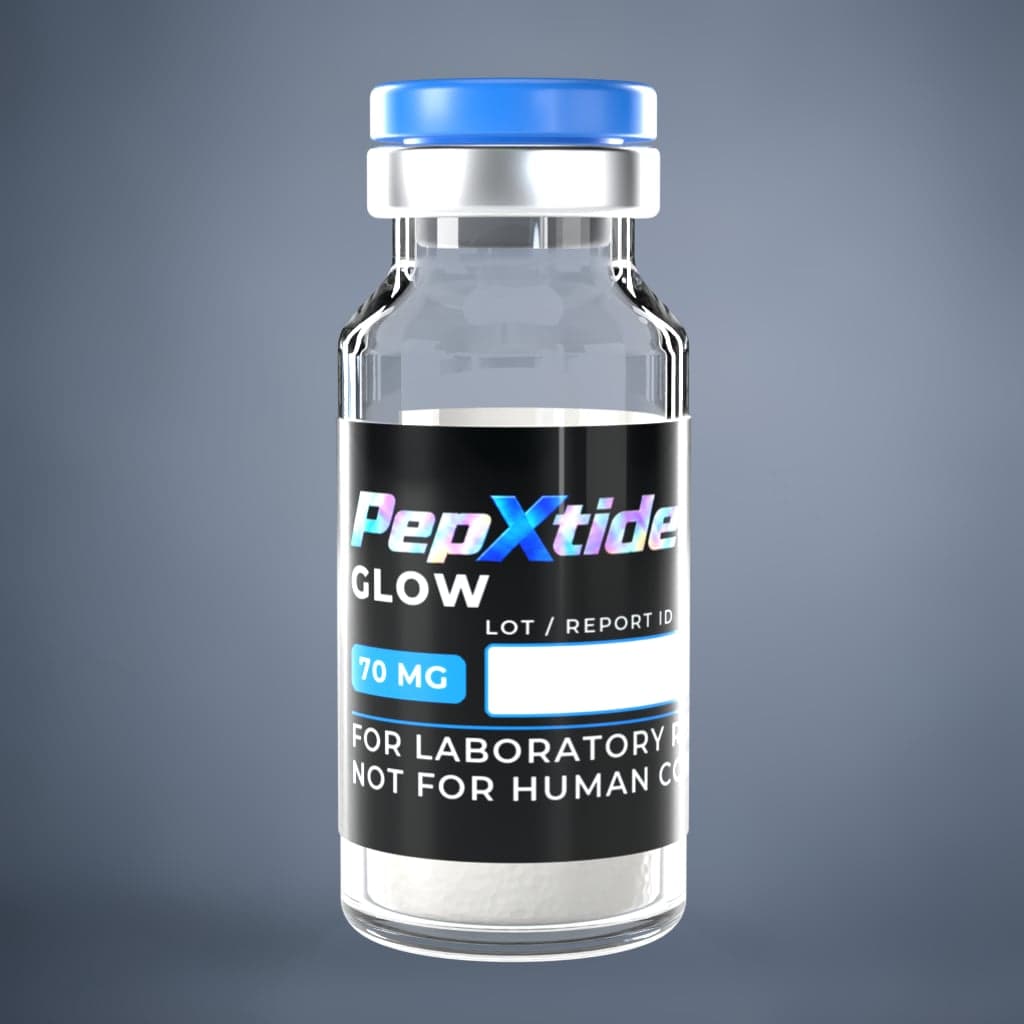
GHK-Cu 100mg, GLOW and KPV Set
The larger GHK-Cu vial alongside the blended GLOW vial and KPV at 10mg, plus water.
On its own this set comes to $229.47 at checkout: $40.49 Bundle & Save is taken off there.
GHK-Cu at 100mg, GLOW at 70mg, KPV at 10mg and a 10ml bacteriostatic water vial. Worth reading each product page before ordering: GLOW arrives as a manufacturer blend while GHK-Cu and KPV are single compounds, so their certificates describe different things.
GLOW is a pre-blended vial supplied by the manufacturer; GHK-Cu here is the single-compound 100mg vial and KPV a single-compound tripeptide fragment. GHK-Cu, GLOW and KPV are listed under Matrix & Cytoskeletal.
Adds 4 separate cart lines. Remove any one of them in the cart.
Studied in NF-kappaB and MAP-kinase signalling research. Supplied as a lyophilized powder for in-vitro laboratory research only. No statement on this page describes an application, benefit, dose, route or outcome. Descriptions are structural and mechanistic, and reference data such as CAS numbers and molecular formulas is published information about the compound itself, provided for identification. No measured result is shown for this strength because a certificate has not yet been published for its lot.


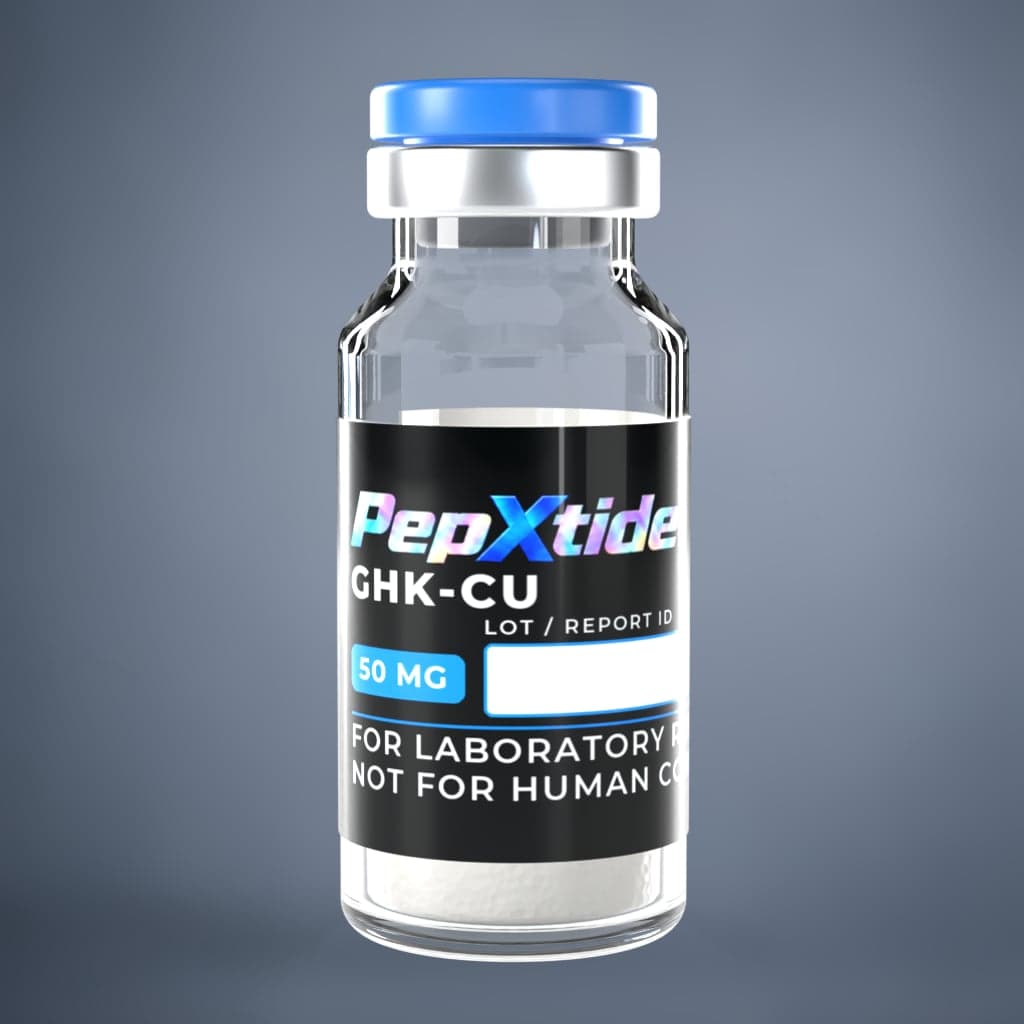 50mg
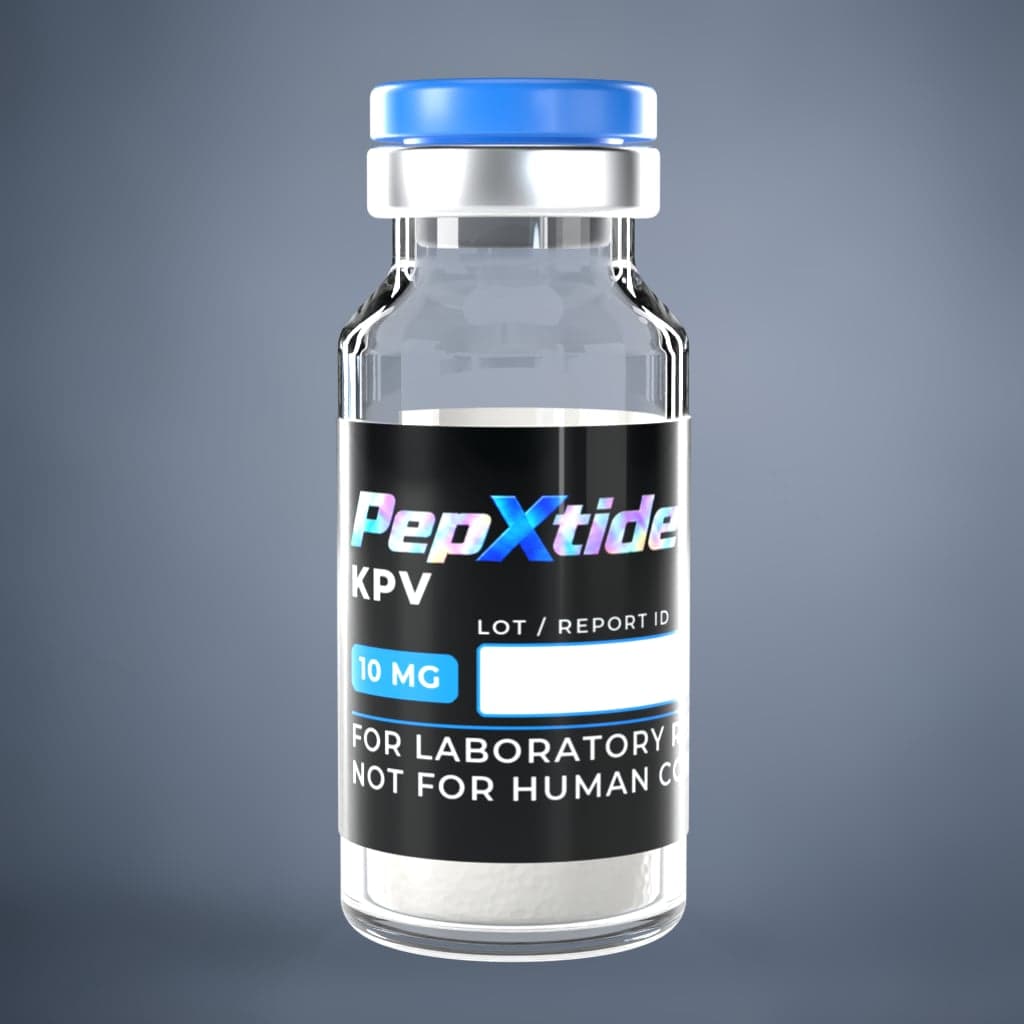 10mg
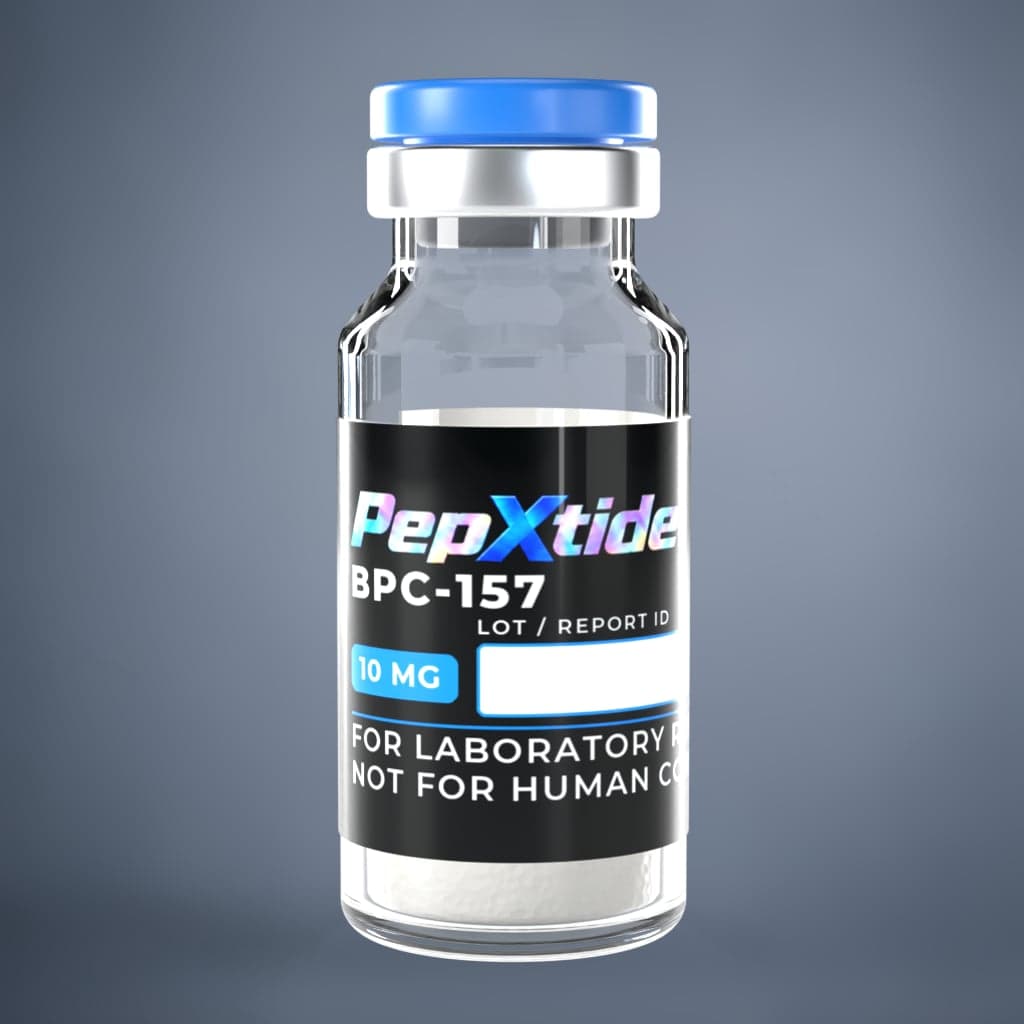 10mg
 10ml